• 文献检索
  • 文档翻译
  • 深度研究
  • 学术资讯
  • Suppr Zotero 插件Zotero 插件
  • 邀请有礼
  • 套餐&价格
  • 历史记录
应用&插件
Suppr Zotero 插件Zotero 插件浏览器插件Mac 客户端Windows 客户端微信小程序
定价
高级版会员购买积分包购买API积分包
服务
文献检索文档翻译深度研究API 文档MCP 服务
关于我们
关于 Suppr公司介绍联系我们用户协议隐私条款
关注我们

Suppr 超能文献

核心技术专利:CN118964589B侵权必究
粤ICP备2023148730 号-1Suppr @ 2026

文献检索

告别复杂PubMed语法,用中文像聊天一样搜索,搜遍4000万医学文献。AI智能推荐,让科研检索更轻松。

立即免费搜索

文件翻译

保留排版,准确专业,支持PDF/Word/PPT等文件格式,支持 12+语言互译。

免费翻译文档

深度研究

AI帮你快速写综述,25分钟生成高质量综述,智能提取关键信息,辅助科研写作。

立即免费体验

城市耐受性在系统发育上受到限制,并由非洲蝙蝠的预先适应介导。

Urban tolerance is phylogenetically constrained and mediated by pre-adaptations in African bats.

作者信息

Marsden Genevieve E, Vosloo Dalene, Schoeman M Corrie

机构信息

Centre for Functional Biodiversity, School of Life Sciences University of KwaZulu-Natal Durban South Africa.

School of Life Sciences University of KwaZulu-Natal Durban South Africa.

出版信息

Ecol Evol. 2023 Mar 8;13(3):e9840. doi: 10.1002/ece3.9840. eCollection 2023 Mar.

DOI:10.1002/ece3.9840
PMID:36911303
原文链接:https://pmc.ncbi.nlm.nih.gov/articles/PMC9994473/
Abstract

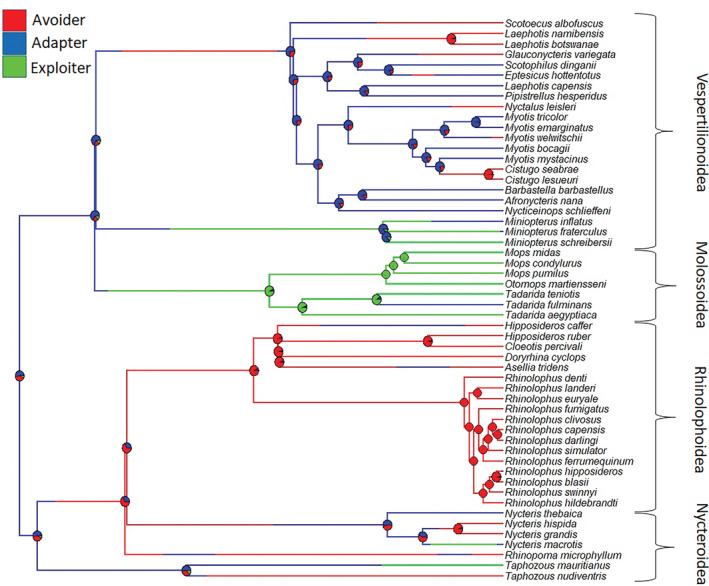
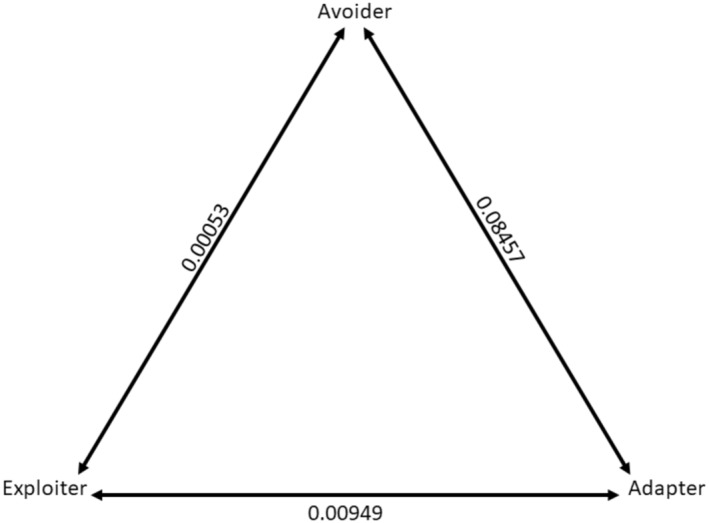
With increasing urbanization, particularly in developing countries, it is important to understand how local biota will respond to such landscape changes. Bats comprise one of the most diverse groups of mammals in urban areas, and many species are threatened by habitat destruction and land use change. Yet, in Africa, the response of bats to urban areas is relatively understudied. Therefore, we collated data on urban presence, phylogenetic relationship, and ecological traits of 54 insectivorous bats in Africa from available literature to test if their response to urbanization was phylogenetically and/or ecologically driven. Ancestral state reconstruction of urban tolerance, defined by functional group and presence observed in urban areas, suggests that ancestral African bat species could adapt to urban landscapes, and significant phylogenetic signal for urban tolerance indicates that this ability is evolutionarily conserved and mediated by pre-adaptations. Specifically, traits of high wing loading and aspect ratio, and flexible roosting strategies, enable occupancy of urban areas. Therefore, our results identify the traits that predict which bat species will likely occur in urban areas, and which vulnerable bat clades conservation efforts should focus on to reduce loss of both functional and phylogenetic diversity in Africa. We, additionally, highlight several gaps in research that should be investigated in future studies to provide better monitoring of the impact urbanization will have on African bats.

摘要

随着城市化进程的加快,尤其是在发展中国家,了解当地生物群将如何应对这种景观变化变得至关重要。蝙蝠是城市地区最多样化的哺乳动物群体之一,许多物种受到栖息地破坏和土地利用变化的威胁。然而,在非洲,蝙蝠对城市地区的反应相对研究较少。因此,我们从现有文献中整理了非洲54种食虫蝙蝠的城市存在、系统发育关系和生态特征数据,以测试它们对城市化的反应是否受系统发育和/或生态驱动。通过功能组和在城市地区观察到的存在来定义城市耐受性的祖先状态重建表明,非洲蝙蝠的祖先物种可以适应城市景观,并且城市耐受性的显著系统发育信号表明这种能力在进化上是保守的,并由预先适应介导。具体而言,高翼载荷和展弦比的特征以及灵活的栖息策略使它们能够在城市地区栖息。因此,我们的结果确定了预测哪些蝙蝠物种可能出现在城市地区的特征,以及保护工作应关注哪些易受影响的蝙蝠进化枝,以减少非洲功能和系统发育多样性的丧失。此外,我们强调了几个研究空白,未来的研究应加以调查,以便更好地监测城市化对非洲蝙蝠的影响。
https://cdn.ncbi.nlm.nih.gov/pmc/blobs/b6a0/9994473/97d55441ac39/ECE3-13-e9840-g001.jpg
https://cdn.ncbi.nlm.nih.gov/pmc/blobs/b6a0/9994473/1063b0c39d7a/ECE3-13-e9840-g002.jpg
https://cdn.ncbi.nlm.nih.gov/pmc/blobs/b6a0/9994473/97d55441ac39/ECE3-13-e9840-g001.jpg
https://cdn.ncbi.nlm.nih.gov/pmc/blobs/b6a0/9994473/1063b0c39d7a/ECE3-13-e9840-g002.jpg
https://cdn.ncbi.nlm.nih.gov/pmc/blobs/b6a0/9994473/97d55441ac39/ECE3-13-e9840-g001.jpg

相似文献

1
Urban tolerance is phylogenetically constrained and mediated by pre-adaptations in African bats.城市耐受性在系统发育上受到限制,并由非洲蝙蝠的预先适应介导。
Ecol Evol. 2023 Mar 8;13(3):e9840. doi: 10.1002/ece3.9840. eCollection 2023 Mar.
2
Trait-dependent tolerance of bats to urbanization: a global meta-analysis.基于性状的蝙蝠对城市化的耐受:全球荟萃分析。
Proc Biol Sci. 2018 Aug 22;285(1885):20181222. doi: 10.1098/rspb.2018.1222.
3
Urban bat communities are affected by wetland size, quality, and pollution levels.城市蝙蝠群落受到湿地面积、质量和污染水平的影响。
Ecol Evol. 2016 Jun 16;6(14):4761-74. doi: 10.1002/ece3.2224. eCollection 2016 Jul.
4
Bats in urban areas of Brazil: roosts, food resources and parasites in disturbed environments.巴西城市地区的蝙蝠:受干扰环境中的栖息地、食物资源和寄生虫
Urban Ecosyst. 2017;20(4):953-969. doi: 10.1007/s11252-016-0632-3. Epub 2016 Dec 27.
5
Influence of landscape structure and human modifications on insect biomass and bat foraging activity in an urban landscape.景观结构和人类活动对城市景观中昆虫生物量和蝙蝠觅食活动的影响。
PLoS One. 2012;7(6):e38800. doi: 10.1371/journal.pone.0038800. Epub 2012 Jun 7.
6
Sensitivity of bats to urbanization: a review.蝙蝠对城市化的敏感性:综述
Mamm Biol. 2015;80(3):205-212. doi: 10.1016/j.mambio.2014.10.003. Epub 2014 Oct 23.
7
Differential responses to woodland character and landscape context by cryptic bats in urban environments.城市环境中隐秘蝙蝠对林地特征和景观背景的差异反应。
PLoS One. 2015 May 15;10(5):e0126850. doi: 10.1371/journal.pone.0126850. eCollection 2015.
8
Separating the effects of water quality and urbanization on temperate insectivorous bats at the landscape scale.在景观尺度上区分水质和城市化对温带食虫蝙蝠的影响。
Ecol Evol. 2017 Dec 3;8(1):667-678. doi: 10.1002/ece3.3693. eCollection 2018 Jan.
9
Low foraging rates drive large insectivorous bats away from urban areas.低觅食率迫使大型食虫蝙蝠离开城市地区。
Glob Chang Biol. 2024 Jan;30(1):e17063. doi: 10.1111/gcb.17063.
10
Phylogeny, Traits, and Biodiversity of a Neotropical Bat Assemblage: Close Relatives Show Similar Responses to Local Deforestation.新热带蝙蝠群落的系统发育、特征与生物多样性:近亲对当地森林砍伐表现出相似反应。
Am Nat. 2017 Aug;190(2):200-212. doi: 10.1086/692534. Epub 2017 Jun 29.

引用本文的文献

1
A Phylogenetic Model of Established and Enabled Biome Shifts.已确立和促成的生物群落转变的系统发育模型。
bioRxiv. 2024 Sep 2:2024.08.30.610561. doi: 10.1101/2024.08.30.610561.
2
Ecological and evolutionary characteristics of anthropogenic roosting ability in bats of the world.世界蝙蝠人为栖息能力的生态与进化特征。
iScience. 2024 Jul 12;27(7):110369. doi: 10.1016/j.isci.2024.110369. eCollection 2024 Jul 19.
3
Guild Vertical Stratification and Drivers of Bat Foraging in a Semi-Arid Tropical Region, Kenya.肯尼亚半干旱热带地区蝙蝠觅食的群落垂直分层及驱动因素

本文引用的文献

1
Coronavirus and Paramyxovirus Shedding by Bats in a Cave and Buildings in Ethiopia.埃塞俄比亚洞穴和建筑物中蝙蝠的冠状病毒和副粘病毒排放。
Ecohealth. 2022 Jun;19(2):216-232. doi: 10.1007/s10393-022-01590-y. Epub 2022 Jun 30.
2
Urban affinity and its associated traits: A global analysis of bats.城市亲和性及其相关特征:蝙蝠的全球分析。
Glob Chang Biol. 2022 Oct;28(19):5667-5682. doi: 10.1111/gcb.16320. Epub 2022 Jul 12.
3
Fruit bats adjust their foraging strategies to urban environments to diversify their diet.果蝠会调整觅食策略以适应城市环境,从而使饮食多样化。
Biology (Basel). 2023 Aug 10;12(8):1116. doi: 10.3390/biology12081116.
BMC Biol. 2021 Jun 16;19(1):123. doi: 10.1186/s12915-021-01060-x.
4
Roost selection by Mauritian tomb bats (Taphozus mauritianus) in Lilongwe city, Malawi - importance of woodland for sustainable urban planning.毛里求斯墓蝠(Taphozus mauritianus)在马拉维利隆圭市的栖息地选择 - 林地对于可持续城市规划的重要性。
PLoS One. 2020 Nov 5;15(11):e0240434. doi: 10.1371/journal.pone.0240434. eCollection 2020.
5
Home range size, habitat selection and roost use by the whiskered bat (Myotis mystacinus) in human-dominated montane landscapes.人类主导的山地景观中须鼻蝠(Myotis mystacinus)的家域大小、栖息地选择和栖息地利用。
PLoS One. 2020 Oct 9;15(10):e0237243. doi: 10.1371/journal.pone.0237243. eCollection 2020.
6
The worldwide impact of urbanisation on avian functional diversity.城市化对鸟类功能多样性的全球影响。
Ecol Lett. 2020 Jun;23(6):962-972. doi: 10.1111/ele.13495. Epub 2020 Apr 7.
7
Sensitivity of bats to urbanization: a review.蝙蝠对城市化的敏感性:综述
Mamm Biol. 2015;80(3):205-212. doi: 10.1016/j.mambio.2014.10.003. Epub 2014 Oct 23.
8
Environmental exposure to non-essential trace elements in two bat species from urbanised (Tadarida teniotis) and open land (Miniopterus schreibersii) areas in Italy.环境暴露于非必需微量元素在来自城市化(Tadarida teniotis)和开阔地(Miniopterus schreibersii)的两种蝙蝠物种中。
Environ Pollut. 2019 Nov;254(Pt B):113034. doi: 10.1016/j.envpol.2019.113034. Epub 2019 Aug 13.
9
Trait-dependent tolerance of bats to urbanization: a global meta-analysis.基于性状的蝙蝠对城市化的耐受:全球荟萃分析。
Proc Biol Sci. 2018 Aug 22;285(1885):20181222. doi: 10.1098/rspb.2018.1222.
10
ape 5.0: an environment for modern phylogenetics and evolutionary analyses in R.ape 5.0:R 中的现代系统发育学和进化分析环境。
Bioinformatics. 2019 Feb 1;35(3):526-528. doi: 10.1093/bioinformatics/bty633.