Department of Radiation Oncology, Nanfang Hospital, Southern Medical University, Guangzhou, China.
Department of Radiation Oncology, Sun Yat-sen University Cancer Center, State Key Laboratory of Oncology in South China, Collaborative Innovation Center for Cancer Medicine, Guangdong Key Laboratory of Nasopharyngeal Carcinoma Diagnosis and Therapy, Guangzhou, China.
Front Immunol. 2023 Feb 22;14:1076890. doi: 10.3389/fimmu.2023.1076890. eCollection 2023.
Head and neck squamous cell carcinoma (HNSCC) ranks sixth among all cancers globally regarding morbidity, and it has a poor prognosis, high mortality, and highly aggressive properties. In this study, we established a model for predicting prognosis based on immunohistochemical (IHC) scores.
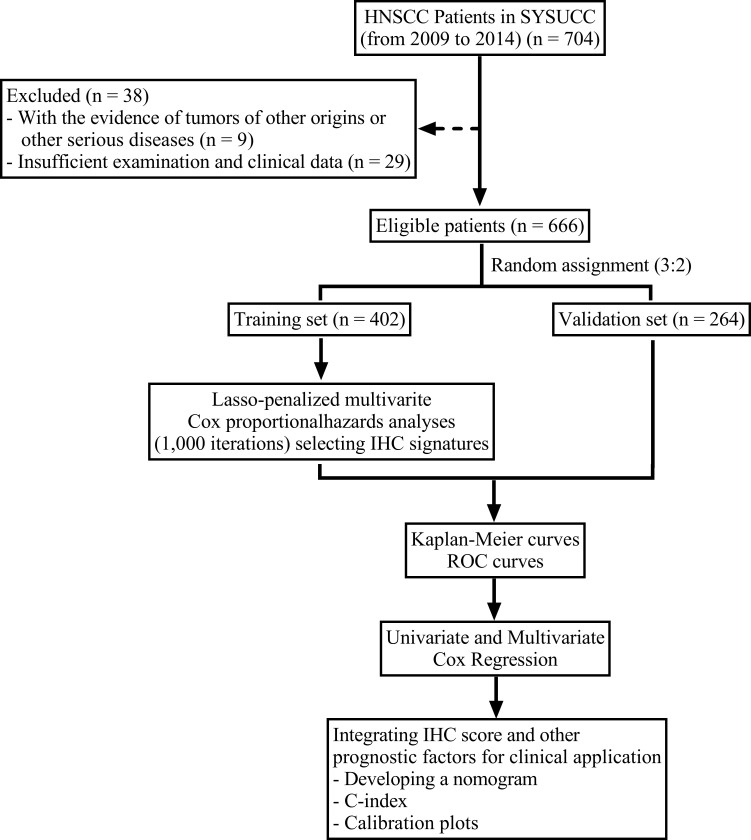
Data on 402 HNSCC cases were collected, the glmnet Cox proportional hazards model was used, risk factors were analyzed for predicting the prognosis of survival, and the IHC score was established. We used the IHC score to predict disease-free survival (DFS) using training and independent validation cohorts, including 264 cases in total. Additionally, the accuracy of the IHC score and the TNM system (8 edition) was compared. A DFS prediction nomogram was established by combining the prognostic factors.
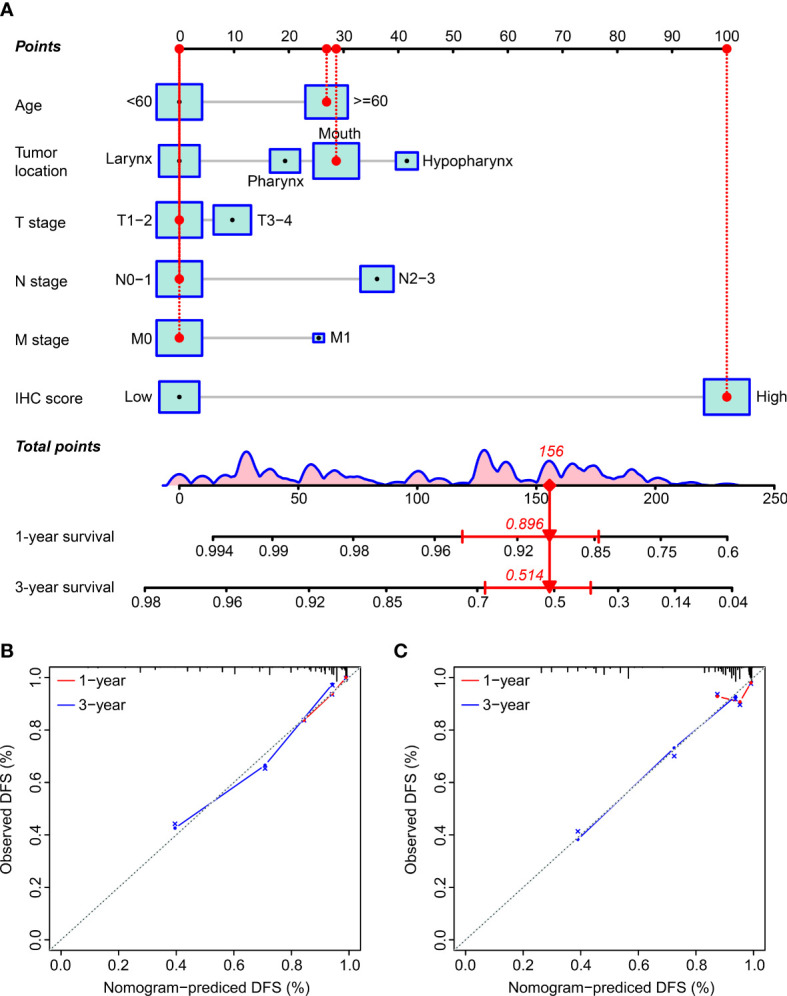
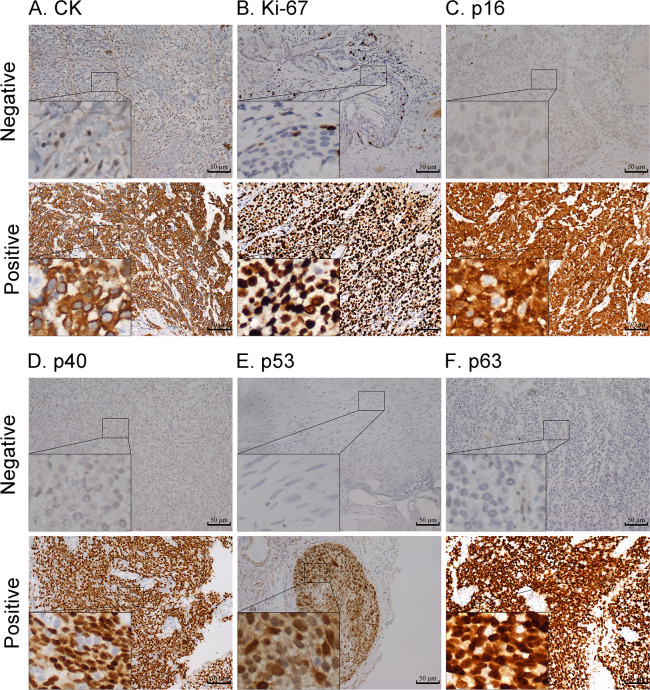
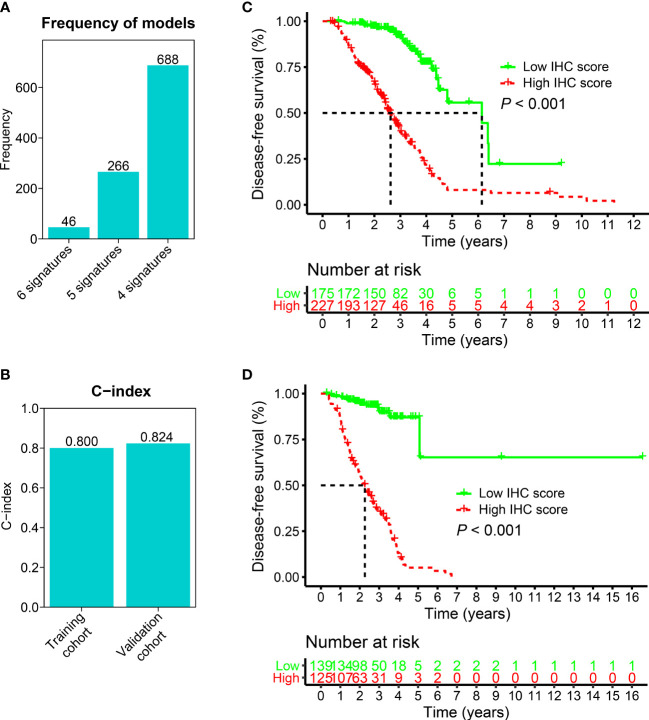
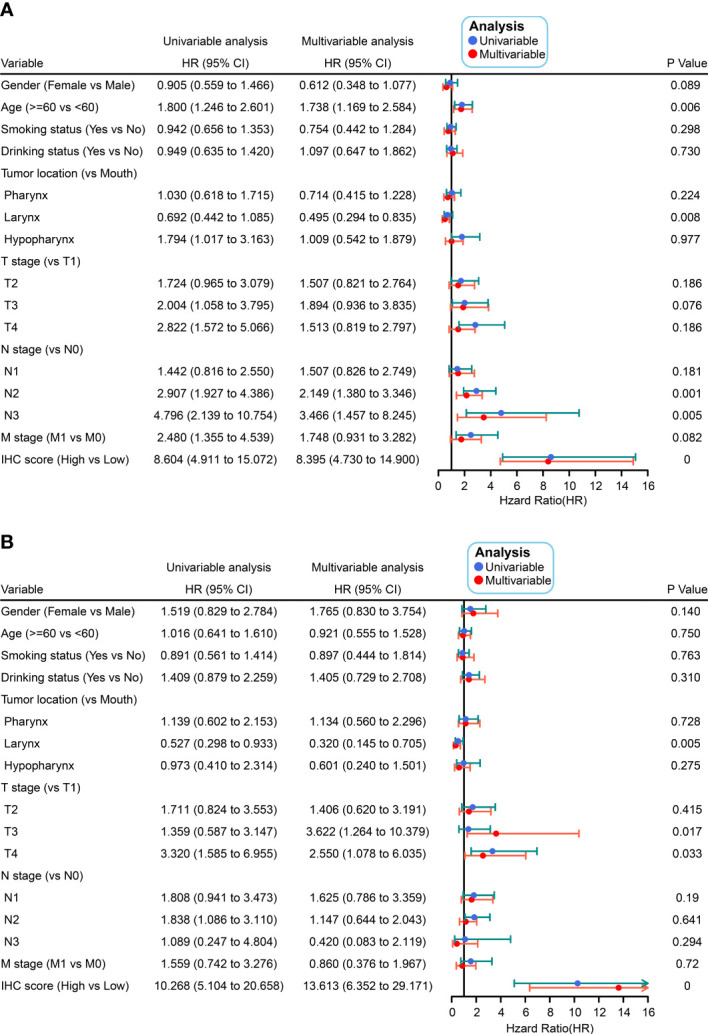
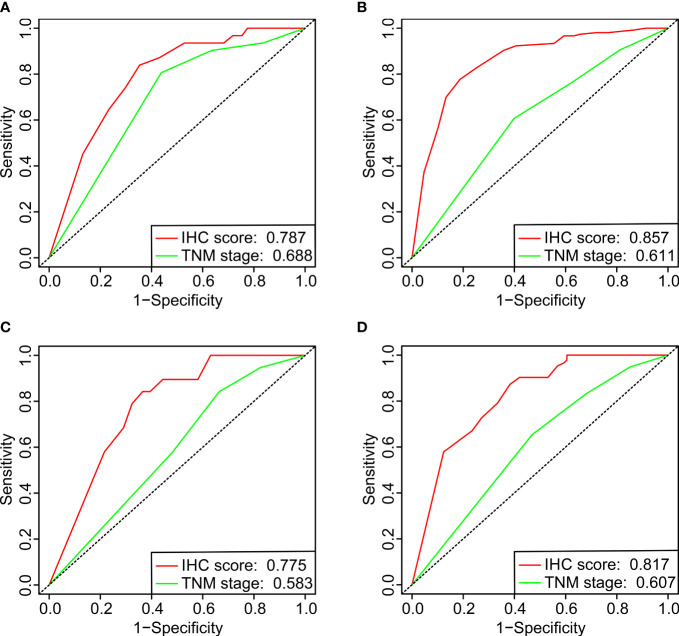
The IHC scores included CK, Ki-67, p16, and p40 staining intensity. The concordance index and the Kaplan-Meier survival analysis showed that the IHC scores had high predictive power for HNSCC. Our results showed that the IHC score is an independent factor that can predict prognosis in a multivariate Cox regression analysis. When predicting DFS, the IHC score had a significantly higher value for the area under the ROC curve (AUC) than that of the TNM system. A nomogram was established and included the IHC score, age, tumor location, and the TNM stage. The calibration curves exhibited high consistency between the prognosis predicted by our nomogram and the actual prognosis.
The IHC score was more accurate than the eighth edition of the TNM system in predicting HNSCC prognosis. Therefore, combining the two methods can facilitate individualized patient consultation and care.
头颈部鳞状细胞癌(HNSCC)在全球所有癌症中发病率排名第六,其预后不良、死亡率高、侵袭性强。本研究旨在建立一种基于免疫组织化学(IHC)评分的预后预测模型。
收集了 402 例 HNSCC 病例数据,使用 glmnet Cox 比例风险模型分析预测生存预后的风险因素,并建立 IHC 评分。使用 IHC 评分在训练和独立验证队列(共 264 例)中预测无病生存(DFS),比较 IHC 评分和 TNM 系统(第 8 版)的准确性。通过联合预后因素建立 DFS 预测列线图。
IHC 评分包括 CK、Ki-67、p16 和 p40 的染色强度。一致性指数和 Kaplan-Meier 生存分析表明,IHC 评分对头颈部鳞状细胞癌具有较高的预测能力。多因素 Cox 回归分析显示,IHC 评分是独立的预后因素。在预测 DFS 时,IHC 评分的 AUC 值明显高于 TNM 系统。建立了一个包含 IHC 评分、年龄、肿瘤位置和 TNM 分期的列线图。校准曲线显示,我们的列线图预测的预后与实际预后具有高度一致性。
与第 8 版 TNM 系统相比,IHC 评分在预测 HNSCC 预后方面更准确。因此,联合两种方法可以为患者的个体化咨询和护理提供便利。