
让男性参与计划生育:对低收入和中等收入国家复杂干预措施的有效组成部分和特征的系统评价。
Involving men and boys in family planning: A systematic review of the effective components and characteristics of complex interventions in low- and middle-income countries.
作者信息
Aventin Áine, Robinson Martin, Hanratty Jennifer, Keenan Ciara, Hamilton Jayne, McAteer Eimear Ruane, Tomlinson Mark, Clarke Mike, Okonofua Friday, Bonell Chris, Lohan Maria
机构信息
Queen's University Belfast Belfast Northern Ireland.
University College Cork Cork Ireland.
出版信息
Campbell Syst Rev. 2023 Jan 13;19(1):e1296. doi: 10.1002/cl2.1296. eCollection 2023 Mar.
BACKGROUND
Involving men and boys as both users and supporters of Family Planning (FP) is now considered essential for optimising maternal and child health outcomes. Evidence on how to engage men and boys to meet FP needs is therefore important.
OBJECTIVES
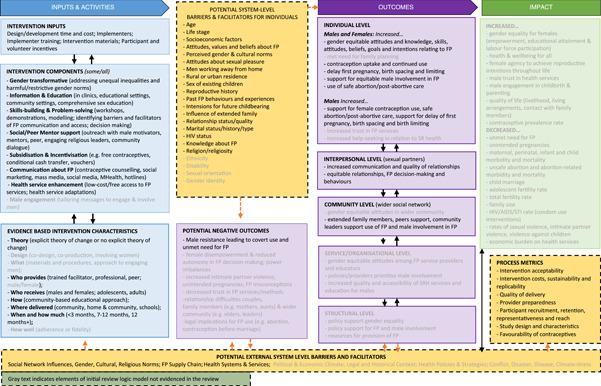
The main objective of this review was to assess the strength of evidence in the area and uncover the effective components and critical process- and system-level characteristics of successful interventions.
SEARCH METHODS
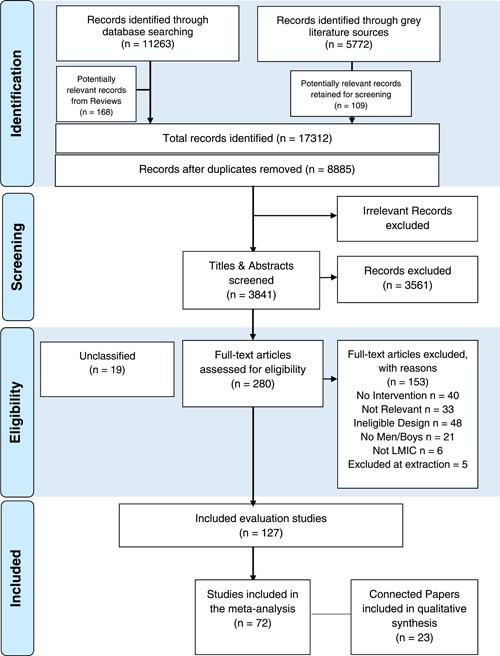
We searched nine electronic databases, seven grey literature databases, organisational websites, and the reference lists of systematic reviews relating to FP. To identify process evaluations and qualitative papers associated with the included experimental studies, we used and hand searches of reference lists.
SELECTION CRITERIA
Experimental and quasi-experimental studies of behavioural and service-level interventions involving males aged 10 years or over in low- and middle-income countries to increase uptake of FP methods were included in this review.
DATA COLLECTION AND ANALYSIS
Methodology was a causal chain analysis involving the development and testing of a logic model of intervention components based on stakeholder consultation and prior research. Qualitative and quantitative data relating to the evaluation studies and interventions were extracted based on the principles of 'effectiveness-plus' reviews. Quantitative analysis was undertaken using r with robust variance estimation (RVE), meta-analysis and meta-regression. Qualitative analysis involved 'best fit' framework synthesis.
RESULTS
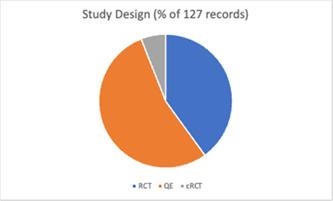
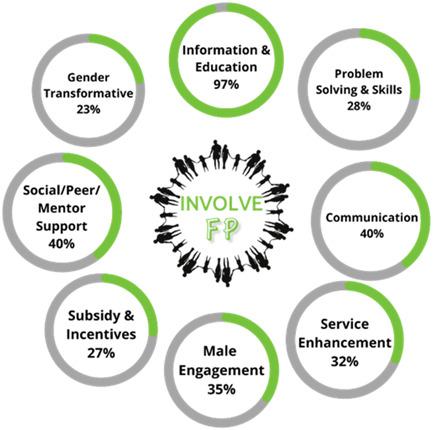
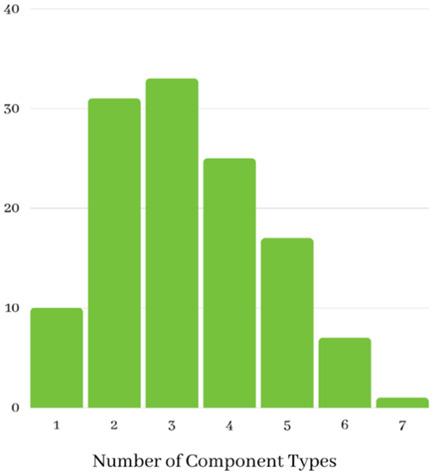
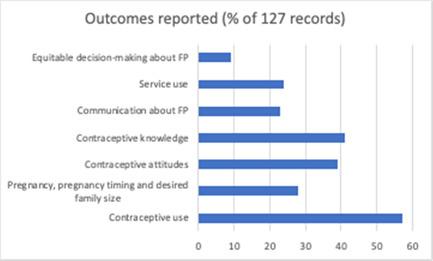
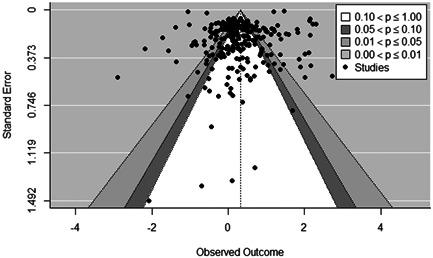
We identified 8885 potentially relevant records and included 127 in the review. Fifty-nine (46%) of these were randomised trials, the remainder were quasi-experimental studies with a comparison group. Fifty-four percent of the included studies were assessed as having a high risk of bias. A meta-analysis of 72 studies ( = 265) showed that the included group of interventions had statistically significantly higher odds of improving contraceptive use when compared to comparison groups (odds ratio = 1.38, confidence interval = 1.21 to 1.57, prediction interval = 0.36 to 5.31, < 0.0001), but there were substantial variations in the effect sizes of the studies ( = 40,647, df = 264, < 0.0001; = 98%) and 73% was within cluster/study. Multi-variate meta-regression revealed several significant intervention delivery characteristics that moderate contraceptive use. These included community-based educational FP interventions, interventions delivered to women as well as men and interventions delivered by trained facilitators, professionals, or peers in community, home and community, or school settings. None of the eight identified intervention components or 33 combinations of components were significant moderators of effects on contraceptive use. Qualitative analysis highlighted some of the barriers and facilitators of effective models of FP that should be considered in future practice and research.
AUTHORS' CONCLUSIONS: FP interventions that involve men and boys alongside women and girls are effective in improving uptake and use of contraceptives. The evidence suggests that policy should continue to promote the involvement of men and boys in FP in ways that also promote gender equality. Recommendations for research include the need for evaluations during conflict and disease outbreaks, and evaluation of gender transformative interventions which engage men and boys as contraceptive users and supporters in helping to achieve desired family size, fertility promotion, safe conception, as well as promoting equitable family planning decision-making for women and girls.
背景
让男性和男孩既作为计划生育(FP)的使用者又作为支持者参与进来,现在被认为对于优化母婴健康结果至关重要。因此,关于如何促使男性和男孩满足计划生育需求的证据很重要。
目的
本综述的主要目的是评估该领域证据的强度,并揭示成功干预措施的有效组成部分以及关键的过程和系统层面特征。
检索方法
我们检索了九个电子数据库、七个灰色文献数据库、组织网站以及与计划生育相关的系统评价的参考文献列表。为了识别与纳入的实验研究相关的过程评价和定性论文,我们使用了并对参考文献列表进行了手工检索。
入选标准
本综述纳入了在低收入和中等收入国家对10岁及以上男性进行的行为和服务层面干预的实验性和准实验性研究,以提高计划生育方法的采用率。
数据收集与分析
方法是因果链分析,包括基于利益相关者咨询和先前研究开发和测试干预组成部分的逻辑模型。基于“有效性加”综述的原则,提取与评价研究和干预措施相关的定性和定量数据。使用带有稳健方差估计(RVE)的R进行定量分析、荟萃分析和元回归。定性分析涉及“最佳拟合”框架综合。
结果
我们识别出8885条潜在相关记录,其中127条纳入了综述。其中59项(46%)为随机试验,其余为有对照组的准实验研究。纳入研究的54%被评估为存在高偏倚风险。对72项研究(n = 265)的荟萃分析表明,与对照组相比,纳入的干预组在改善避孕措施使用方面具有统计学显著更高的优势比(优势比 = 1.38,置信区间 = 1.21至1.57,预测区间 = 0.36至5.31,P < 0.0001),但研究的效应大小存在很大差异(I² = 40,647,df = 264,P < 0.0001;τ² = 98%),且73%在聚类/研究内。多变量元回归揭示了几个影响避孕措施使用的显著干预实施特征。这些包括基于社区的计划生育教育干预、针对女性以及男性的干预,以及由经过培训的促进者、专业人员或社区、家庭和社区或学校环境中的同伴实施的干预。确定的八个干预组成部分或33种组成部分组合中,没有一个是对避孕措施使用影响的显著调节因素。定性分析突出了一些有效计划生育模式的障碍和促进因素,这些应在未来的实践和研究中加以考虑。
作者结论
让男性和男孩与女性和女孩一起参与的计划生育干预措施在提高避孕措施的采用和使用方面是有效的。证据表明,政策应继续以促进性别平等的方式推动男性和男孩参与计划生育。研究建议包括在冲突和疾病爆发期间进行评估的必要性,以及对性别变革性干预措施的评估,这些干预措施让男性和男孩作为避孕使用者和支持者,以帮助实现期望的家庭规模、促进生育、安全受孕,以及促进女性和女孩的公平计划生育决策。
 Zotero 插件