Department of Cultural Heritage (DBC), University of Padova, Piazza Capitaniato 7, 35139, Padua, Italy.
Inter, Departmental Research Centre for the Study of Cement Materials and Hydraulic Binders (CIRCe), University of Padova, Via Giovanni Gradenigo 6, 35131, Padua, Italy.
Sci Rep. 2023 Mar 13;13(1):4110. doi: 10.1038/s41598-023-30692-y.
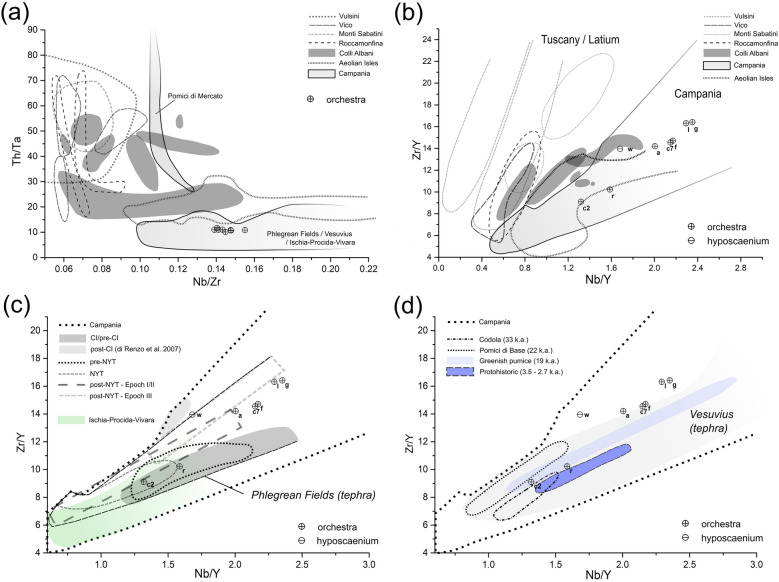
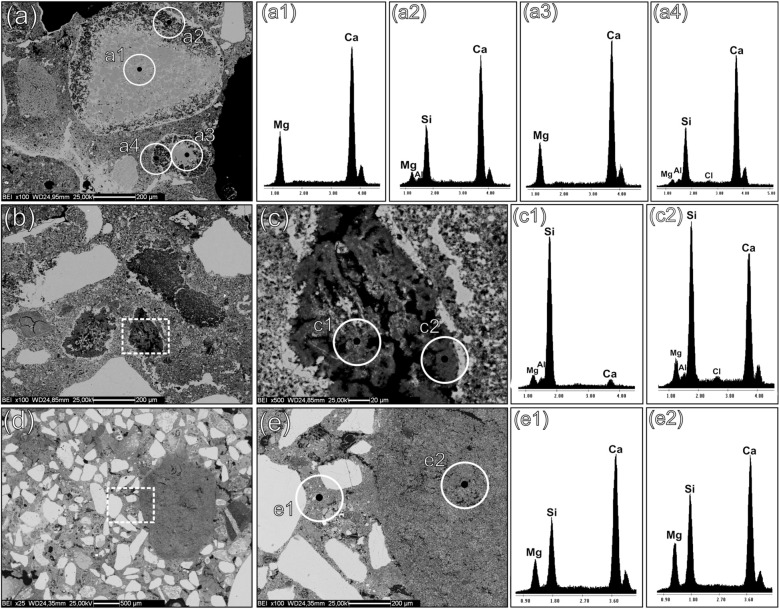
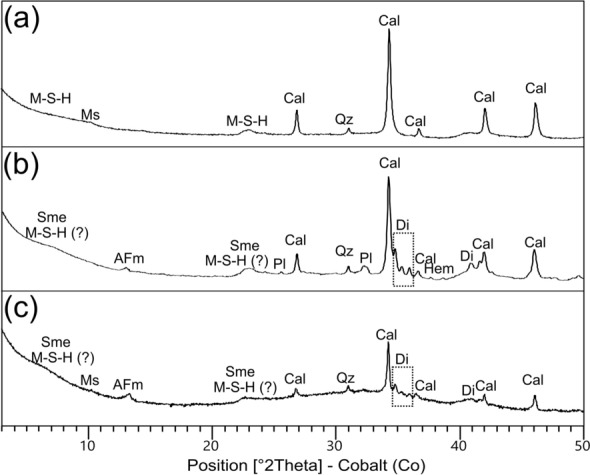
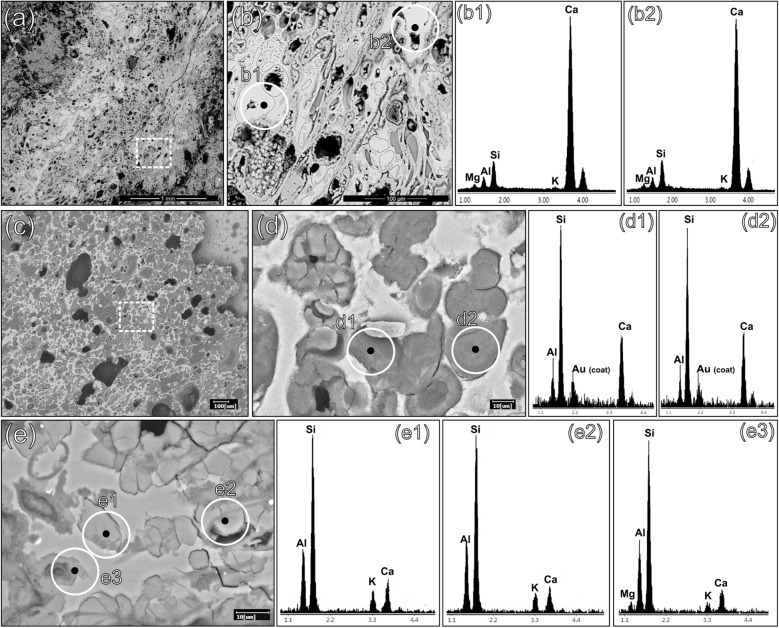
The paper reports the results of the analyses on mortar-based materials from the Roman theatre of Aquileia (Friuli Venezia Giulia, Northern Italy), recently dated between the mid-1st Century BCE and the mid-1st Century CE. Samples were characterized by Polarized Light Microscopy on thin sections (PLM), Scanning Electron Microscopy with Energy Dispersive Spectroscopy (SEM-EDS) and Quantitative Phase Analysis by X-Ray Powder Diffraction (QPA-XRPD). Pyroclastic aggregates (mainly pumices and scattered tuffs), incompatible with the regional geology, were found in two samples from the preparation layers of the ground floor of the building. Their provenance was determined by means of QPA-XRPD, SEM-EDS, X-Ray Fluorescence (XRF) and Laser-Ablation Inductively-Coupled-Plasma Mass-Spectrometry (LA-ICP-MS). Mineralogical and geochemical analyses demonstrated their provenance from the Bay of Naples, thus recognizing them as pulvis puteolana, a type of pozzolanic aggregate outcropping around the modern town of Pozzuoli and prescribed by Vitruvius (De Architectura, 2.6.1) in mortar-based materials to strengthen masonries and produce hydraulic concrete for harbor piers. This evidence represents the oldest analytically-established case of pulvis puteolana exploitation in Northern Italy up to now, and an early use of the material out of Campania adapted for civil constructions in a non-strictly maritime-related environment. Indeed, the theatre was built in the low-lying Aquileia's deltaic plain, prone to water infiltrations that are typical in lagoon-like environments. The data highlight the craftsmen's resilience in adapting and reinterpreting the traditional use of the Neapolitan volcanic materials to deal with the geomorphological challenges of Aquileia's lowland.
本文报告了对来自意大利东北部弗留利-威尼斯朱利亚地区的罗马剧场的基于灰浆的材料进行分析的结果。这些样本最近的年代测定在公元前 1 世纪中期到公元 1 世纪中期之间。对薄片进行偏光显微镜分析(PLM)、扫描电子显微镜与能量色散光谱分析(SEM-EDS)以及 X 射线粉末衍射的定量相分析(QPA-XRPD)对样品进行了分析。在建筑物底层的准备层的两个样本中发现了与区域地质不相符的火山碎屑骨料(主要是浮石和分散的凝灰岩)。通过 QPA-XRPD、SEM-EDS、X 射线荧光(XRF)和激光烧蚀电感耦合等离子体质谱(LA-ICP-MS)确定了它们的来源。矿物学和地球化学分析表明它们的来源是那不勒斯湾,因此它们被认定为火山灰,这是一种在现代波佐利镇周围露头的火山灰骨料,维特鲁威(De Architectura,2.6.1)在基于灰浆的材料中规定使用这种骨料来加固砌体并为码头桥墩生产水工混凝土。这一证据代表了迄今为止在意大利北部最早分析确定的火山灰利用案例,也是该材料在那不勒斯以外地区的早期使用,适应了非严格与航海相关的环境中的民用建筑。事实上,该剧院建在地势低洼的阿奎莱亚三角洲平原上,容易受到水的渗透,这种情况在泻湖式环境中很常见。这些数据突出了工匠们的适应能力和对传统使用那不勒斯火山材料的重新诠释,以应对阿奎莱亚低地的地貌挑战。