Department of Pharmaceutical Chemistry, University of California, San Francisco, CA, USA.
Department of Molecular Genetics and Microbiology, Duke University, Durham, NC, USA.
Nature. 2023 Mar;615(7953):742-749. doi: 10.1038/s41586-023-05798-y. Epub 2023 Mar 15.
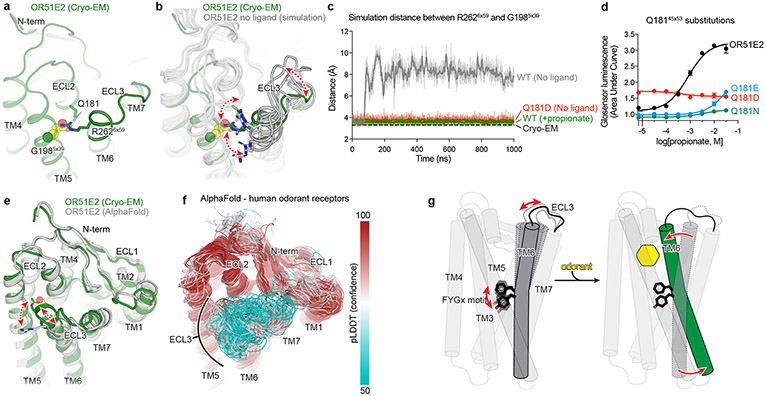
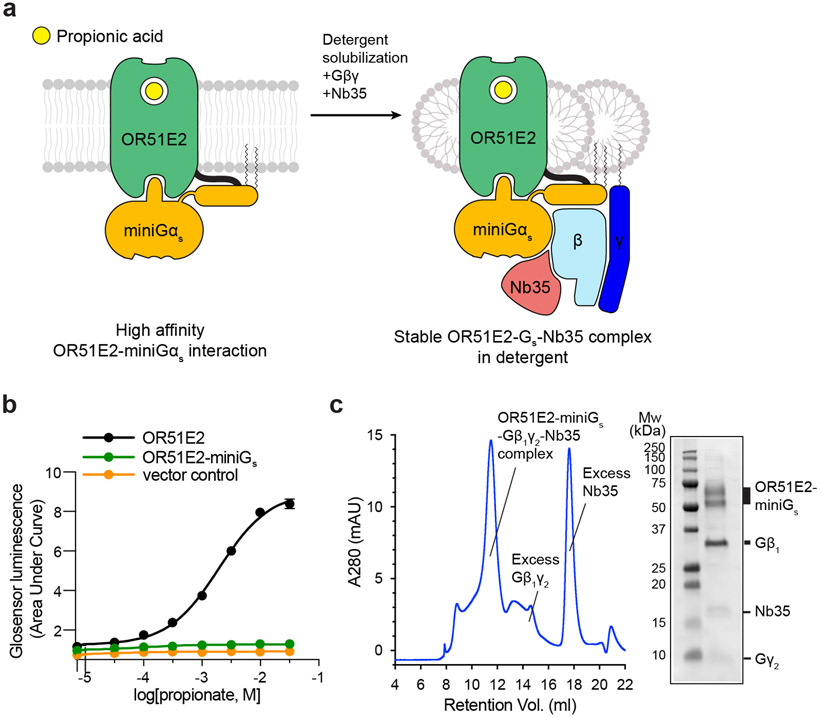
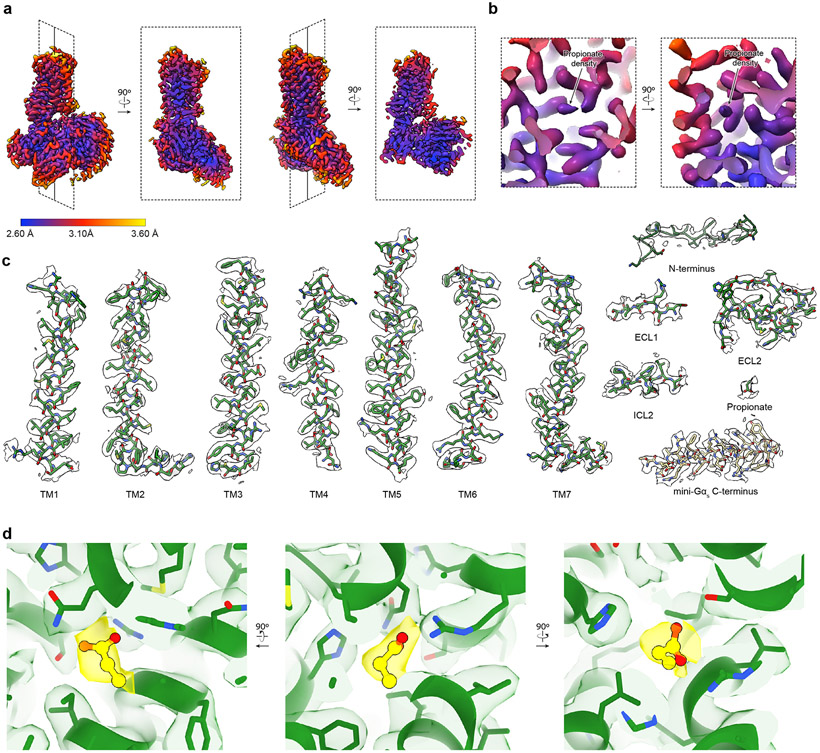
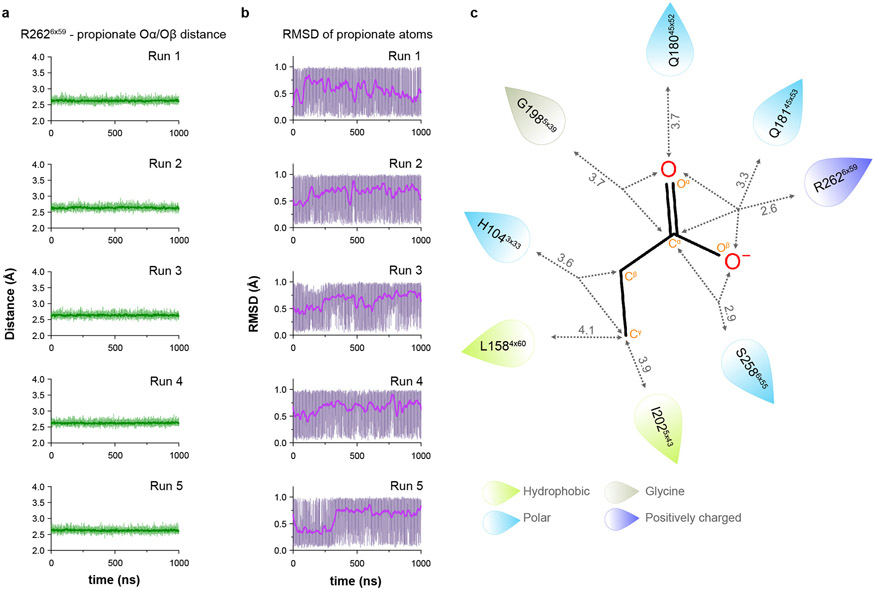
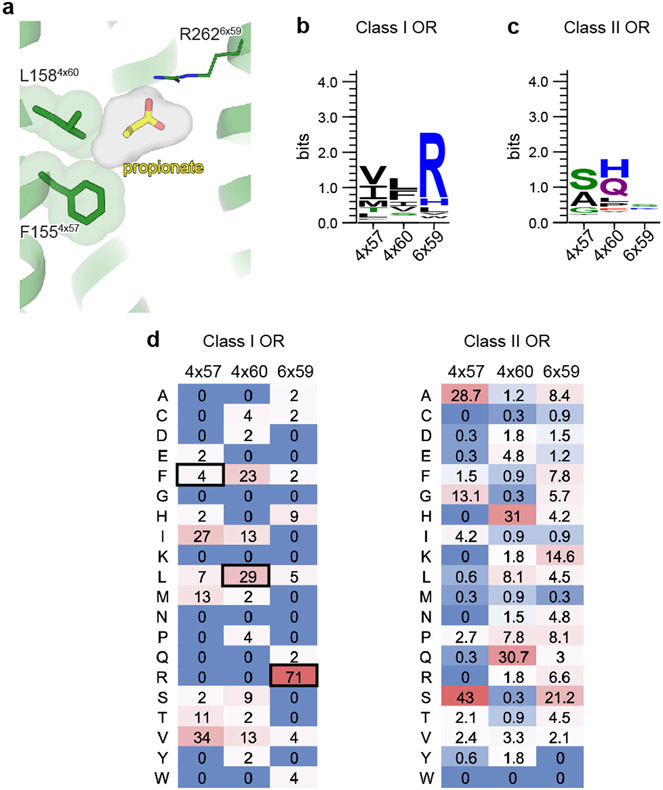
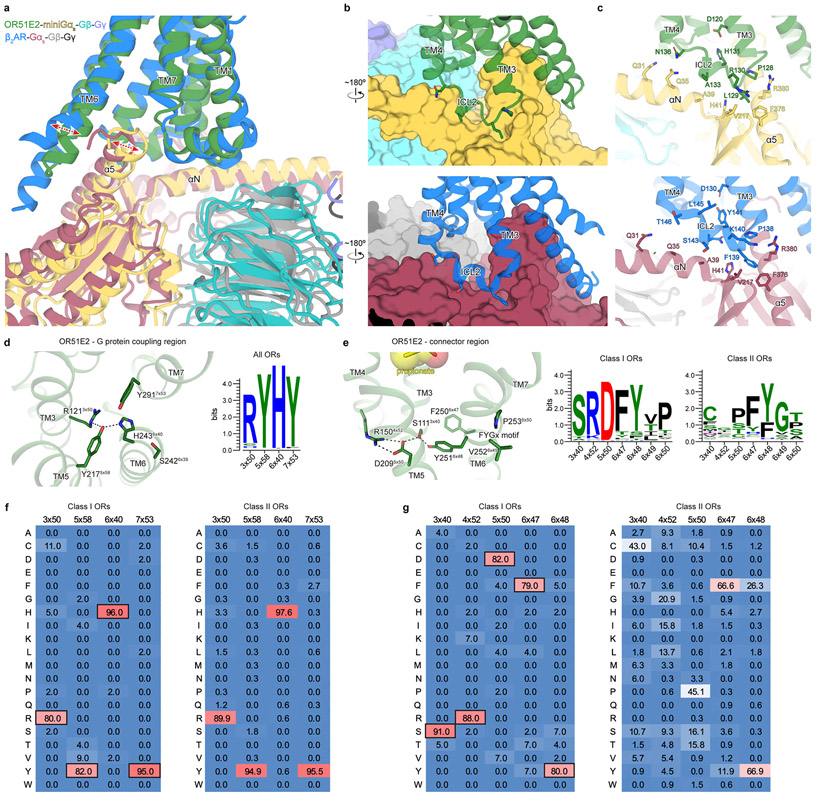
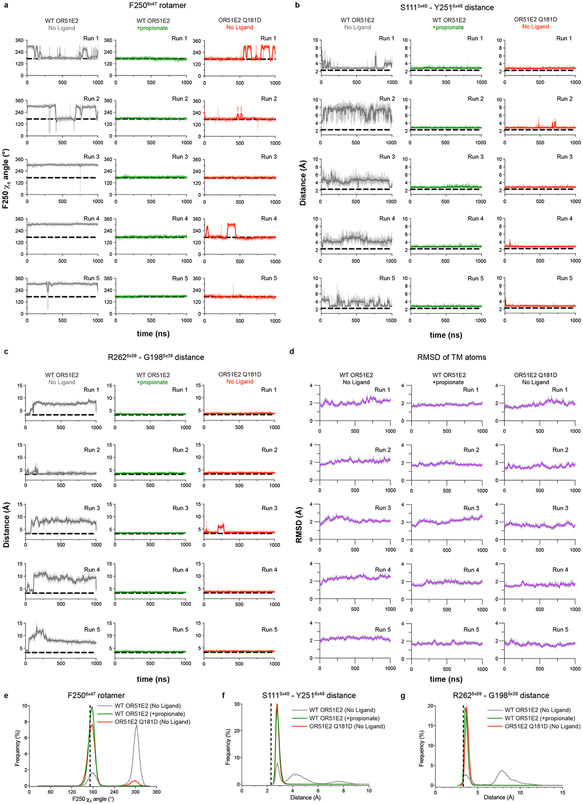
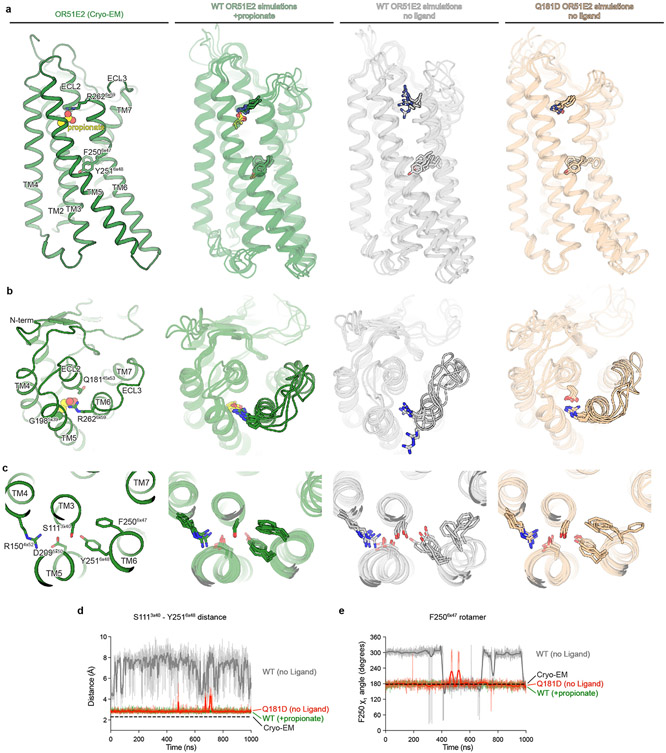
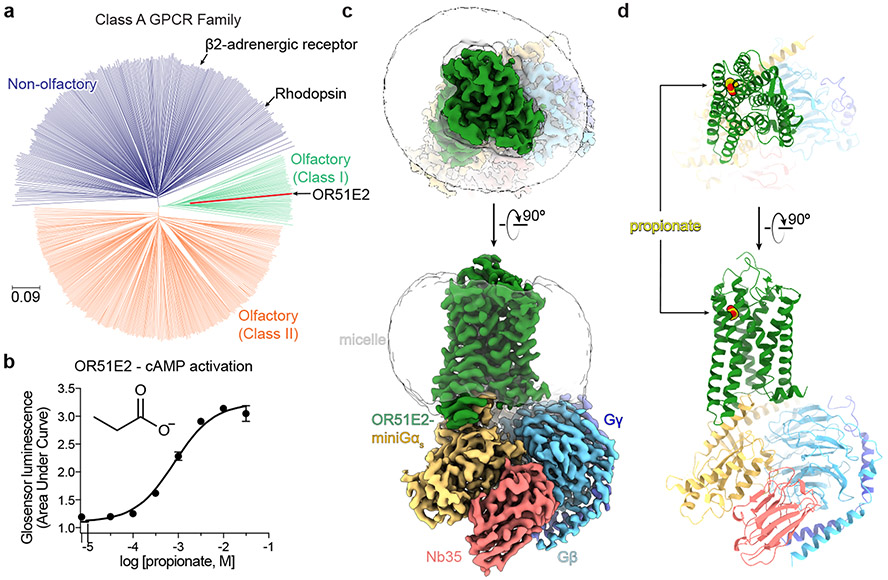
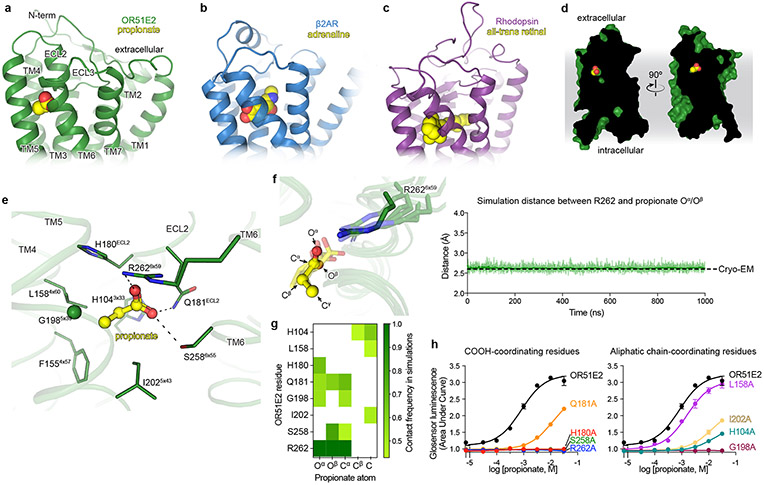
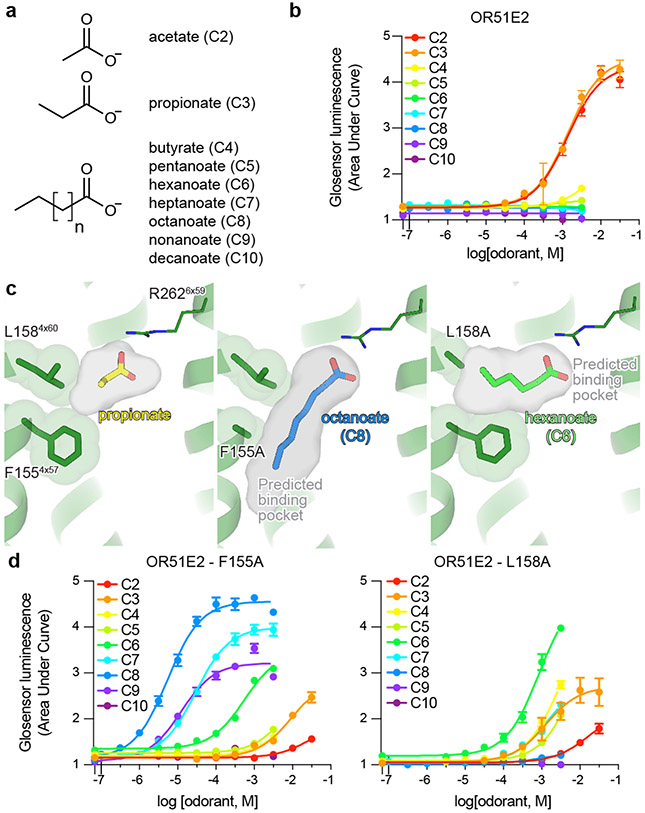
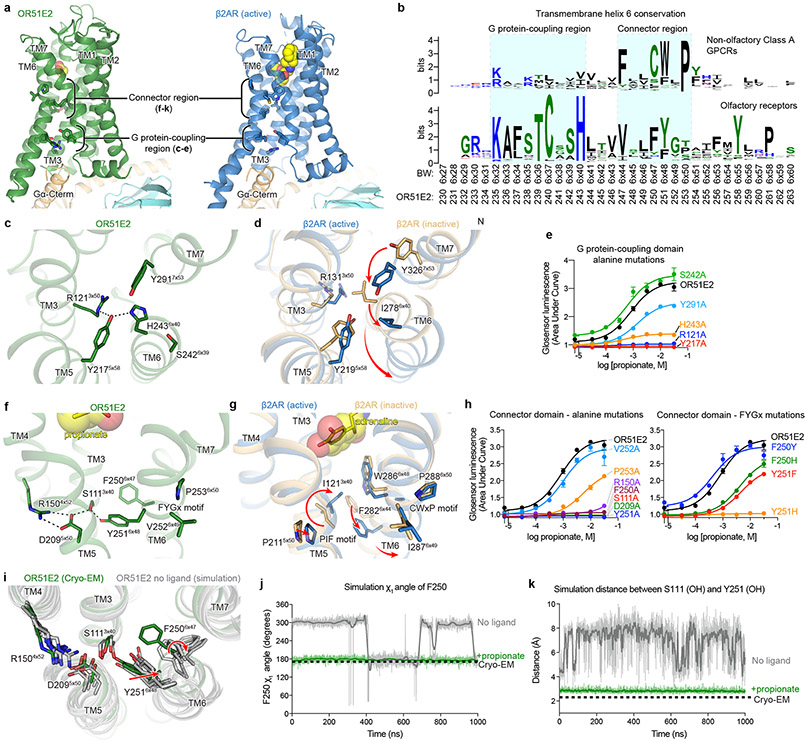
Our sense of smell enables us to navigate a vast space of chemically diverse odour molecules. This task is accomplished by the combinatorial activation of approximately 400 odorant G protein-coupled receptors encoded in the human genome. How odorants are recognized by odorant receptors remains unclear. Here we provide mechanistic insight into how an odorant binds to a human odorant receptor. Using cryo-electron microscopy, we determined the structure of the active human odorant receptor OR51E2 bound to the fatty acid propionate. Propionate is bound within an occluded pocket in OR51E2 and makes specific contacts critical to receptor activation. Mutation of the odorant-binding pocket in OR51E2 alters the recognition spectrum for fatty acids of varying chain length, suggesting that odorant selectivity is controlled by tight packing interactions between an odorant and an odorant receptor. Molecular dynamics simulations demonstrate that propionate-induced conformational changes in extracellular loop 3 activate OR51E2. Together, our studies provide a high-resolution view of chemical recognition of an odorant by a vertebrate odorant receptor, providing insight into how this large family of G protein-coupled receptors enables our olfactory sense.
我们的嗅觉使我们能够在充满化学多样性的气味分子的广阔空间中导航。这项任务是通过大约 400 种嗅觉 G 蛋白偶联受体的组合激活来完成的,这些受体编码在人类基因组中。气味如何被嗅觉受体识别仍然不清楚。在这里,我们提供了一种机制上的见解,说明气味如何与人类嗅觉受体结合。使用冷冻电子显微镜,我们确定了与脂肪酸丙酸结合的活性人类嗅觉受体 OR51E2 的结构。丙酸结合在 OR51E2 的一个封闭口袋内,并与受体激活至关重要的特定接触。OR51E2 中气味结合口袋的突变改变了对不同链长脂肪酸的识别谱,这表明气味选择性是由气味和气味受体之间的紧密包装相互作用控制的。分子动力学模拟表明,丙酸诱导的细胞外环 3 的构象变化激活了 OR51E2。总之,我们的研究提供了一个脊椎动物嗅觉受体对气味进行化学识别的高分辨率视图,深入了解了这个庞大的 G 蛋白偶联受体家族如何使我们的嗅觉感知成为可能。