The Wistar Institute, Philadelphia, Pennsylvania.
ICC, Early Oncology R&D, AstraZeneca, Cambridge, United Kingdom.
Cancer Res Commun. 2023 Mar 13;3(3):420-430. doi: 10.1158/2767-9764.CRC-22-0368. eCollection 2023 Mar.
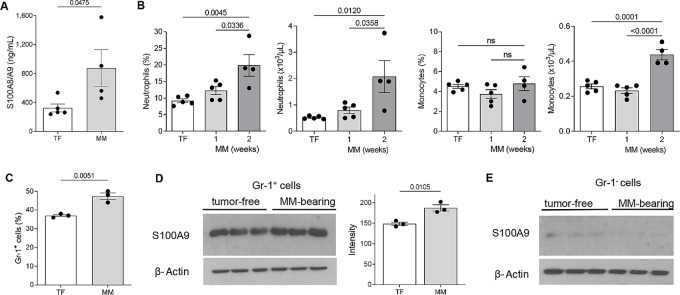
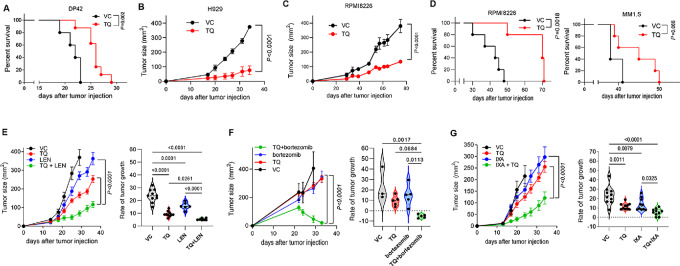
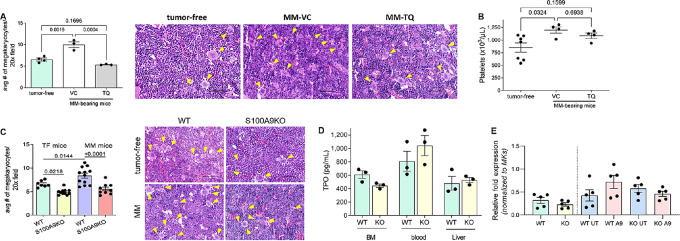
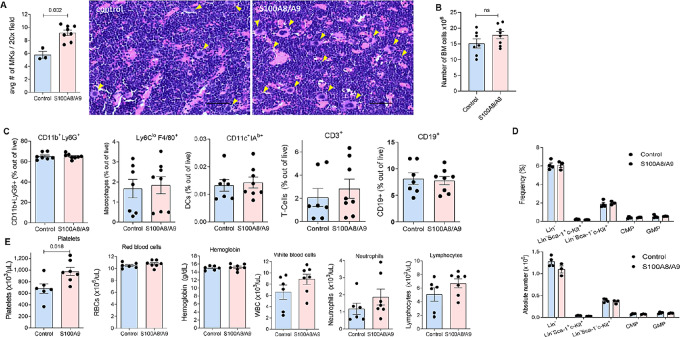
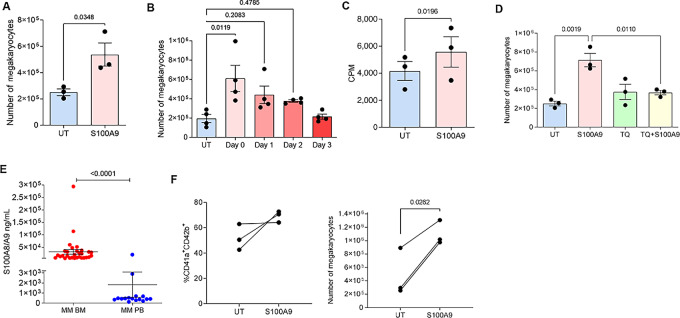
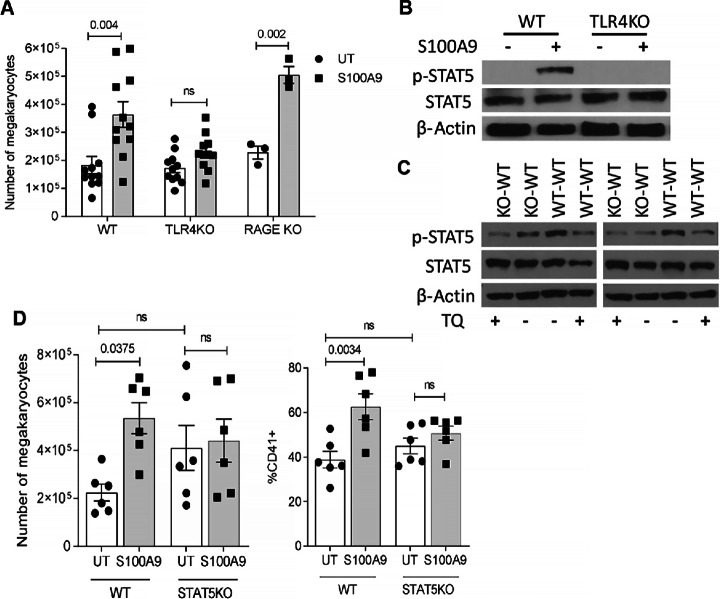
Multiple myeloma is characterized by clonal proliferation of plasma cells that accumulate preferentially in the bone marrow (BM). The tumor microenvironment is one of the leading factors that promote tumor progression. Neutrophils and monocytes are a major part of the BM tumor microenvironment, but the mechanism of their contribution to multiple myeloma progression remains unclear. Here, we describe a novel mechanism by which S100A8/S100A9 proteins produced by BM neutrophils and monocytes promote the expansion of megakaryocytes supporting multiple myeloma progression. S100A8/S100A9 alone was not sufficient to drive megakaryopoiesis but markedly enhanced the effect of thrombopoietin, an effect that was mediated by Toll-like receptor 4 and activation of the STAT5 transcription factor. Targeting S100A9 with tasquinimod as a single agent and in combination with lenalidomide and with proteasome inhibitors has potent antimyeloma effect that is at least partly independent of the adaptive immune system. This newly identified axis of signaling involving myeloid cells and megakaryocytes may provide a new avenue for therapeutic targeting in multiple myeloma.
We identified a novel mechanism by which myeloid cells promote myeloma progression independently of the adaptive immune system. Specifically, we discovered a novel role of S100A8/S100A9, the most abundant proteins produced by neutrophils and monocytes, in regulation of myeloma progression via promotion of the megakaryocyte expansion and angiogenesis. Tasquinimod, an inhibitor of S100A9, has potent antimyeloma effects as a single agent and in combination with lenalidomide and with proteasome inhibitors.
多发性骨髓瘤的特征是浆细胞克隆性增殖,这些浆细胞优先在骨髓(BM)中积累。肿瘤微环境是促进肿瘤进展的主要因素之一。中性粒细胞和单核细胞是 BM 肿瘤微环境的主要组成部分,但它们促进多发性骨髓瘤进展的机制尚不清楚。在这里,我们描述了一种新的机制,即 BM 中性粒细胞和单核细胞产生的 S100A8/S100A9 蛋白促进支持多发性骨髓瘤进展的巨核细胞的扩增。S100A8/S100A9 本身不足以驱动巨核细胞生成,但明显增强了血小板生成素的作用,这种作用是由 Toll 样受体 4 介导的,激活了 STAT5 转录因子。用 tasquinimod 作为单一药物靶向 S100A9,与 lenalidomide 和蛋白酶体抑制剂联合使用,具有很强的抗骨髓瘤作用,至少部分独立于适应性免疫系统。这个新发现的涉及髓样细胞和巨核细胞的信号传导轴可能为多发性骨髓瘤的治疗靶向提供新途径。
我们确定了髓样细胞独立于适应性免疫系统促进骨髓瘤进展的新机制。具体来说,我们发现了 S100A8/S100A9 的一个新作用,S100A8/S100A9 是中性粒细胞和单核细胞产生的最丰富的蛋白质,通过促进巨核细胞扩增和血管生成来调节骨髓瘤的进展。tasquinimod 是 S100A9 的抑制剂,作为单一药物和与 lenalidomide 以及蛋白酶体抑制剂联合使用具有很强的抗骨髓瘤作用。