McNeal Demetria M, Sahler Olle Jane Z, Noll Robert B, Fairclough Diane L, Voll Megan E, Bhat Shubha, Morrato Elaine H
Division of General Internal Medicine, University of Colorado School of Medicine, Aurora, CO, United States.
Adult and Child Consortium for Health Outcomes Research and Delivery Science, University of Colorado Anschutz Medical Campus, Aurora, CO, United States.
Front Health Serv. 2022 Nov 4;2:928580. doi: 10.3389/frhs.2022.928580. eCollection 2022.
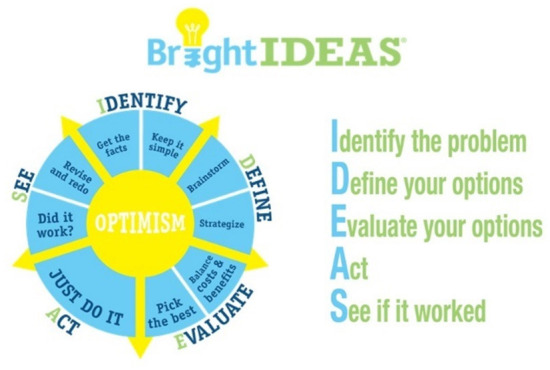
Despite efforts to widely disseminate interventions designed to increase access to quality supportive care to pediatric cancer patients and their families, many of these interventions fail to meet expectations once deployed in real-life clinical settings. This study identifies the functions and forms of Bright IDEAS: Problem-Solving Skills Training, an evidence based psychosocial intervention for caregivers of children recently diagnosed with cancer, to identify pragmatic program adaptations in its real-world clinical implementation. We compare intervention adoption before and after adaptations to the Bright IDEAS training program as part of a national training program designed to disseminate the intervention.
209 pediatric psychosocial oncology practitioners representing 134 unique institutions were trained during 10 in-person 8-hour workshops (2015-2019). Functions and forms of Bright IDEAS were identified, and adaptations made to the training agenda and curriculum based on practitioner feedback following implementation in local institutions. Mixed method evaluation included longitudinal surveys at 6- and 12-months post training; and qualitative interviews among a subgroup of practitioners ( = 47) to understand and compare perspectives on intervention adoption and barriers to implementation before and after adaptations to the Bright IDEAS training program. The RE-AIM framework was used to guide dissemination evaluation.
A total of four adaptations were tailored to the identified forms of the intervention: case studies; pre-training reading materials; training videos; and letters of institutional support from primary supervisor. Pre- and post-training adaptations to the Bright IDEAS training program were mapped to RE-AIM constructs. Quantitative findings demonstrate that adaptations appeared to improve adoption and usage overall.
This study provides insight into how contextual factors influence psychosocial practitioners' capacity to adopt, implement, and maintain Bright IDEAS in the clinical setting. This study demonstrates the use of real-time stakeholder feedback to guide intervention translation from research to practice settings.
尽管人们努力广泛传播旨在增加儿科癌症患者及其家庭获得优质支持性护理机会的干预措施,但其中许多干预措施在实际临床环境中实施后未能达到预期效果。本研究确定了“光明创意:解决问题技能培训”的功能和形式,这是一项针对近期被诊断患有癌症儿童的照料者的循证心理社会干预措施,以确定其在现实世界临床实施中的实用项目调整。作为一项旨在推广该干预措施的全国性培训项目的一部分,我们比较了对“光明创意”培训项目进行调整前后的干预措施采用情况。
在10次为期8小时的现场研讨会(2015 - 2019年)期间,对代表134个不同机构的209名儿科心理社会肿瘤学从业者进行了培训。确定了“光明创意”的功能和形式,并根据在当地机构实施后的从业者反馈对培训议程和课程进行了调整。混合方法评估包括培训后6个月和12个月的纵向调查;以及对一部分从业者(n = 47)进行定性访谈,以了解和比较对“光明创意”培训项目调整前后干预措施采用情况和实施障碍的看法。采用RE - AIM框架指导传播评估。
总共针对已确定的干预形式进行了四项调整:案例研究;培训前阅读材料;培训视频;以及来自主要监督者的机构支持信。对“光明创意”培训项目的培训前和培训后调整与RE - AIM结构进行了映射。定量研究结果表明,这些调整总体上似乎提高了采用率和使用率。
本研究深入了解了背景因素如何影响心理社会从业者在临床环境中采用、实施和维持“光明创意”的能力。本研究展示了利用实时利益相关者反馈来指导干预措施从研究环境向实践环境的转化。