Department of Medicine, Public Health Research Institute, Rutgers New Jersey Medical School, Newark, New Jersey, United States of America.
School of Medicine, Rutgers New Jersey Medical School, Newark, New Jersey, United States of America.
PLoS One. 2023 Mar 16;18(3):e0282708. doi: 10.1371/journal.pone.0282708. eCollection 2023.
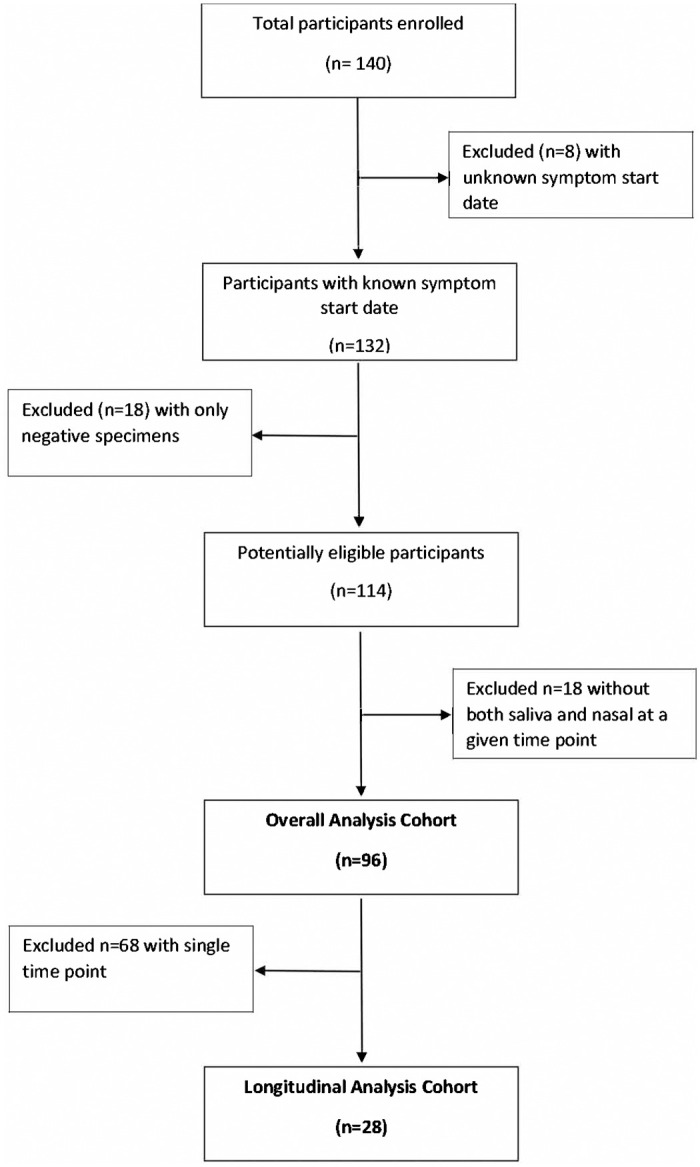
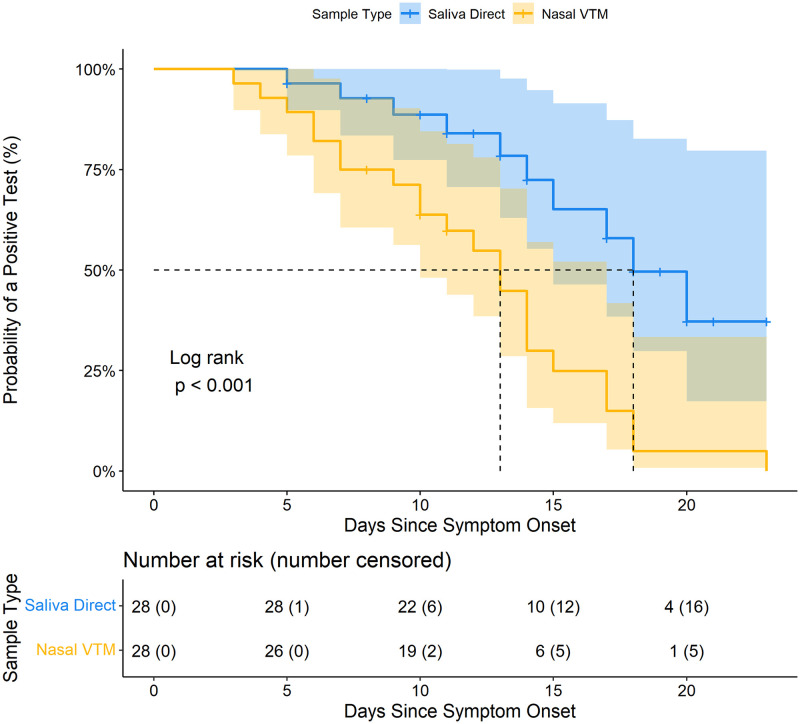
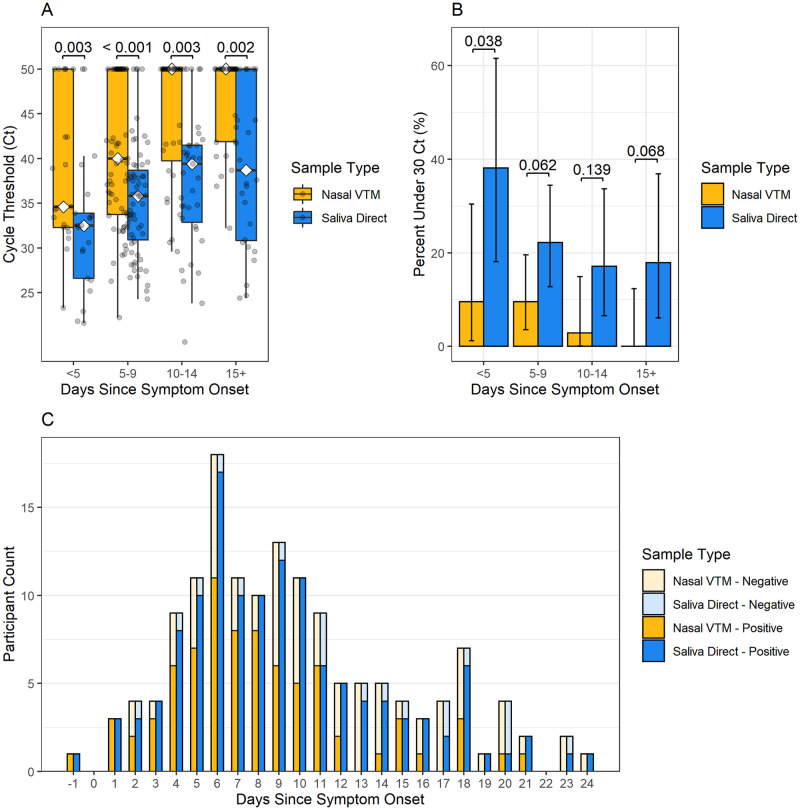
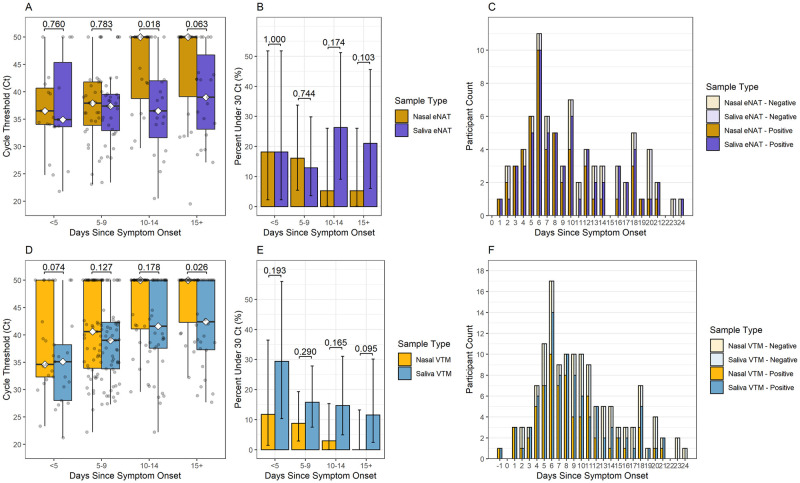
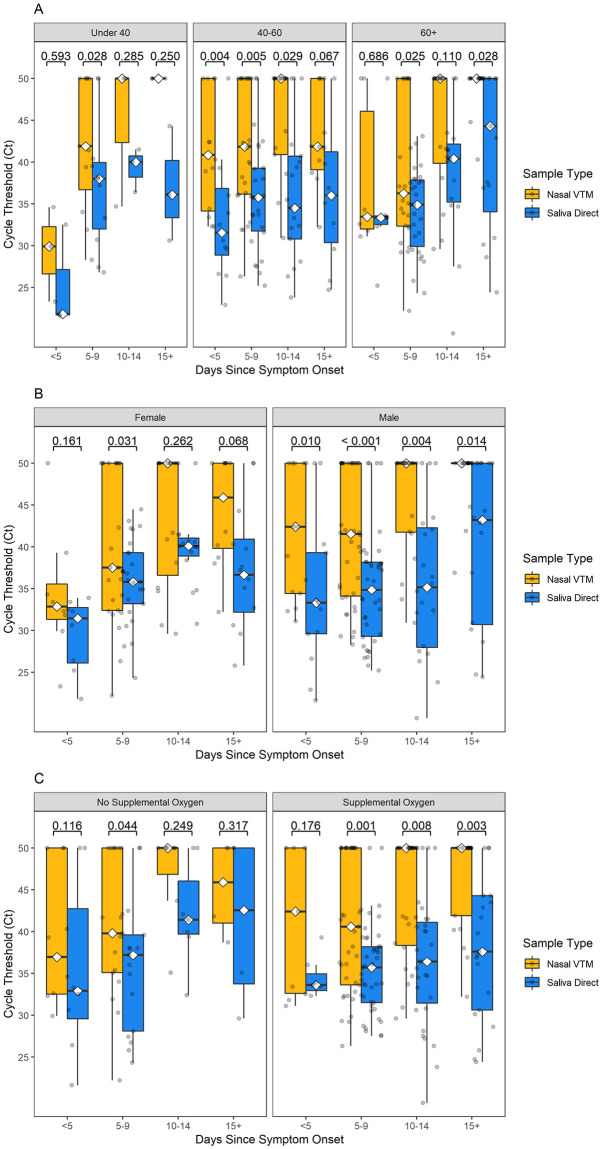
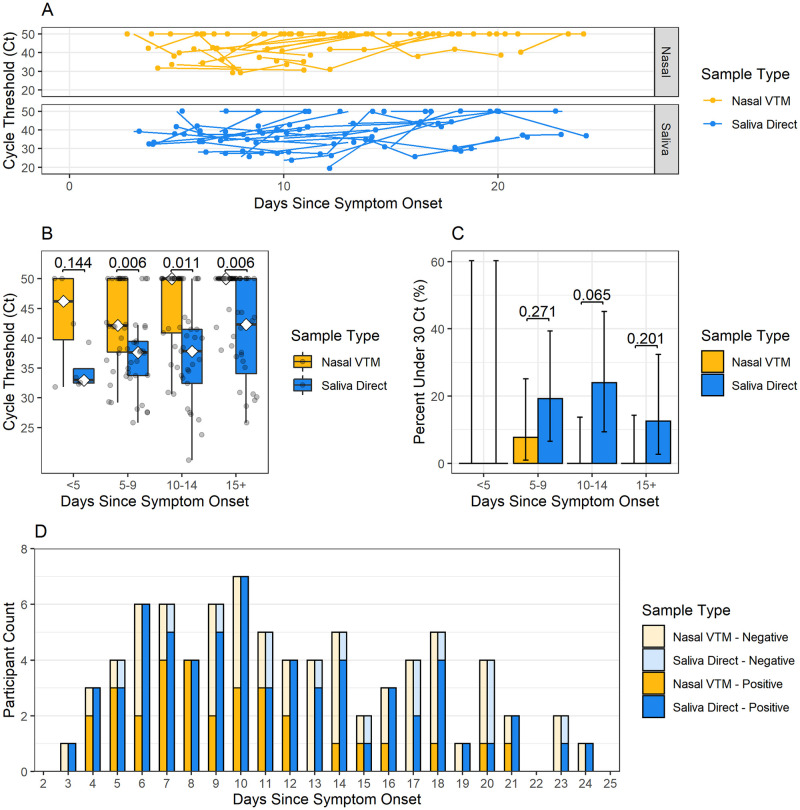
Saliva has been a COVID-19 diagnostic specimen of interest due to its simple collection, scalability, and yield. Yet COVID-19 testing and estimates of the infectious period remain largely based on nasopharyngeal and nasal swabs. We sought to evaluate whether saliva testing captured prolonged presence of SARS-CoV-2 and potential infectiousness later in the disease course. We conducted an observational study of symptomatic COVID-19 patients at University Hospital in Newark, NJ. Paired saliva and nasal specimens from 96 patients were analyzed, including longitudinal analysis of paired observations from 28 of these patients who had multiple time-points. Saliva detected significantly more cases of COVID-19 beyond 5 days (86.1% [99/115] saliva vs 48.7% [56/115] nasal, p-value < 0.001), 9 days (79.4% [50/63] saliva vs 36.5% [23/63] nasal, p-value < 0.001) and 14 days (71.4% [20/28] saliva vs 32.1% [9/28] nasal, p-value = 0.010) of symptoms. Additionally, saliva yielded lower cycle thresholds across all time periods, indicative of higher viral loads in saliva. In the longitudinal analysis, a log-rank analysis indicated that the survival curve for saliva was significantly different from the curve for nasal swabs (p<0.001) with a median survival time for saliva of 18 days compared to 13 days for nasal swabs. We additionally performed saliva viral cultures among a similar COVID-19 patient cohort and noted patients with positive saliva viral cultures between 7 to 28 days of symptoms. Findings from this study suggest that SARS-CoV-2 RNA persists longer and in higher abundance in saliva compared to nasal swabs, with potential of prolonged propagating virus. Testing saliva may thus increase yield for detecting potentially infectious virus even beyond the first five days of symptomatic COVID-19.
唾液一直是 COVID-19 诊断标本的研究重点,因为其采集方便、可扩展性强、产量高。然而,COVID-19 的检测和感染期的估计仍然主要基于鼻咽和鼻腔拭子。我们试图评估唾液检测是否能在疾病后期更长时间地检测到 SARS-CoV-2 并检测到潜在的传染性。我们在新泽西州纽瓦克大学医院进行了一项针对有症状 COVID-19 患者的观察性研究。对 96 名患者的唾液和鼻腔样本进行了分析,包括对 28 名有多个时间点的患者的配对观察进行了纵向分析。唾液检测到 COVID-19 的病例明显多于 5 天(86.1%[95/115]唾液 vs 48.7%[56/115]鼻腔,p 值<0.001)、9 天(79.4%[50/63]唾液 vs 36.5%[23/63]鼻腔,p 值<0.001)和 14 天(71.4%[20/28]唾液 vs 32.1%[9/28]鼻腔,p 值=0.010)。此外,唾液在所有时间段的循环阈值都较低,表明唾液中的病毒载量较高。在纵向分析中,对数秩分析表明,唾液的生存曲线与鼻腔拭子的曲线显著不同(p<0.001),唾液的中位生存时间为 18 天,而鼻腔拭子的中位生存时间为 13 天。我们还在类似的 COVID-19 患者队列中进行了唾液病毒培养,并注意到在症状出现后 7 至 28 天之间有患者的唾液病毒培养阳性。这项研究的结果表明,与鼻腔拭子相比,SARS-CoV-2 RNA 在唾液中持续时间更长,丰度更高,可能存在持续传播的病毒。因此,即使在 COVID-19 有症状的前五天之后,检测唾液也可能会增加检测潜在传染性病毒的产量。