Stanford Prevention Research Center, Department of Medicine, Stanford University School of Medicine, Stanford, CA, United States of America.
Graduate School of Business, Stanford University, Stanford, CA, United States of America.
PLoS One. 2023 Mar 17;18(3):e0282681. doi: 10.1371/journal.pone.0282681. eCollection 2023.
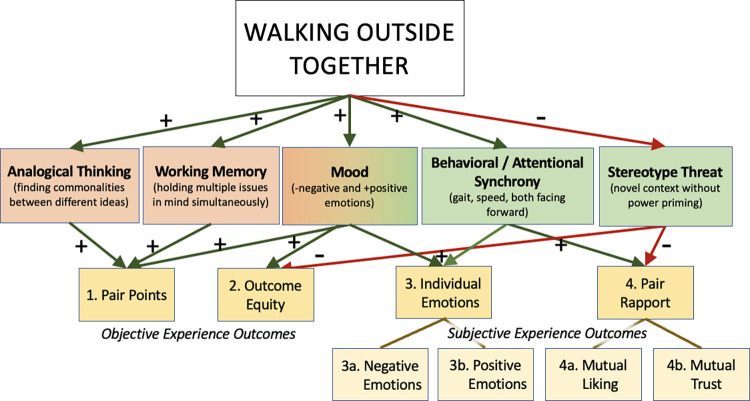
Negotiation is a consequential activity that can exacerbate power differentials, especially for women. While traditional contexts can prime stereotypical gender roles and promote conditions that lead to performance differences, these can be mitigated by context shifts. This proof-of-concept study explores whether an easy-to-apply context shift, moving from seated indoors to walking outside, can help improve the quality of negotiated interactions. Here we examine walking's effects on negotiation and relational outcomes as well as experienced emotions, moderated by gender.
Same-gender pairs were randomly assigned to either sitting or walking as either candidate or recruiter negotiating a job offer.
Eighty-one pairs of graduate students or community members participated: sitting pairs: 27 women, 14 men; walking pairs: 23 women, 17 men.
Participants negotiated either while seated (across from each other) or walking (side by side along a path).
We measured: negotiation performance (total points) and outcome equity (difference between negotiating party points); subjective outcomes of positive emotions, negative emotions, mutual liking, and mutual trust. With mixed effects models, we tested main effects of condition, gender, and interaction of condition x gender.
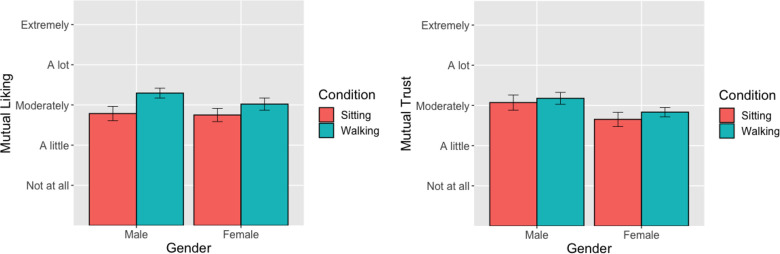
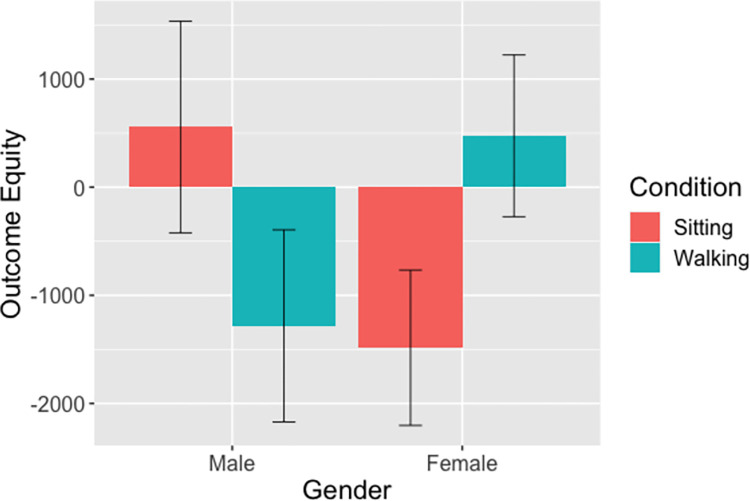
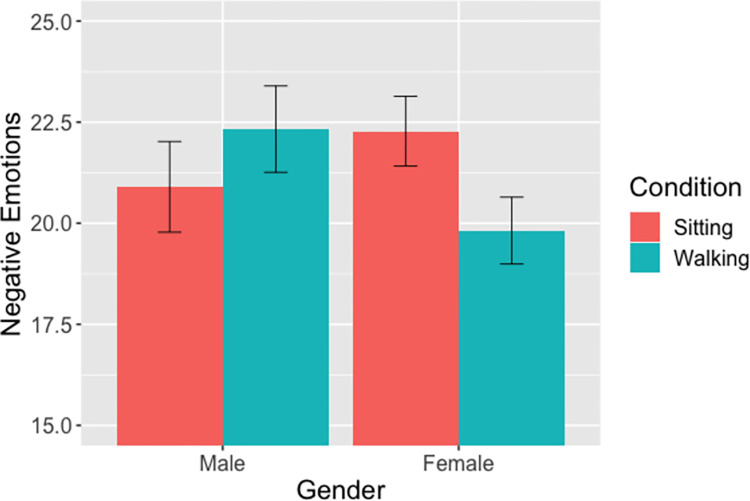
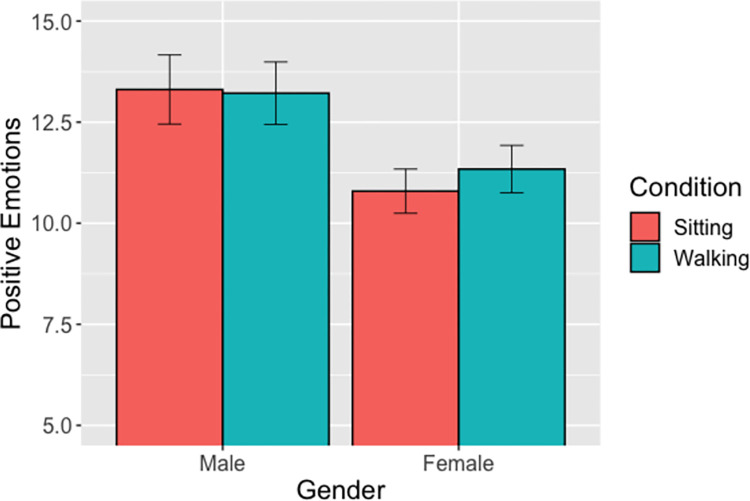
Relative to sitting, walking was associated with: increased outcome equality for women, but decreased for men (B = 3799.1, SE = 1679.9, p = .027); decreased negative emotions, more for women than men (IRR = .83, 95% CI:[.69,1.00], p = .046); and greater mutual liking for both genders (W = 591.5, p-value = 0.027). No significant effects were found for negotiation point totals, positive emotions, or mutual trust.
This study provides a foundation for investigating easy-to-implement changes that can mitigate stereotyped performance differences in negotiation.
谈判是一项重要的活动,可能会加剧权力差异,尤其是对女性而言。虽然传统环境可以预先设定刻板的性别角色,并促进导致表现差异的条件,但这些可以通过环境转变来减轻。这项概念验证研究探讨了一种易于实施的环境转变,即从室内坐着转变为户外行走,是否有助于提高谈判互动的质量。在这里,我们研究了行走对谈判和关系结果以及所经历的情绪的影响,并考虑了性别因素的调节作用。
将同性别的参与者随机分配到坐着或行走两种条件下,作为候选人或招聘人员进行工作谈判。
81 对研究生或社区成员参与了研究:坐着的参与者:27 名女性,14 名男性;行走的参与者:23 名女性,17 名男性。
参与者要么坐着(面对面)进行谈判,要么沿着小路并排行走进行谈判。
我们测量了谈判表现(总分)和结果公平性(谈判方得分的差异);积极情绪、消极情绪、相互喜欢和相互信任的主观结果。通过混合效应模型,我们检验了条件、性别和条件与性别的交互作用的主要效应。
与坐着相比,行走与以下因素相关:女性的结果公平性提高,而男性的结果公平性降低(B = 3799.1,SE = 1679.9,p =.027);女性的消极情绪减少,而男性的消极情绪减少更多(IRR =.83,95%CI:[.69,1.00],p =.046);两性的相互喜欢程度更高(W = 591.5,p 值 = 0.027)。没有发现对谈判总分、积极情绪或相互信任有显著影响。
这项研究为研究易于实施的改变提供了基础,可以减轻谈判中刻板的表现差异。