Department of Biomedical Sciences, Faculty of Health Sciences, University of Buea, Buea, South West Region, Cameroon.
Phytopharmacy and Drug Discovery Section, The Cameroon Consortium for Translational Cancer Research (CCOTCARE), Douala, Cameroon.
Mol Cancer. 2023 Mar 17;22(1):52. doi: 10.1186/s12943-023-01734-w.
Inflammation is undoubtedly a hallmark of cancer development. Its maintenance within tumors and the consequences on disease aggressiveness are insufficiently understood.
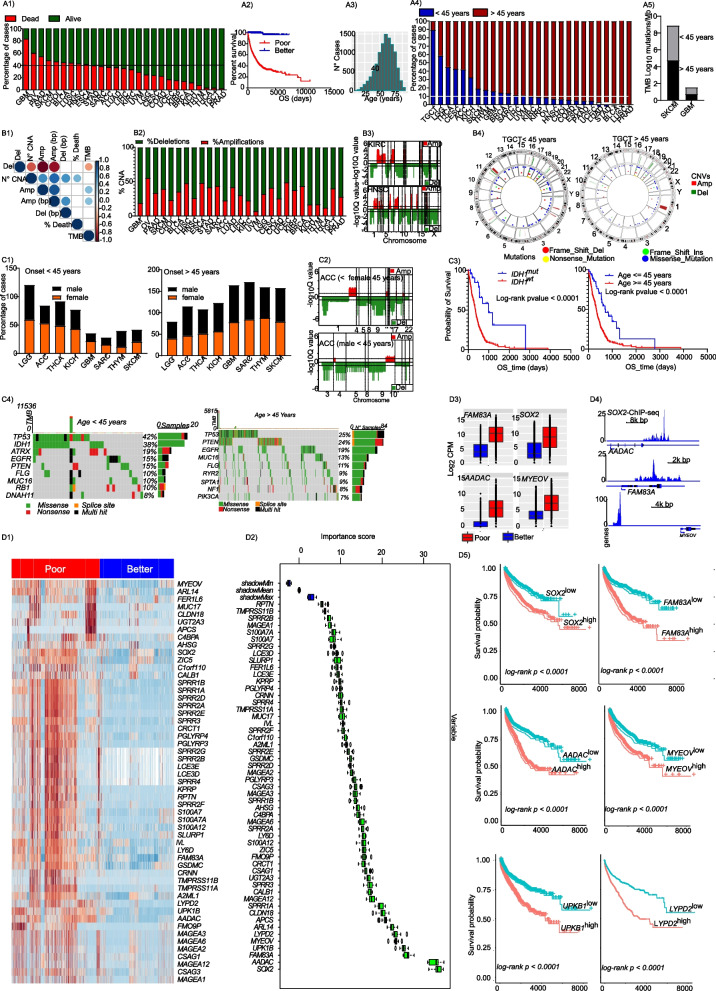
Data of 27 tumor entities (about 5000 samples) were downloaded from the TCGA and GEO databases. Multi-omic analyses were performed on these and in-house data to investigate molecular determinants of tumor aggressiveness. Using molecular loss-of-function data, the mechanistic underpinnings of inflammation-induced tumor aggressiveness were addressed. Patient specimens and in vivo disease models were subsequently used to validate findings.
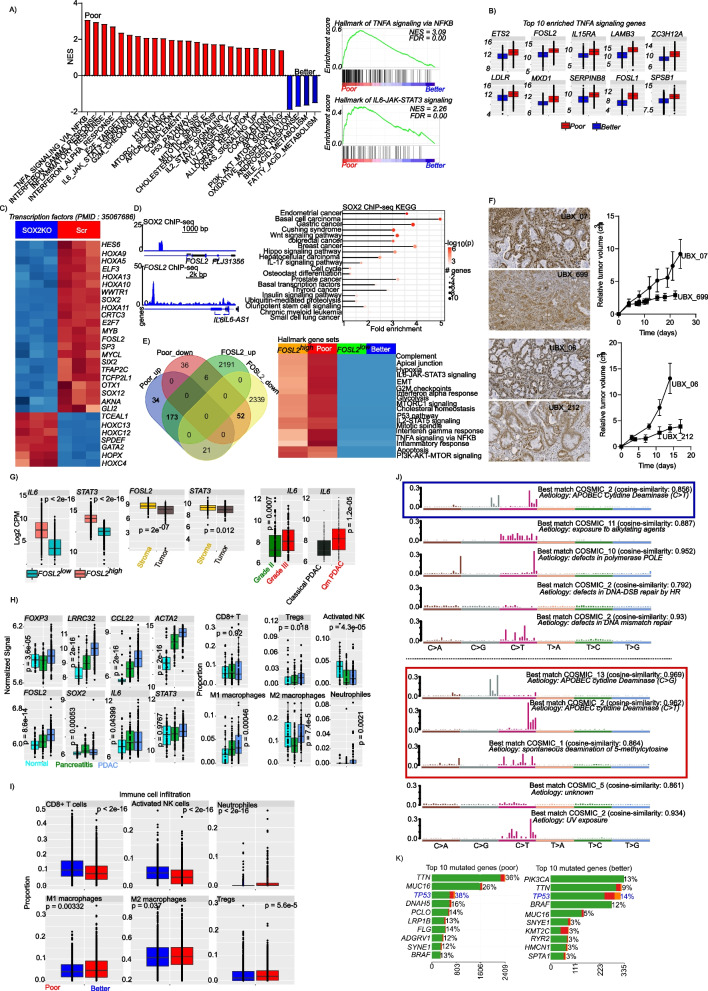
There was significant association between somatic copy number alterations (sCNAs) and tumor aggressiveness. SOX2 amplification was the most important feature among novel and known aggressiveness-associated alterations. Mechanistically, SOX2 regulates a group of genes, in particular the AP1 transcription factor FOSL2, to sustain pro-inflammatory signaling pathways, such as IL6-JAK-STAT3, TNFA and IL17. FOSL2 was found overexpressed in tumor sections of specifically aggressive cancers. In consequence, prolonged inflammation induces immunosuppression and activates cytidine deamination and thus DNA damage as evidenced by related mutational signatures in aggressive tumors. The DNA damage affects tumor suppressor genes such as TP53, which is the most mutated gene in aggressive tumors compared to less aggressive ones (38% vs 14%), thereby releasing cell cycle control. These results were confirmed by analyzing tissues from various tumor types and in vivo studies.
Our data demonstrate the implication of SOX2 in promoting DNA damage and genome instability by sustaining inflammation via FOSL2/IL6, resulting in tumor aggressiveness.
炎症无疑是癌症发展的一个标志。其在肿瘤中的维持及其对疾病侵袭性的影响还没有被充分了解。
从 TCGA 和 GEO 数据库中下载了 27 种肿瘤实体的数据(约 5000 个样本)。对这些数据和内部数据进行了多组学分析,以研究肿瘤侵袭性的分子决定因素。利用分子功能丧失数据,研究了炎症诱导肿瘤侵袭性的机制基础。随后使用患者标本和体内疾病模型来验证研究结果。
肿瘤中体细胞拷贝数改变(sCNAs)与肿瘤侵袭性之间存在显著相关性。SOX2 扩增是新型和已知与侵袭性相关改变中最重要的特征。从机制上讲,SOX2 调节一组基因,特别是 AP1 转录因子 FOSL2,以维持促炎信号通路,如 IL6-JAK-STAT3、TNFA 和 IL17。在特定侵袭性癌症的肿瘤切片中发现 FOSL2 过表达。结果,长期的炎症会导致免疫抑制,并激活胞嘧啶脱氨酶,从而导致 DNA 损伤,这在侵袭性肿瘤中相关的突变特征中得到了证实。DNA 损伤会影响肿瘤抑制基因,如 TP53,与侵袭性肿瘤相比,TP53 在侵袭性肿瘤中的突变率最高(38%比 14%),从而释放细胞周期控制。通过分析来自各种肿瘤类型的组织和体内研究证实了这些结果。
我们的数据表明,SOX2 通过 FOSL2/IL6 维持炎症,促进 DNA 损伤和基因组不稳定性,从而促进肿瘤的侵袭性。