Li Xuening, Wu Xiaodong, Ma Tianyi, Zhang Yuemin, Sun Pingping, Qi Dandan, Ma Huagang
School of Clinical Medicine, Weifang Medical University, Weifang, Shandong 261000, P.R. China.
Faculty of Engineering and IT, University of Technology Sydney, Sydney, New South Wales 2007, Australia.
Exp Ther Med. 2023 Feb 23;25(4):161. doi: 10.3892/etm.2023.11860. eCollection 2023 Apr.
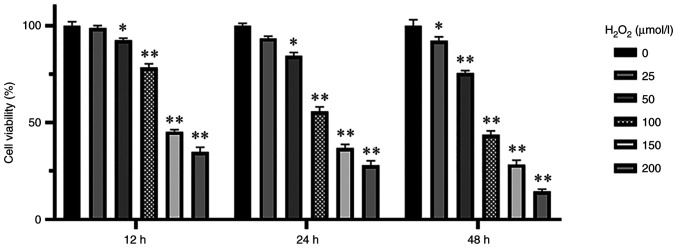
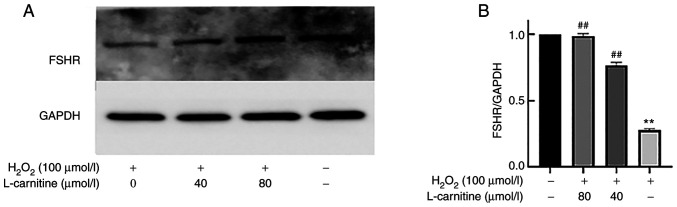
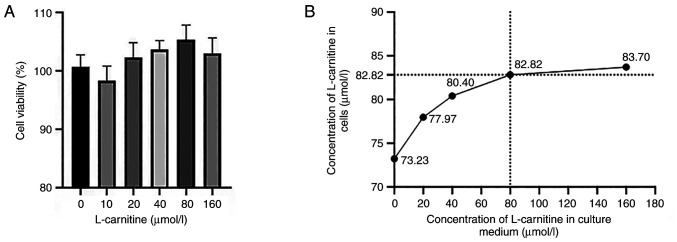
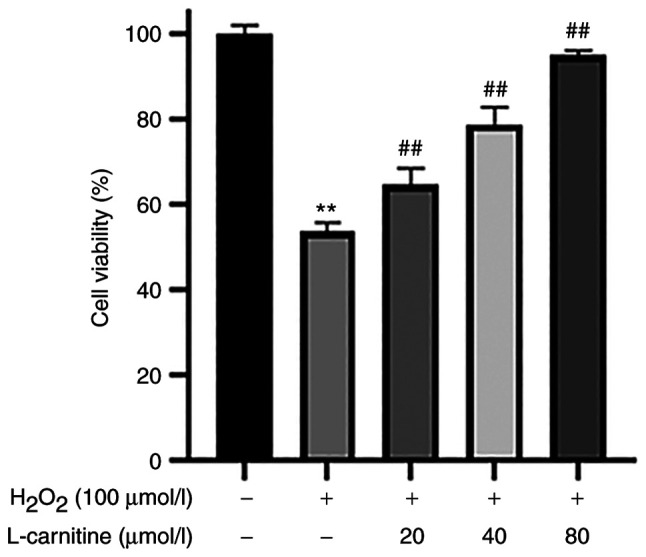
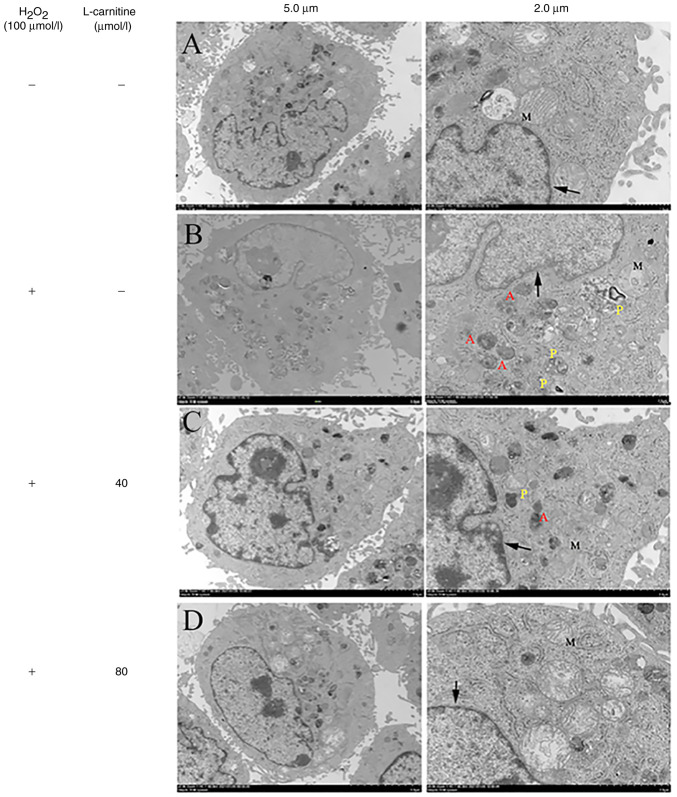
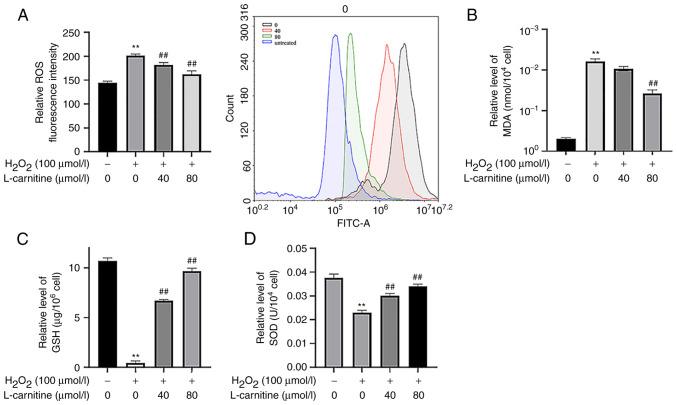
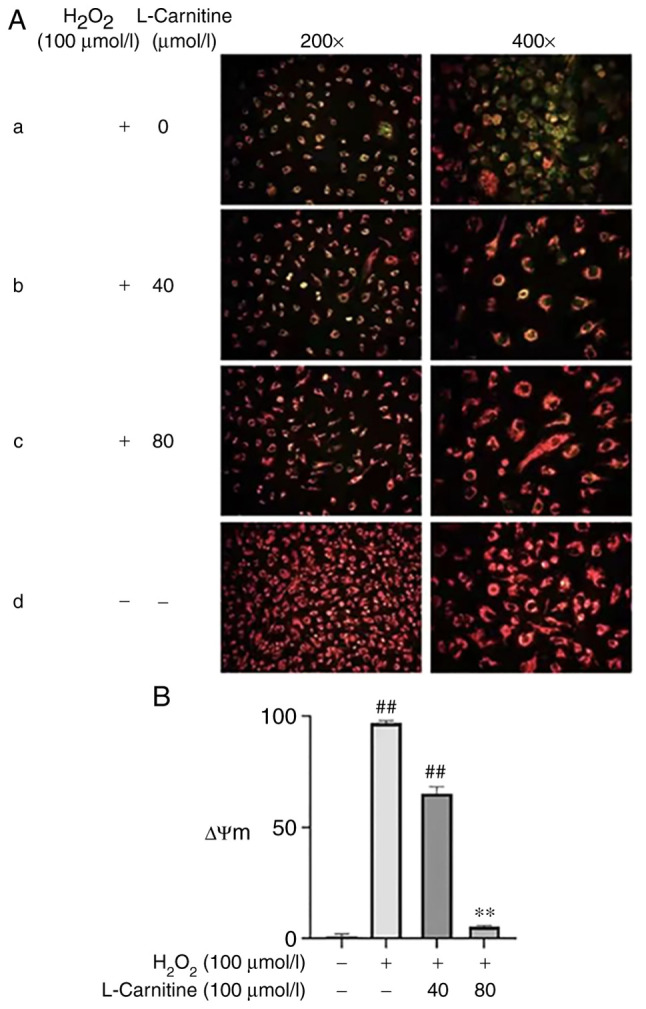
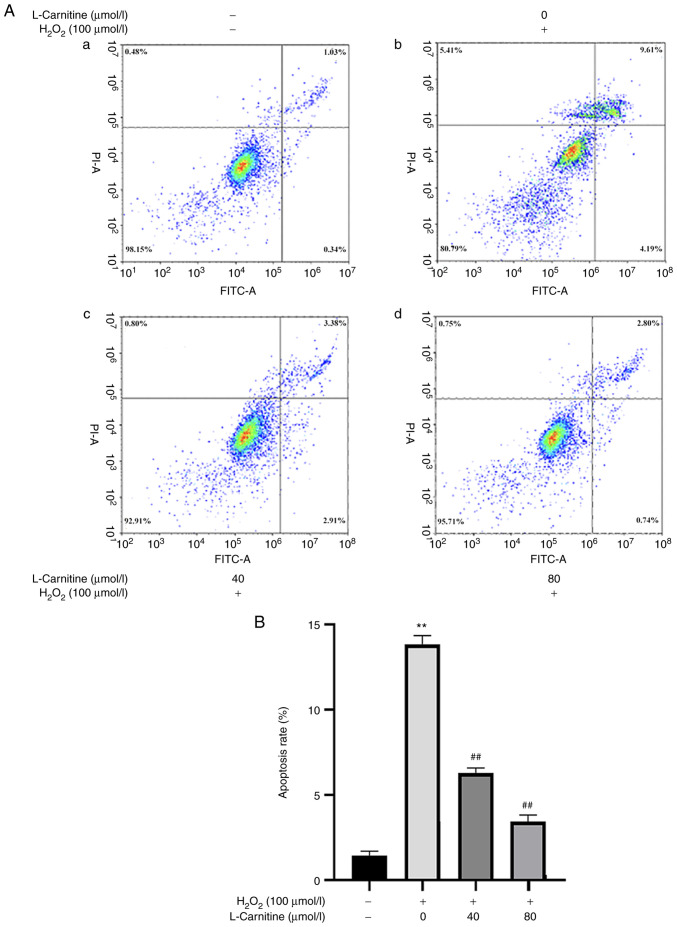
Granulosa cells (GCs) are important for supporting and nourishing oocytes during follicular development and maturation. Oxidative stress (OS) injury of GCs can lead to decreased responsiveness of follicles to follicular stimulating hormone (FSH), which will accelerate ovarian senescence and adversely affect oocyte and embryo quality. Since L-carnitine has been previously reported to exert strong antioxidant activity, the present study aimed to explore the possible effects of L-carnitine on OS injury and FSH receptor (FSHR) expression in ovarian GCs, results of which may be of significance for GCs protection. In the present study, OS was induced in KGN cells by treatment with HO. KGN cells were cultured and divided into the following four groups: Blank, OS, and 40 and 80 µmol/l L-carnitine pre-treatment groups. In the OS group, cells showed nuclear pyknosis, mitochondria swelled irregularly whilst featuring fractured cristae. In addition, cell viability, ROS levels, superoxide dismutase levels, glutathione levels, malondialdehyde levels, the mitochondrial membrane potential and FSHR expression, as determined by Cell Counting Kit-8 (CCK-8), 2,7-dichloro-dihydrofluorescein diacetate, spectrophotometry, ELISA, spectrophotometry, JC-1 and western blot analyses, respectively, were all significantly different in the OS group compared with those in the control group. However, malonaldehyde levels, reactive oxygen species levels and the apoptosis rate according to flow cytometry were all significantly increased compared with those in the control. Compared with those in the OS group, the morphology of cells and mitochondria in the L-carnitine pre-treatment groups were improved, whilst cell viability and the expression of FSHR were significantly increased but oxidative stress injury was decreased. The present results suggest that L-carnitine can protect the cells from OS damage induced by HO, enhance antioxidant activity whilst suppressing the apoptosis of GCs, in addition to preserving FSHR expression in GCs under OS. Therefore, the present study revealed that the introduction of L-carnitine in clinical medicine or dietary supplement may protect GCs, improve follicular quality and female reproductive function.
颗粒细胞(GCs)在卵泡发育和成熟过程中对支持和滋养卵母细胞至关重要。GCs的氧化应激(OS)损伤会导致卵泡对促卵泡激素(FSH)的反应性降低,这将加速卵巢衰老并对卵母细胞和胚胎质量产生不利影响。由于先前已有报道称左旋肉碱具有强大的抗氧化活性,本研究旨在探讨左旋肉碱对卵巢颗粒细胞OS损伤和FSH受体(FSHR)表达的可能影响,其结果可能对颗粒细胞保护具有重要意义。在本研究中,通过用HO处理在KGN细胞中诱导OS。将KGN细胞培养并分为以下四组:空白组、OS组以及40和80μmol/L左旋肉碱预处理组。在OS组中,细胞出现核固缩,线粒体不规则肿胀,同时嵴断裂。此外,通过细胞计数试剂盒-8(CCK-8)、2,7-二氯二氢荧光素二乙酸酯、分光光度法、酶联免疫吸附测定、分光光度法、JC-1和蛋白质免疫印迹分析分别测定的细胞活力、ROS水平、超氧化物歧化酶水平、谷胱甘肽水平、丙二醛水平、线粒体膜电位和FSHR表达,与对照组相比,OS组均有显著差异。然而,与对照组相比,丙二醛水平、活性氧水平和流式细胞术检测的凋亡率均显著增加。与OS组相比,左旋肉碱预处理组的细胞和线粒体形态得到改善,同时细胞活力和FSHR表达显著增加,但氧化应激损伤降低。目前的结果表明,左旋肉碱可以保护细胞免受HO诱导的OS损伤,增强抗氧化活性,同时抑制颗粒细胞凋亡,此外还能在OS条件下维持颗粒细胞中FSHR的表达。因此,本研究表明,在临床医学中引入左旋肉碱或作为膳食补充剂可能会保护颗粒细胞,改善卵泡质量和女性生殖功能。