Department of Medical Microbiology and Immunology, University of Wisconsin-Madison, Madison, Wisconsin, USA.
Microbiology Doctoral Training Program, University of Wisconsin-Madison, Madison, Wisconsin, USA.
mBio. 2023 Apr 25;14(2):e0007323. doi: 10.1128/mbio.00073-23. Epub 2023 Mar 20.
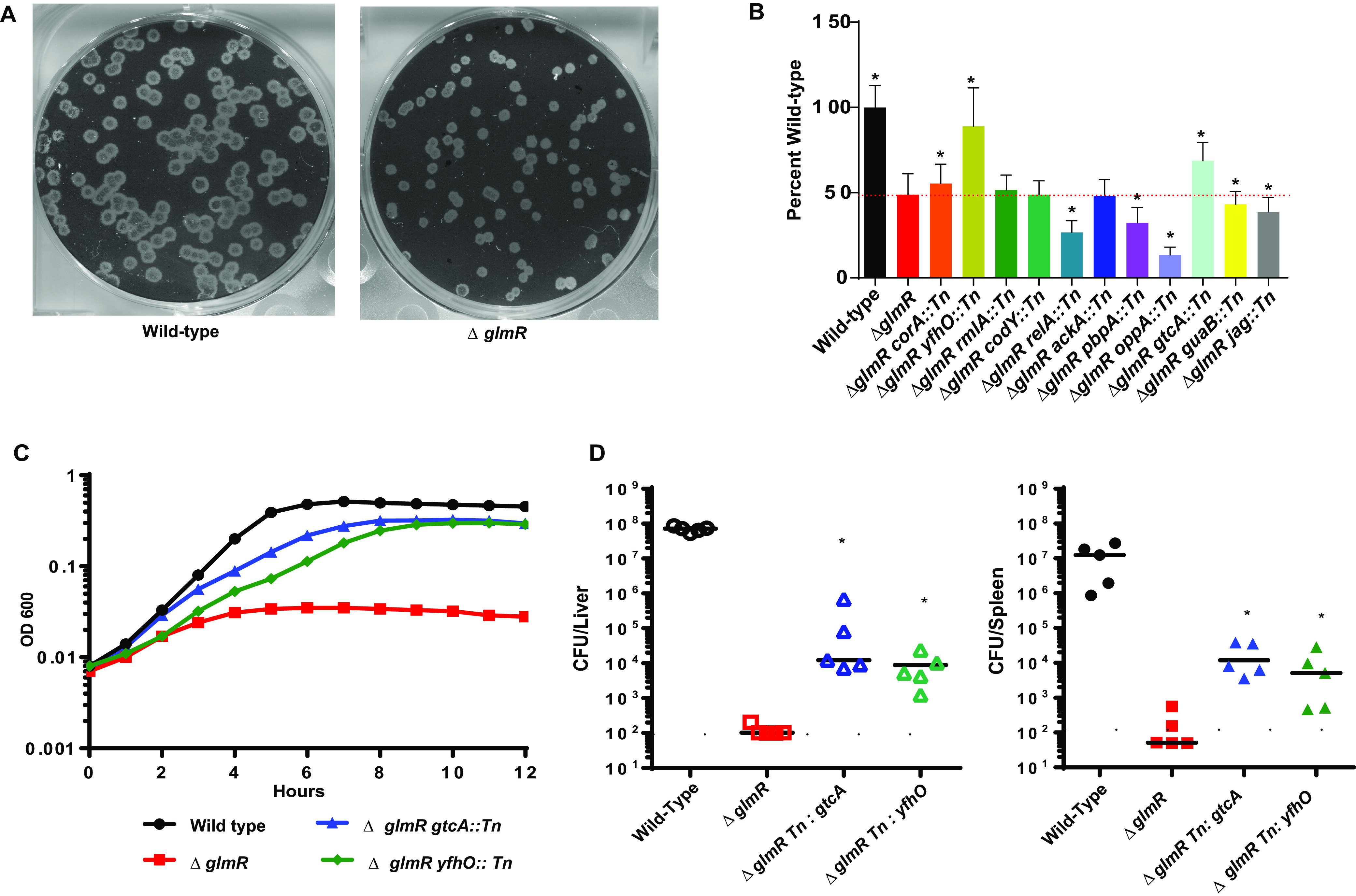
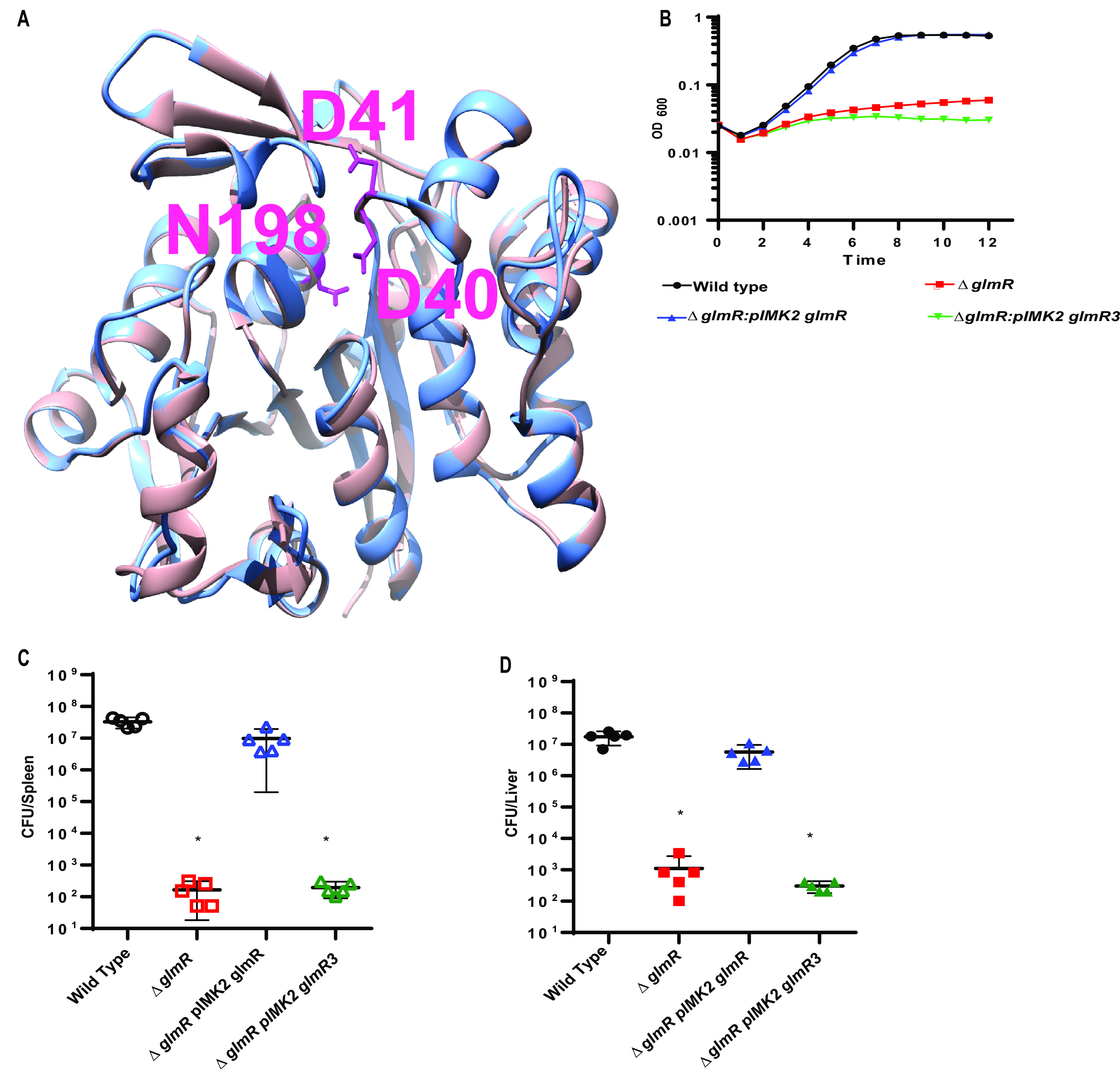
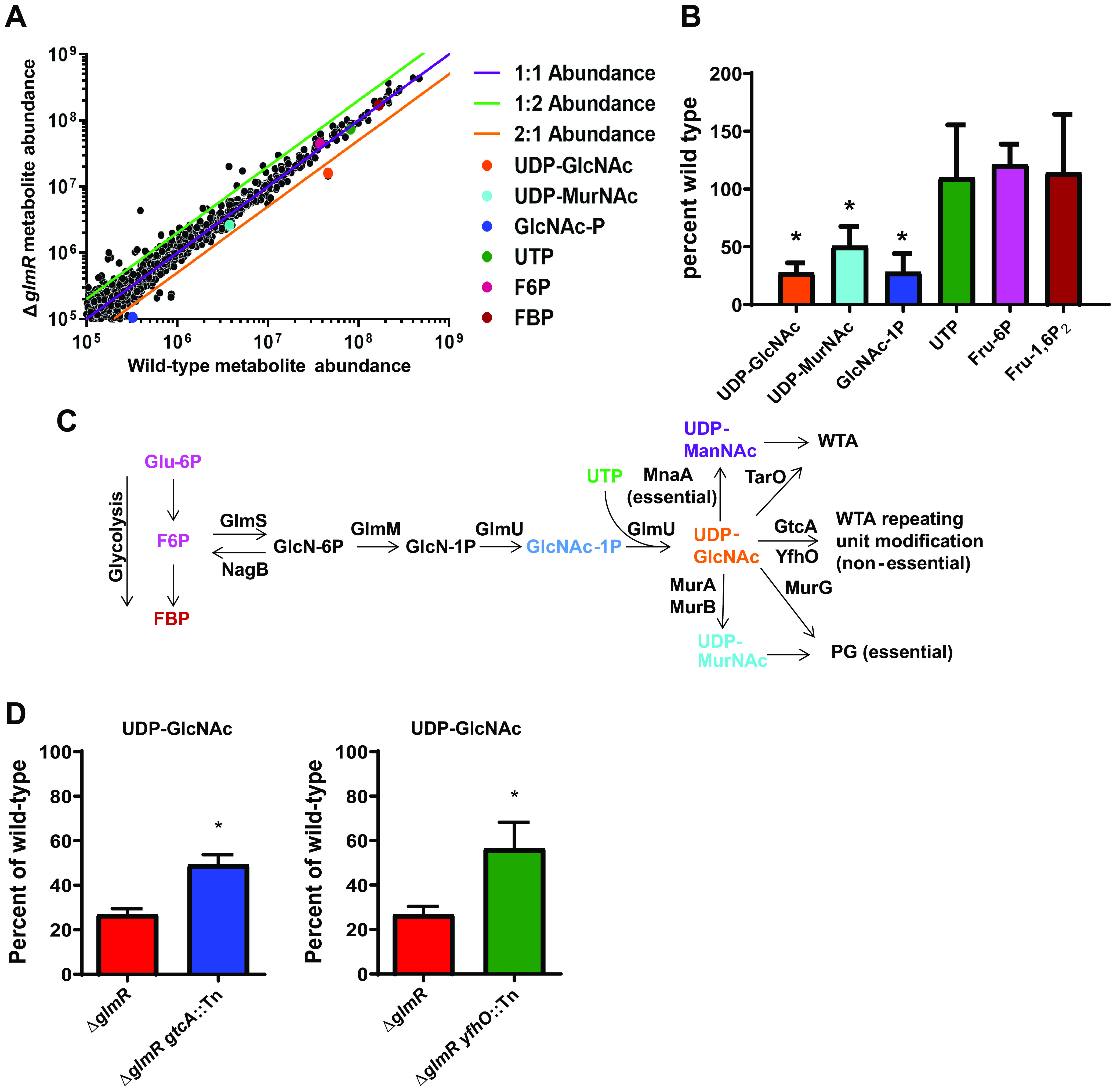
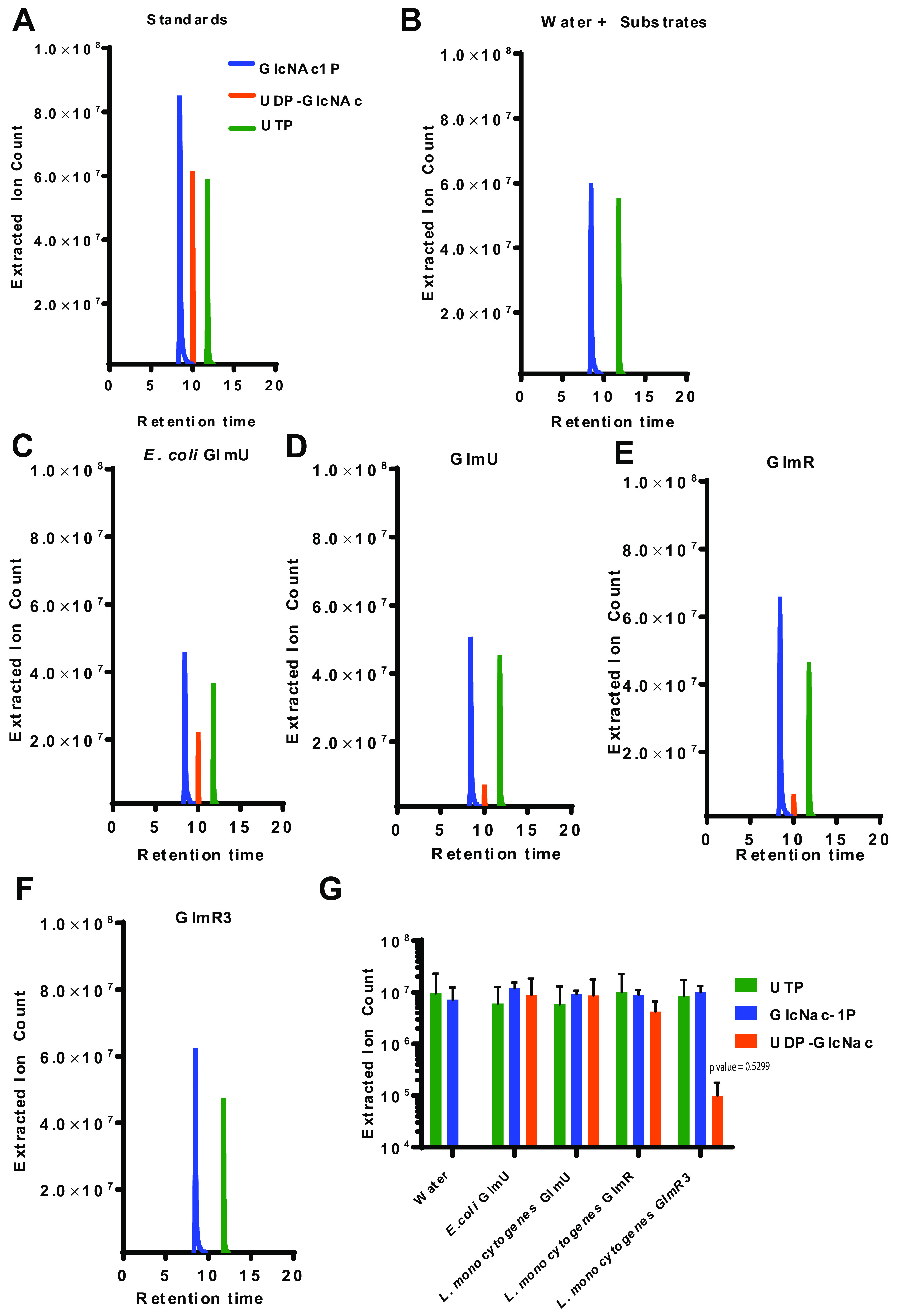
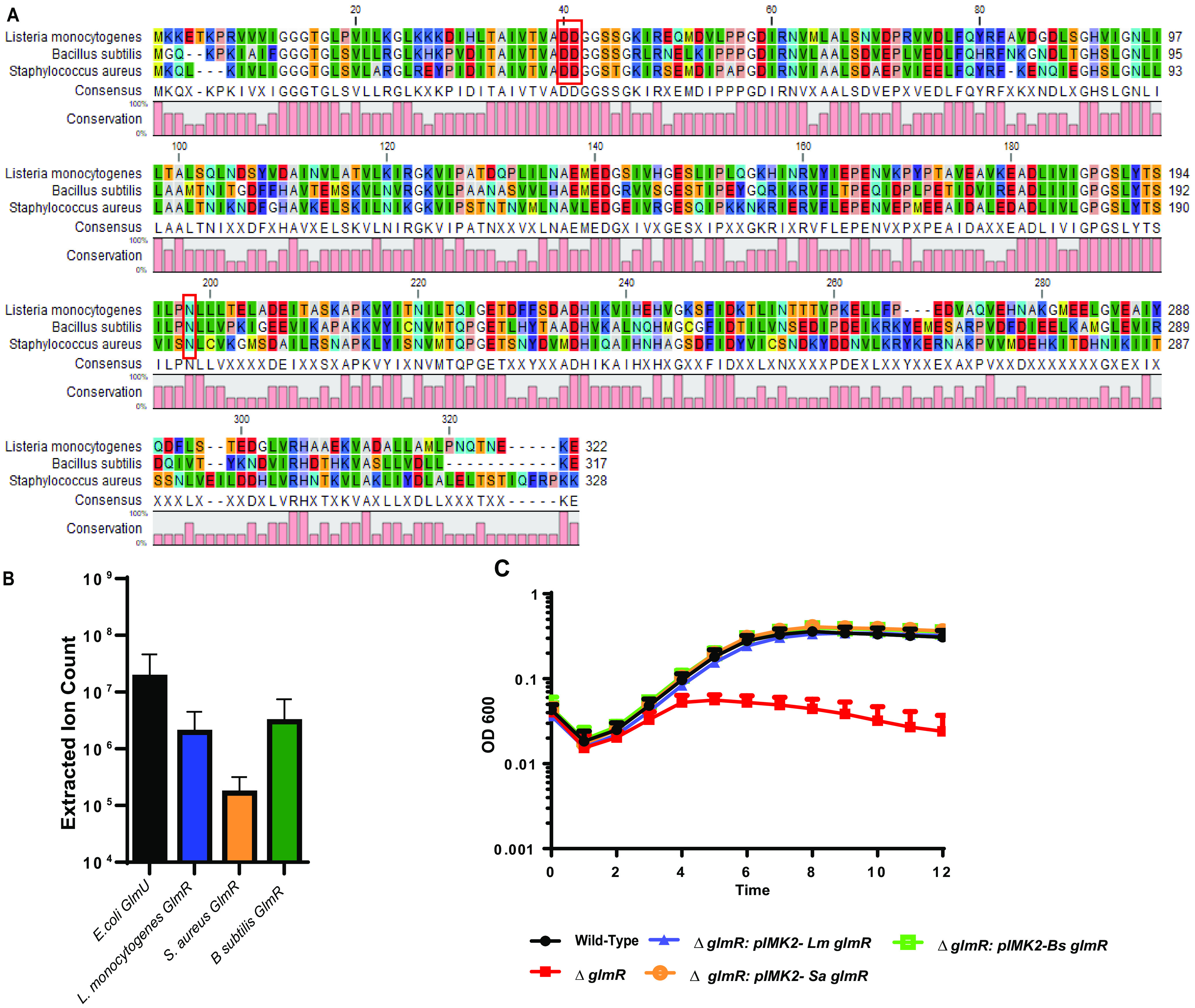
The cytosol of eukaryotic host cells is an intrinsically hostile environment for bacteria. Understanding how cytosolic pathogens adapt to and survive in the cytosol is critical to developing novel therapeutic interventions against these pathogens. The cytosolic pathogen Listeria monocytogenes requires (previously known as ), a gene of unknown function, for resistance to cell-wall stress, cytosolic survival, inflammasome avoidance, and, ultimately, virulence . In this study, a genetic suppressor screen revealed that blocking utilization of UDP -acetylglucosamine (UDP-GlcNAc) by a nonessential wall teichoic acid decoration pathway restored resistance to lysozyme and partially restored virulence of Δ mutants. In parallel, metabolomic analysis revealed that Δ mutants are impaired in the production of UDP-GlcNAc, an essential peptidoglycan and wall teichoic acid (WTA) precursor. We next demonstrated that purified GlmR can directly catalyze the synthesis of UDP-GlcNAc from GlcNAc-1P and UTP, suggesting that it is an accessory uridyltransferase. Biochemical analysis of GlmR orthologues suggests that uridyltransferase activity is conserved. Finally, mutational analysis resulting in a GlmR mutant with impaired catalytic activity demonstrated that uridyltransferase activity was essential to facilitate cell-wall stress responses and virulence . Taken together, these studies indicate that GlmR is an evolutionary conserved accessory uridyltransferase required for cytosolic survival and virulence of L. monocytogenes. Bacterial pathogens must adapt to their host environment in order to cause disease. The cytosolic bacterial pathogen Listeria monocytogenes requires a highly conserved protein of unknown function, GlmR (previously known as YvcK), to survive in the host cytosol. GlmR is important for resistance to some cell-wall stresses and is essential for virulence. The Δ mutant is deficient in production of an essential cell-wall metabolite, UDP-GlcNAc, and suppressors that increase metabolite levels also restore virulence. Purified GlmR can directly catalyze the synthesis of UDP-GlcNAc, and this enzymatic activity is conserved in both Bacillus subtilis and Staphylococcus aureus. These results highlight the importance of accessory cell wall metabolism enzymes in responding to cell-wall stress in a variety of Gram-positive bacteria.
真核宿主细胞的细胞质是细菌内在的恶劣环境。了解细胞质病原体如何适应和在细胞质中存活对于开发针对这些病原体的新型治疗干预措施至关重要。细胞质病原体李斯特菌需要 (以前称为 ),一个功能未知的基因,以抵抗细胞壁应激、细胞质存活、炎症小体回避,最终是毒力 。在这项研究中,遗传抑制筛选揭示了阻断非必需细胞壁磷壁酸修饰途径对 UDP-乙酰葡萄糖胺 (UDP-GlcNAc) 的利用可恢复溶菌酶的抗性,并部分恢复 Δ 突变体的毒力。同时,代谢组学分析表明,Δ 突变体在 UDP-GlcNAc 的产生中受损,UDP-GlcNAc 是肽聚糖和壁磷壁酸 (WTA) 的必需前体。我们接下来证明,纯化的 GlmR 可以直接催化 GlcNAc-1P 和 UTP 合成 UDP-GlcNAc,表明它是一种辅助尿苷转移酶。GlmR 同源物的生化分析表明,尿苷转移酶活性是保守的。最后,导致催化活性受损的 GlmR 突变体的突变分析表明,尿苷转移酶活性对于促进细胞壁应激反应和毒力至关重要 。总之,这些研究表明 GlmR 是一种进化保守的辅助尿苷转移酶,是李斯特菌细胞质存活和毒力所必需的。 细菌病原体必须适应其宿主环境才能引起疾病。细胞质细菌病原体李斯特菌需要一种高度保守的未知功能蛋白,GlmR(以前称为 YvcK),才能在宿主细胞质中存活。GlmR 对抵抗某些细胞壁应激很重要,对毒力也很重要。Δ 突变体缺乏一种必需细胞壁代谢物 UDP-GlcNAc 的产生,增加代谢物水平的抑制剂也恢复了毒力。纯化的 GlmR 可以直接催化 UDP-GlcNAc 的合成,这种酶活性在枯草芽孢杆菌和金黄色葡萄球菌中都有保守。这些结果强调了辅助细胞壁代谢酶在应对各种革兰氏阳性菌细胞壁应激中的重要性。