Sun Lei, Rogiers Gil, Michiels Chris W
Department of Microbial and Molecular Systems, KU Leuven, B-3000 Leuven, Belgium.
Foods. 2021 Jul 20;10(7):1666. doi: 10.3390/foods10071666.
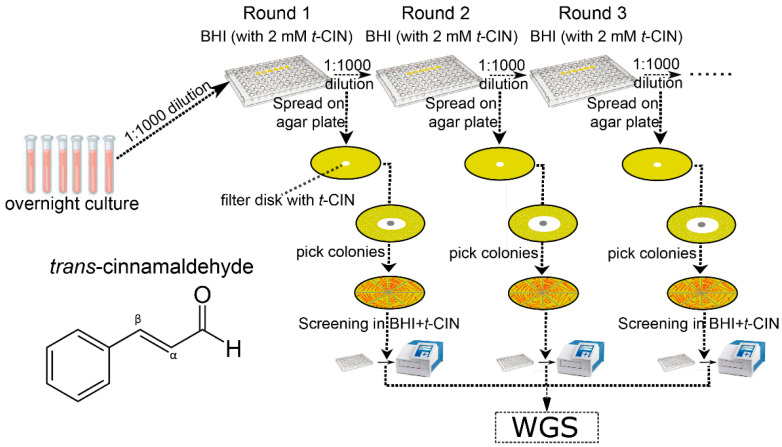
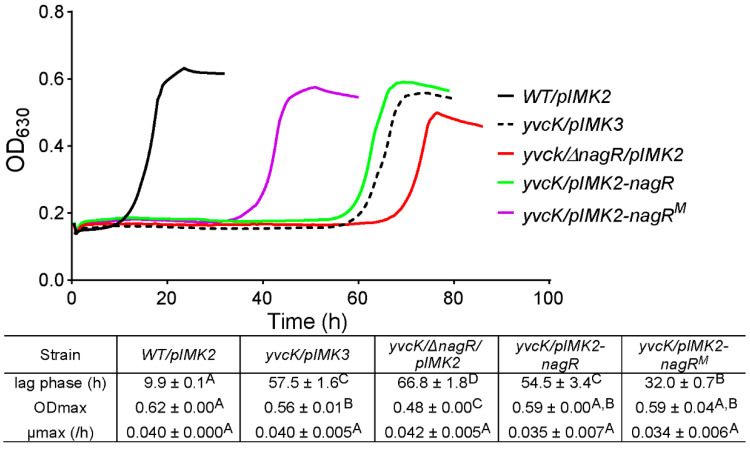
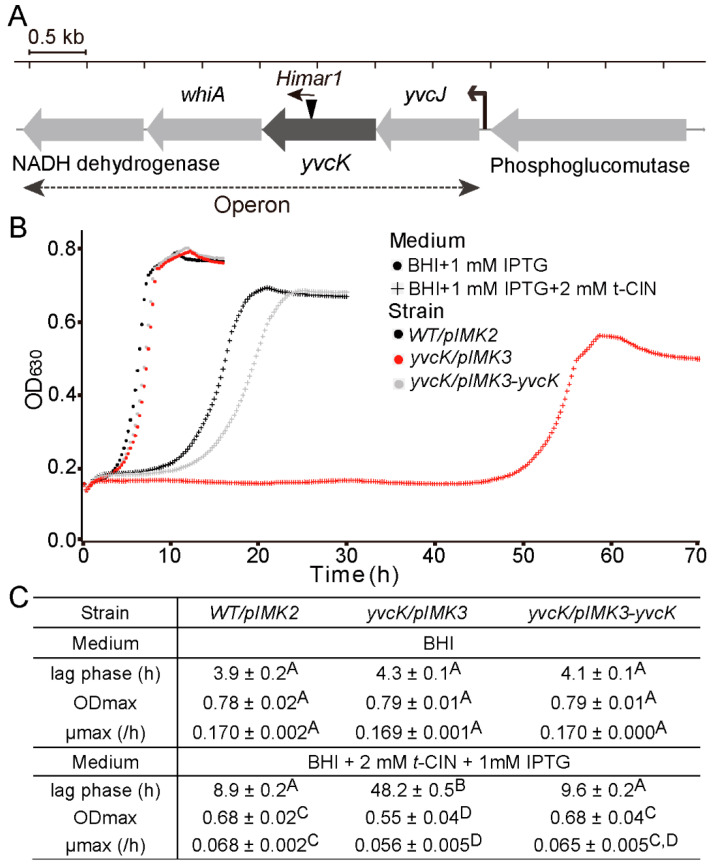
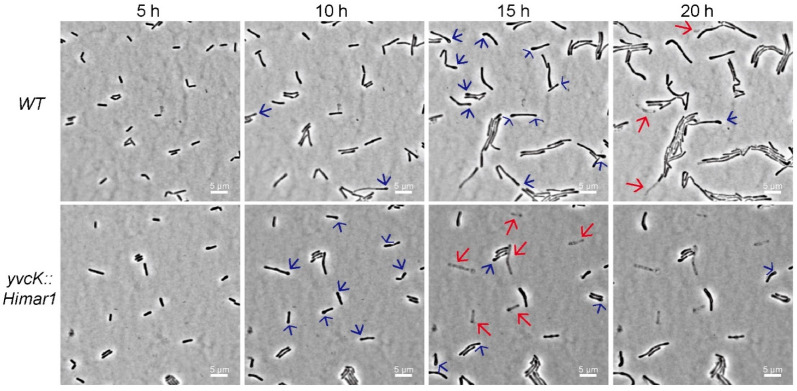
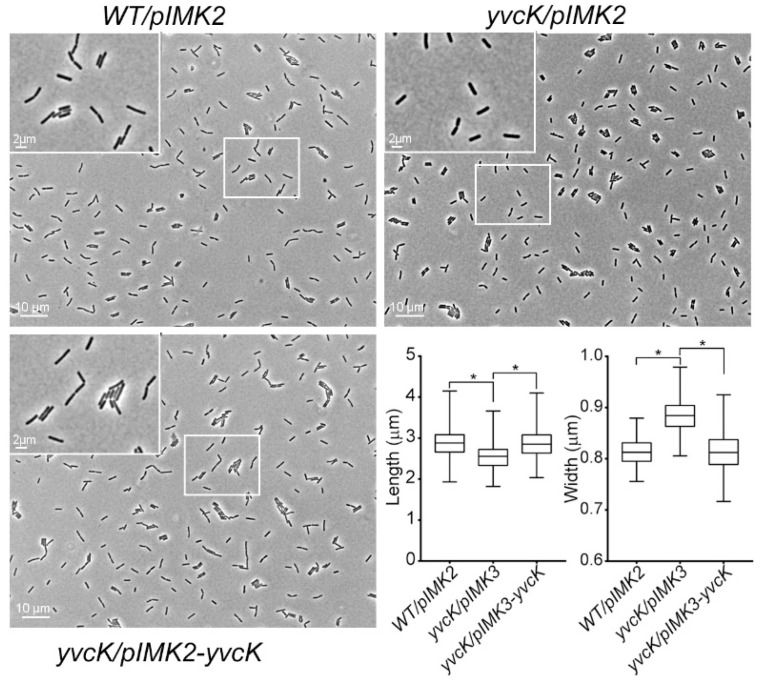
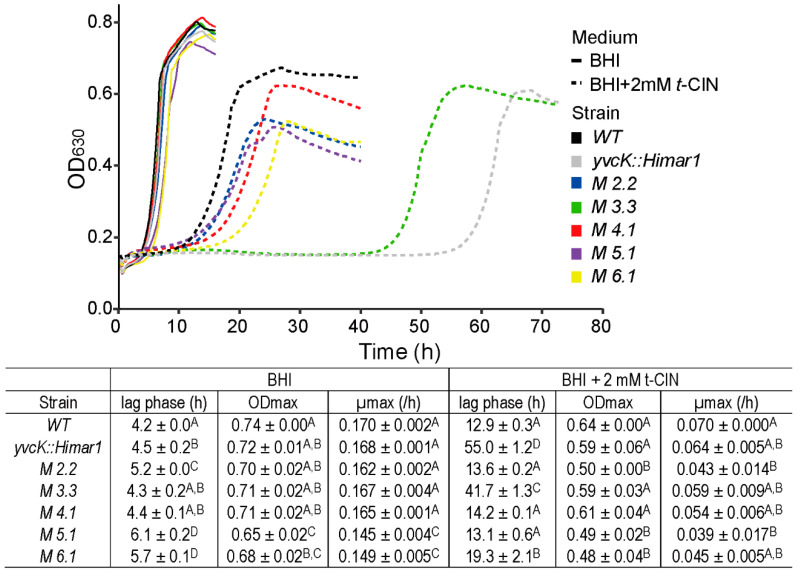
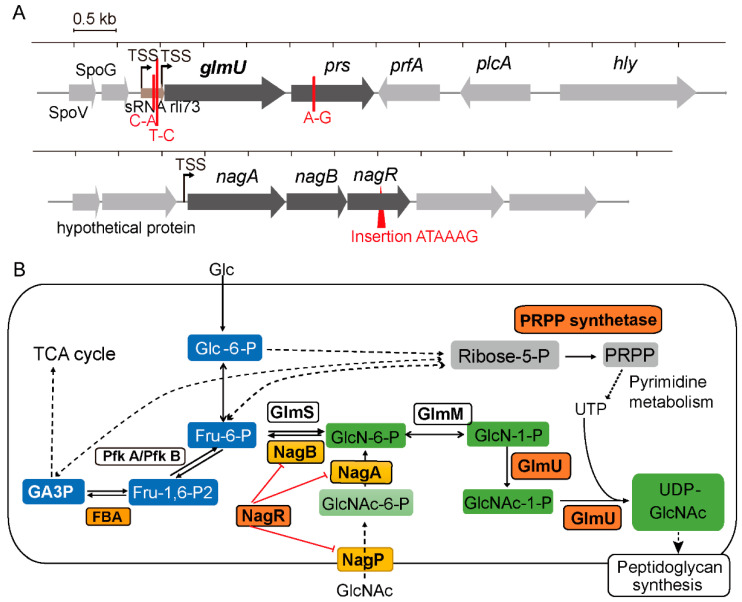
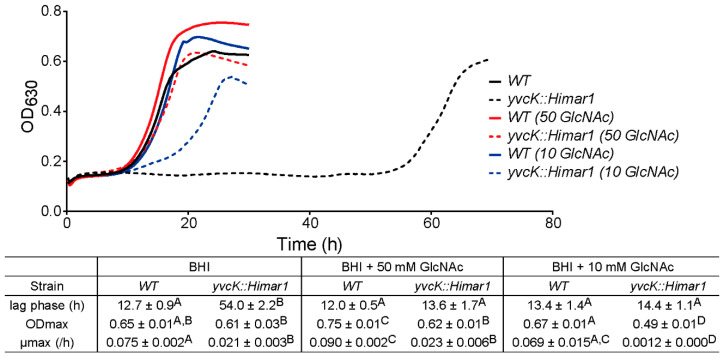
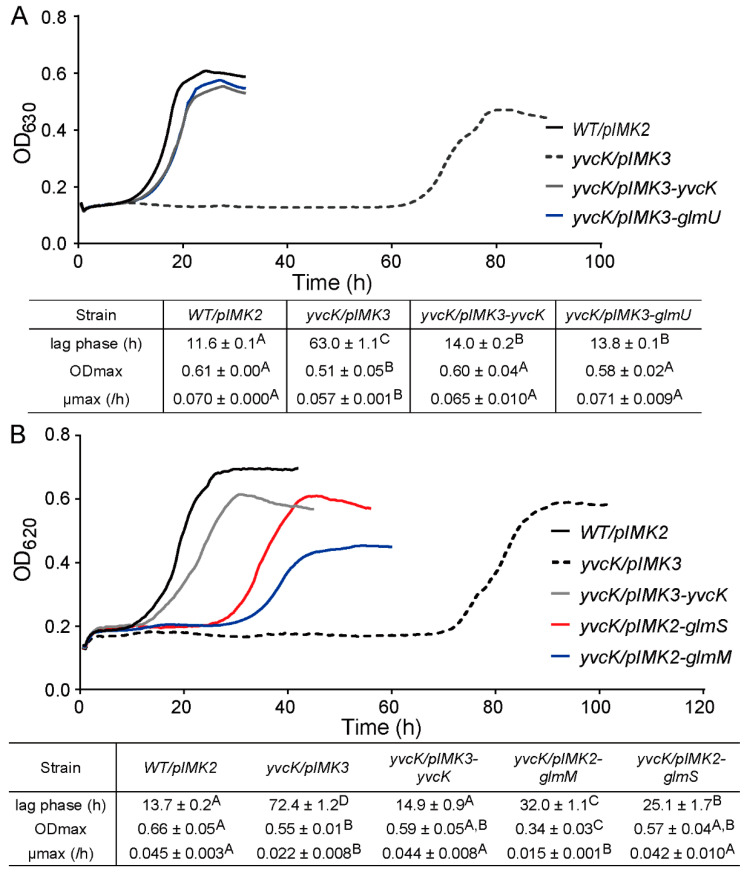
-cinnamaldehyde (-CIN), an antimicrobial compound from cinnamon essential oil, is of interest because it inhibits various foodborne pathogens. In the present work, we investigated the antimicrobial mechanisms of -CIN in using a previously isolated transposon mutant which shows hypersensitivity to -CIN. Time-lapse microscopy revealed that -CIN induces a bulging cell shape followed by lysis in the mutant. Complementation with wild-type gene completely restored the tolerance of strain to -CIN and the cell morphology. Suppressor mutants which partially reversed the -CIN sensitivity of the mutant were isolated from evolutionary experiments. Three out of five suppression mutations were in the operon and in , which are linked to the biosynthesis of the peptidoglycan precursor uridine-diphosphate-N-acetylglucosamine (UDP-GlcNAc). GlmU catalyzes the last two steps of UDP-GlcNAc biosynthesis and NagR represses the uptake and utilization of N-acetylglucosamine. Feeding N-acetylglucosamine or increasing the production of UDP-GlcNAc synthetic enzymes fully or partially restored the -CIN tolerance of the mutant. Together, these results suggest that YvcK plays a pivotal role in diverting substrates to UDP-GlcNAc biosynthesis in and that -CIN interferes with this pathway, leading to a peptidoglycan synthesis defect.
肉桂醛(-CIN)是肉桂精油中的一种抗菌化合物,因其能抑制多种食源性病原体而备受关注。在本研究中,我们使用先前分离的对-CIN敏感的转座子突变体,研究了-CIN在[具体微生物名称未给出]中的抗菌机制。延时显微镜观察显示,-CIN会使突变体细胞形状凸起,随后发生裂解。用野生型[基因名称未给出]基因进行互补完全恢复了[菌株名称未给出]菌株对-CIN的耐受性和细胞形态。从进化实验中分离出了部分逆转[突变体名称未给出]突变体对-CIN敏感性的抑制突变体。五个抑制突变中有三个位于[操纵子名称未给出]操纵子和[基因名称未给出]中,它们与肽聚糖前体尿苷二磷酸-N-乙酰葡糖胺(UDP-GlcNAc)的生物合成有关。GlmU催化UDP-GlcNAc生物合成的最后两步,而NagR抑制N-乙酰葡糖胺的摄取和利用。添加N-乙酰葡糖胺或增加UDP-GlcNAc合成酶的产量可完全或部分恢复[突变体名称未给出]突变体对-CIN的耐受性。总之,这些结果表明YvcK在将底物转向[具体微生物名称未给出]中UDP-GlcNAc生物合成过程中起关键作用,并且-CIN干扰了该途径,导致肽聚糖合成缺陷。