
公共建筑智能运维与控制系统:致力于降低感染风险与提高能源效率。
Intelligent operation, maintenance, and control system for public building: Towards infection risk mitigation and energy efficiency.
作者信息
Ren Chen, Zhu Hao-Cheng, Wang Junqi, Feng Zhuangbo, Chen Gang, Haghighat Fariborz, Cao Shi-Jie
机构信息
School of Architecture, Southeast University, Nanjing, 210096, China.
School of Environmental Science and Engineering, Suzhou University of Science and Technology, Suzhou, 215009, China.
出版信息
Sustain Cities Soc. 2023 Jun;93:104533. doi: 10.1016/j.scs.2023.104533. Epub 2023 Mar 16.
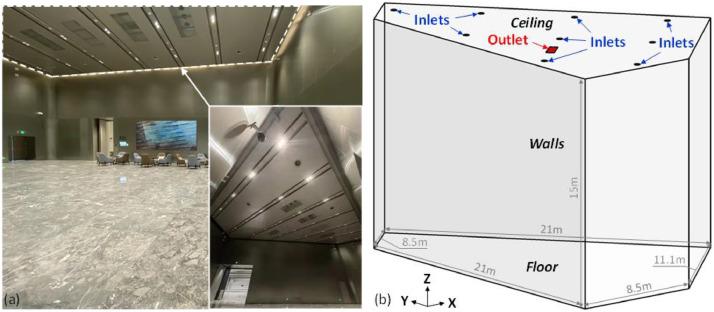
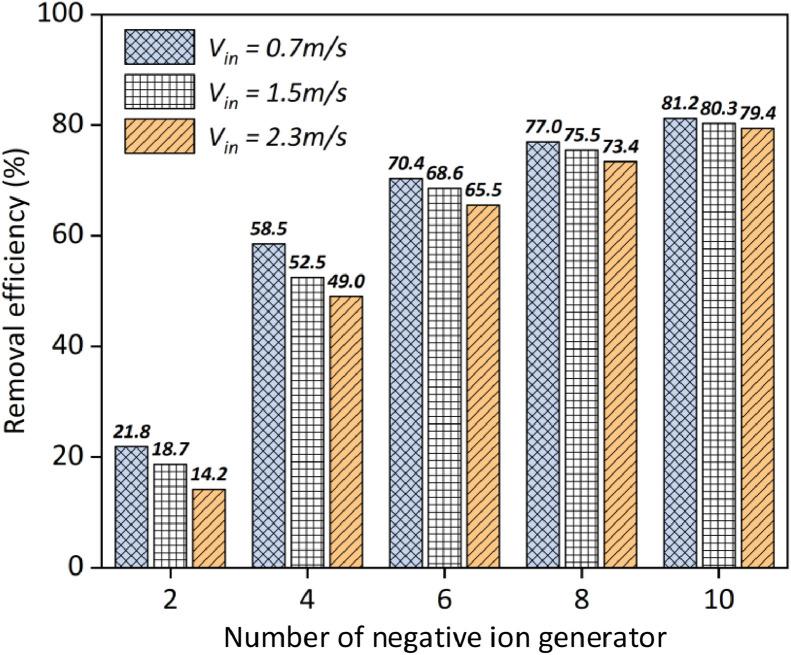
During the post-COVID-19 era, it is important but challenging to synchronously mitigate the infection risk and optimize the energy savings in public buildings. While, ineffective control of ventilation and purification systems can result in increased energy consumption and cross-contamination. This paper is to develop intelligent operation, maintenance, and control systems by coupling intelligent ventilation and air purification systems (negative ion generators). Optimal deployment of sensors is determined by Fuzzy C-mean (FCM), based on which CO concentration fields are rapidly predicted by combing the artificial neural network (ANN) and self-adaptive low-dimensional linear model (LLM). Negative oxygen ion and particle concentrations are simulated with different numbers of negative ion generators. Optimal ventilation rates and number of negative ion generators are decided. A visualization platform is established to display the effects of ventilation control, epidemic prevention, and pollutant removal. The rapid prediction error of LLM-based ANN for CO concentration was below 10% compared with the simulation. Fast decision reduced CO concentration below 1000 ppm, infection risk below 1.5%, and energy consumption by 27.4%. The largest removal efficiency was 81% when number of negative ion generators was 10. This work can promote intelligent operation, maintenance, and control systems considering infection prevention and energy sustainability.
在后新冠疫情时代,同步降低公共建筑中的感染风险并优化节能既重要又具有挑战性。然而,通风和净化系统控制不当会导致能源消耗增加和交叉污染。本文旨在通过耦合智能通风和空气净化系统(负离子发生器)来开发智能运行、维护和控制系统。基于模糊C均值(FCM)确定传感器的最优部署,并在此基础上,结合人工神经网络(ANN)和自适应低维线性模型(LLM)快速预测一氧化碳(CO)浓度场。模拟不同数量负离子发生器情况下的负氧离子和颗粒物浓度。确定最优通风率和负离子发生器数量。建立可视化平台以展示通风控制、防疫和污染物去除效果。与模拟结果相比,基于LLM的ANN对CO浓度的快速预测误差低于10%。快速决策将CO浓度降低到1000 ppm以下,感染风险降低到1.5%以下,能耗降低27.4%。当负离子发生器数量为10时,最大去除效率为81%。这项工作有助于推动兼顾感染预防和能源可持续性的智能运行、维护和控制系统的发展。




 Zotero 插件