Hladish Thomas J, Pillai Alexander N, Pearson Carl A B, Toh Kok Ben, Tamayo Andrea, Stoltzfus Arlin, Longini Ira M
Department of Biology, University of Florida, Gainesville, Florida, USA.
Emerging Pathogens Institute, University of Florida, Gainesville, Florida, USA.
medRxiv. 2023 Mar 10:2023.03.09.23285319. doi: 10.1101/2023.03.09.23285319.
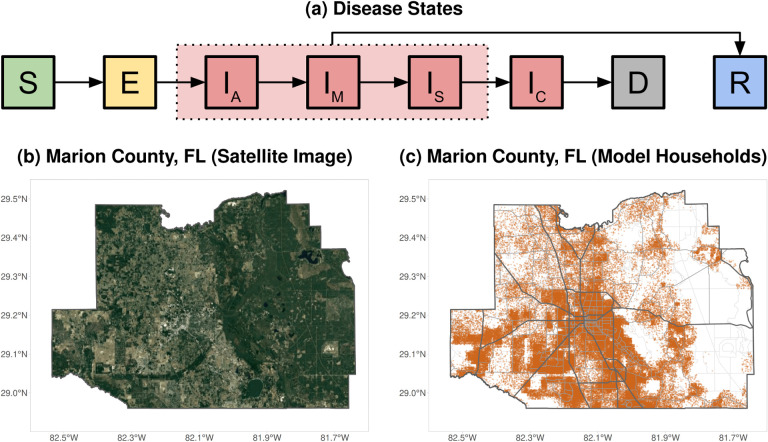
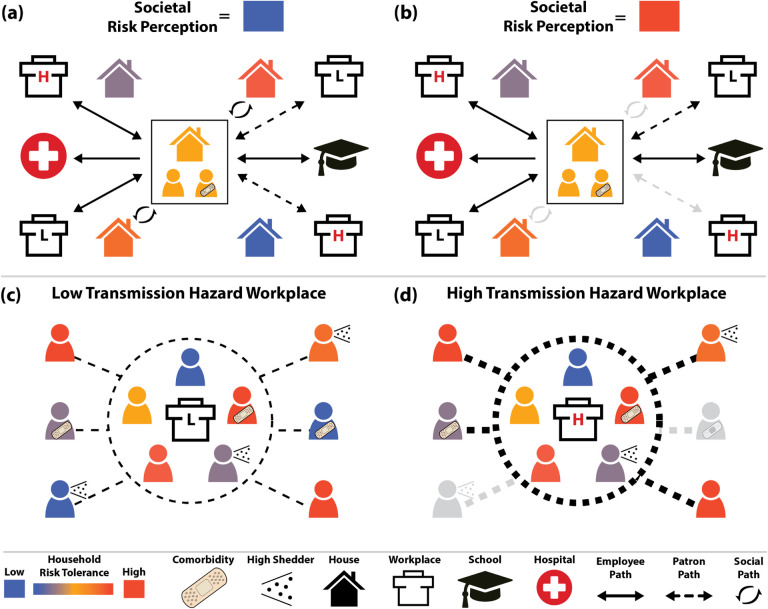
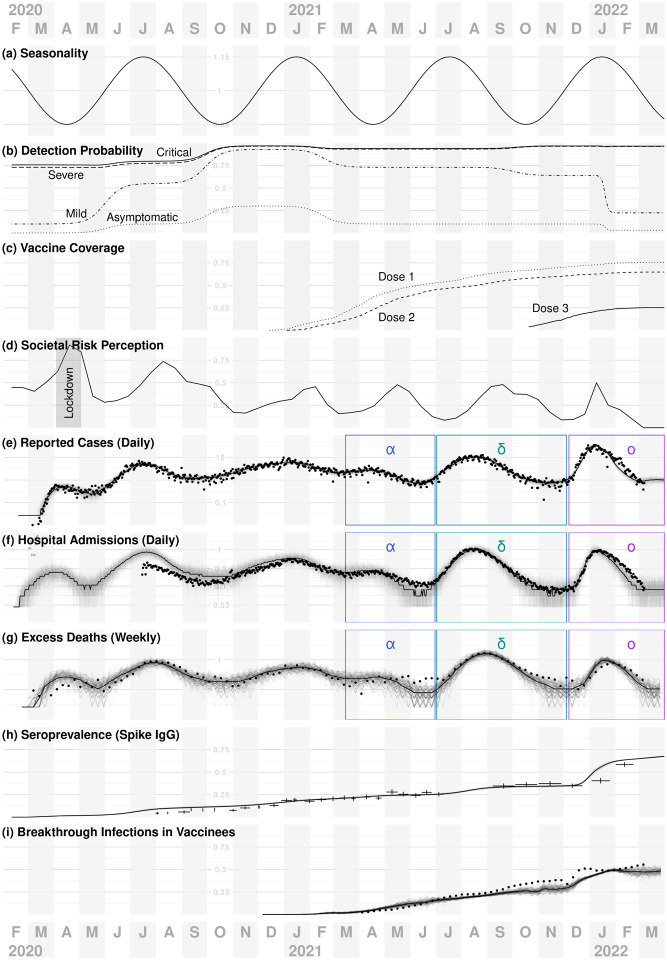
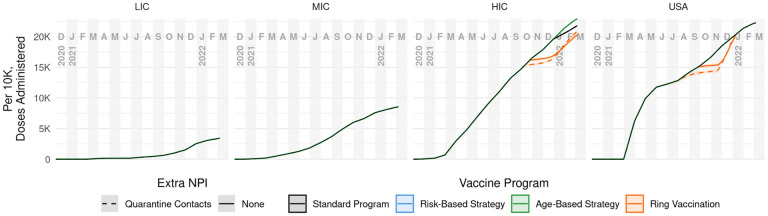
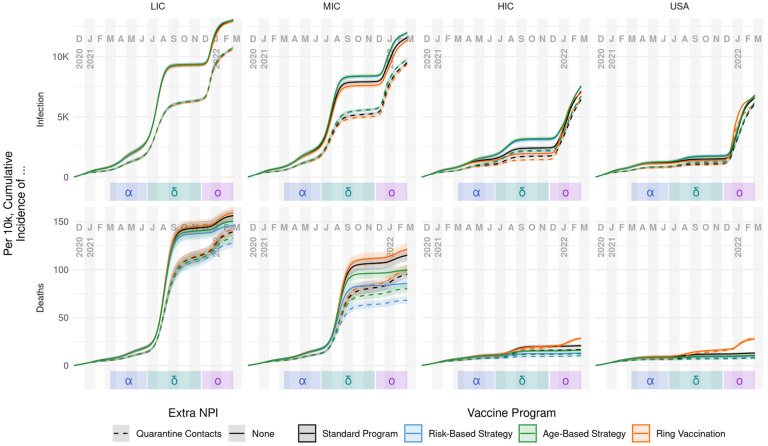
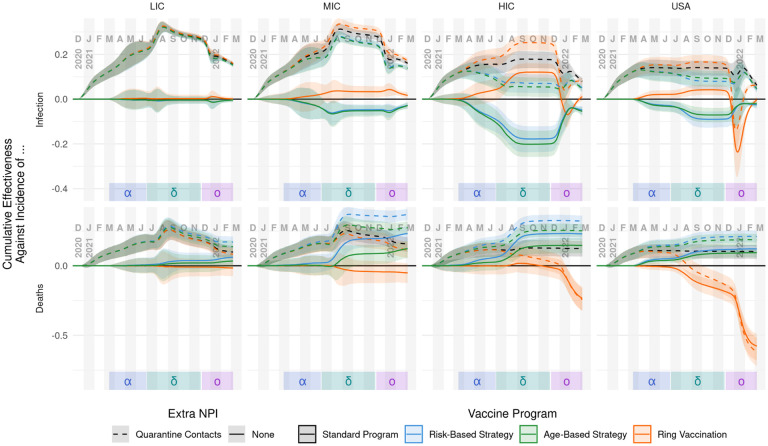
We evaluate approaches to vaccine distribution using an agent-based model of human activity and COVID-19 transmission calibrated to detailed trends in cases, hospitalizations, deaths, seroprevalence, and vaccine breakthrough infections in Florida, USA. We compare the incremental effectiveness for four different distribution strategies at four different levels of vaccine availability, reflecting different income settings' historical COVID-19 vaccine distribution. Our analysis indicates that the best strategy to reduce severe outcomes is to actively target high disease-risk individuals. This was true in every scenario, although the advantage was greatest for the middle-income-country availability assumptions, and relatively modest compared to a simple mass vaccination approach for rapid, high levels of vaccine availability. Ring vaccination, while generally the most effective strategy for reducing infections, ultimately proved least effective at preventing deaths. We also consider using age group as a practical, surrogate measure for actual disease-risk targeting; this approach still outperforms both simple mass distribution and ring vaccination. We also find that the magnitude of strategy effectiveness depends on when assessment occurs (., after delta vs. after omicron variants). However, these differences in absolute benefit for the strategies do not change the ranking of their performance at preventing severe outcomes across vaccine availability assumptions.
我们使用一种基于主体的人类活动和新冠病毒传播模型来评估疫苗分配方法,该模型已根据美国佛罗里达州病例、住院、死亡、血清流行率和疫苗突破性感染的详细趋势进行了校准。我们比较了在四种不同疫苗可及水平下四种不同分配策略的增量效果,这四种水平反映了不同收入环境下新冠疫苗的历史分配情况。我们的分析表明,降低严重后果的最佳策略是积极针对高疾病风险个体。在每种情况下都是如此,尽管在中等收入国家的疫苗可及性假设下优势最大,并且与快速实现高疫苗可及性的简单大规模接种方法相比相对较小。环形接种虽然通常是减少感染最有效的策略,但最终证明在预防死亡方面效果最差。我们还考虑将年龄组作为针对实际疾病风险的一种实用替代指标;这种方法仍然优于简单的大规模分配和环形接种。我们还发现,策略有效性的程度取决于评估时间(例如,在德尔塔毒株出现后与奥密克戎毒株出现后)。然而,这些策略在绝对收益上的差异并没有改变它们在不同疫苗可及性假设下预防严重后果的性能排名。