Department of Pathology, Yale University School of Medicine, New Haven, Connecticut.
Department of Medicine, School of Medicine, National and Kapodistrian University of Athens, Athens, Greece.
Cancer Res Commun. 2023 Mar 21;3(3):471-482. doi: 10.1158/2767-9764.CRC-22-0334. eCollection 2023 Mar.
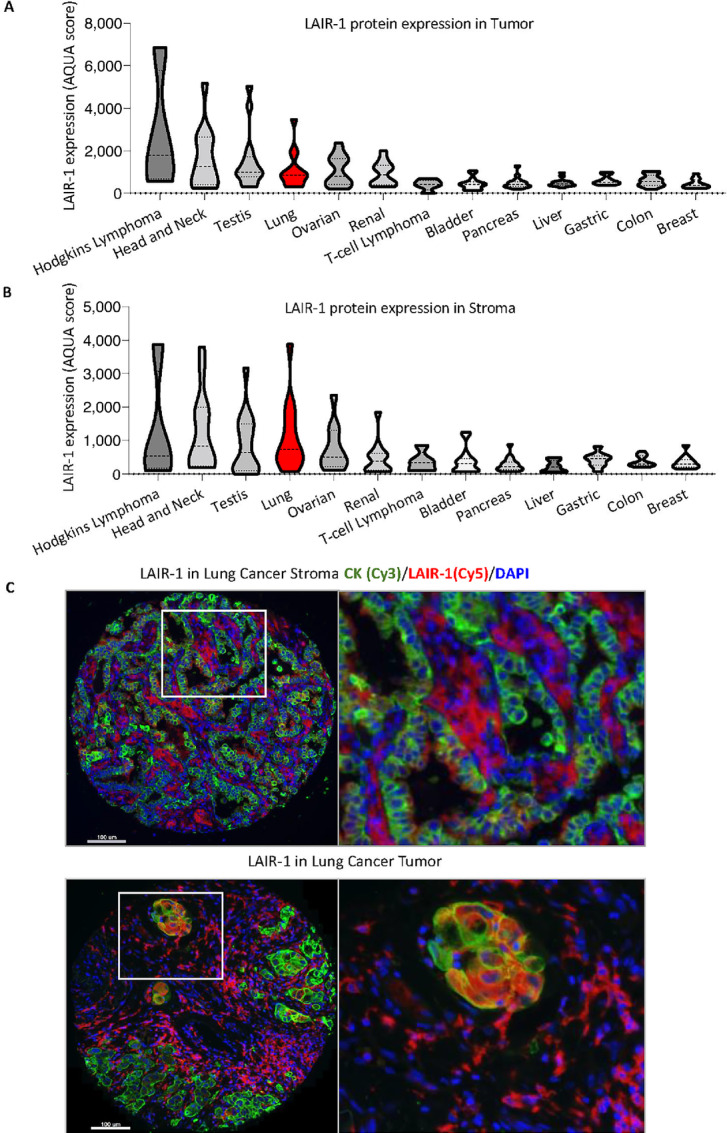
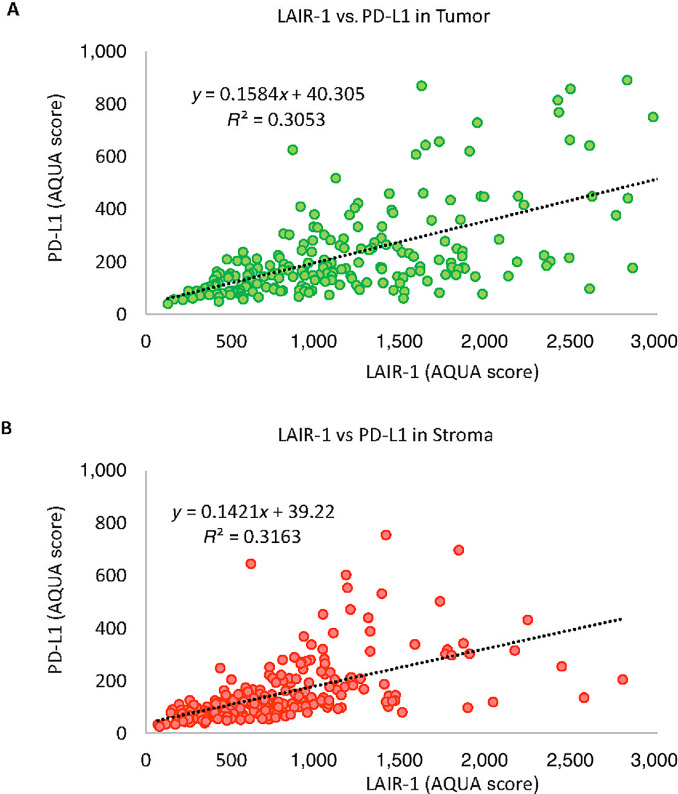
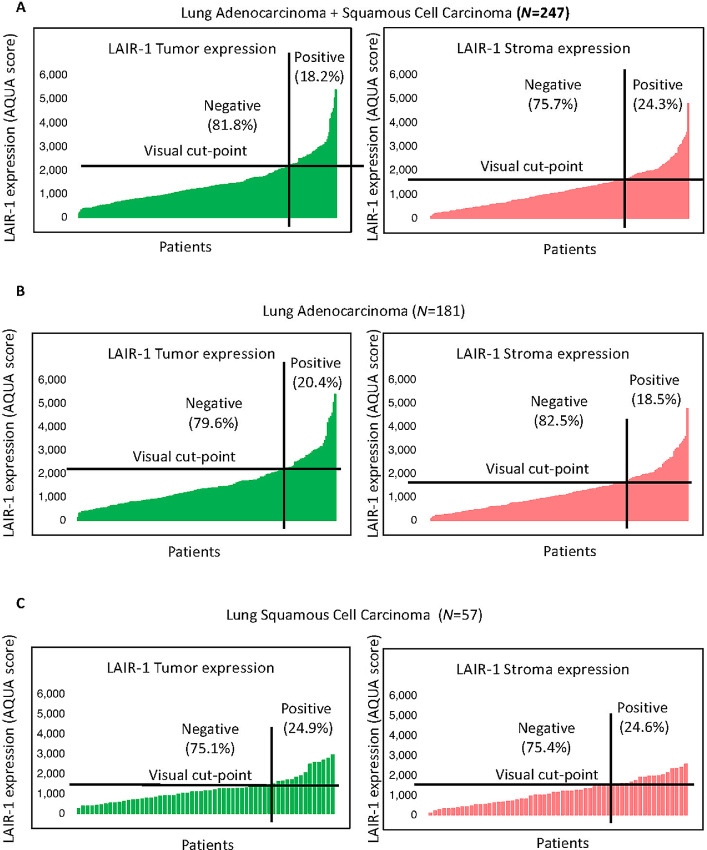
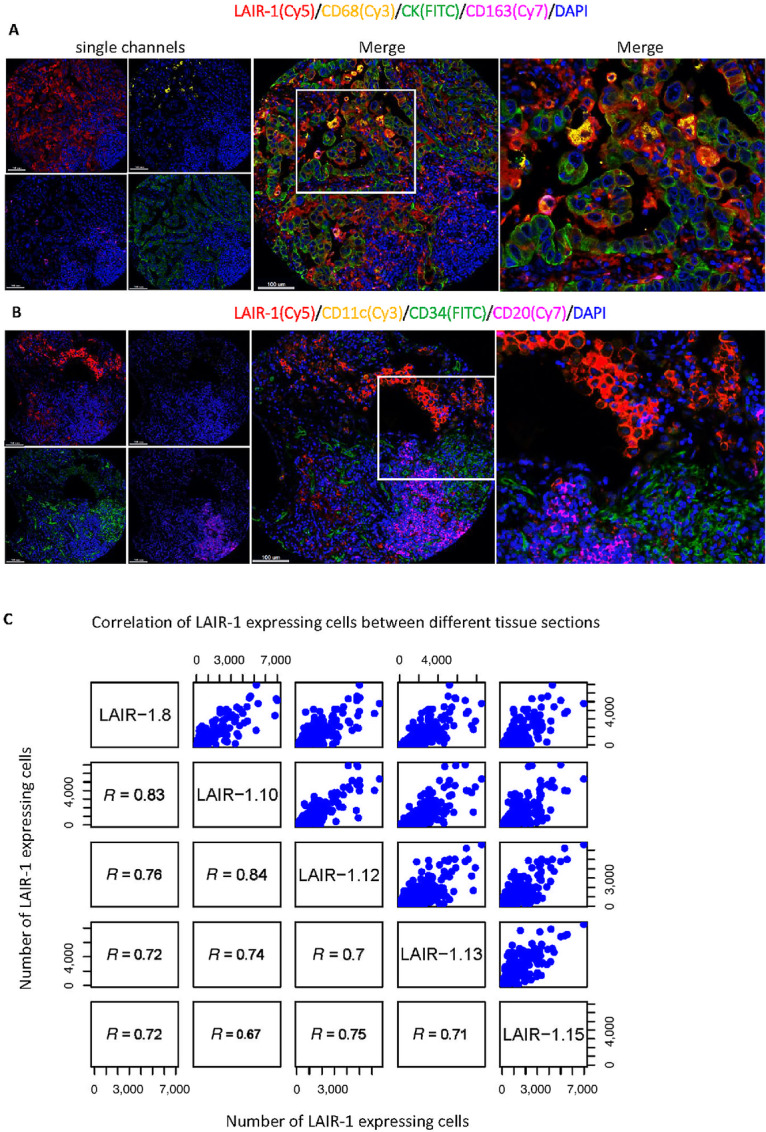
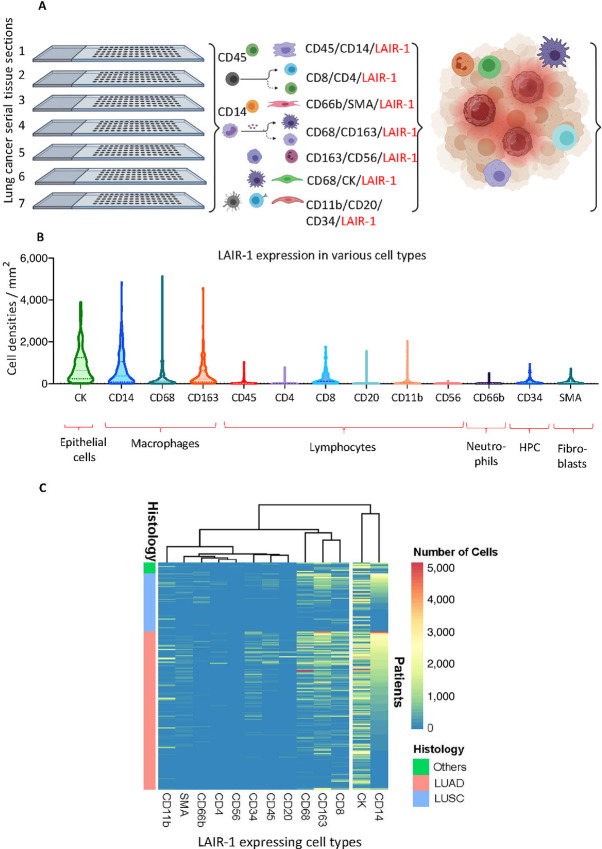
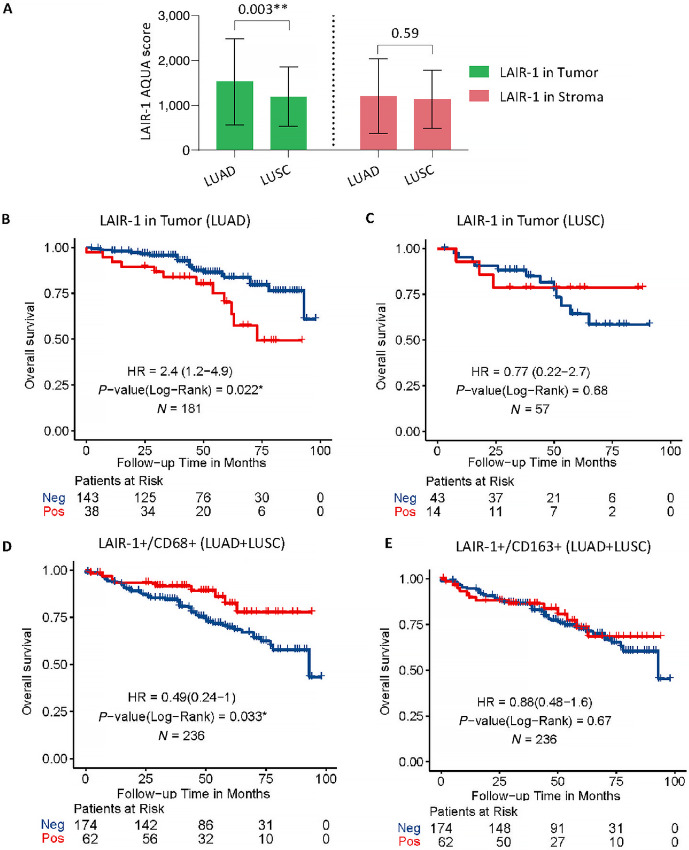
Targeting the interaction of leukocyte-associated immunoglobulin-like receptor-1 (LAIR-1) and its ligands has been shown to reinstate antitumor immunity. In addition, the introduction of the LAIR-1 decoy protein, LAIR-2, sensitizes previously resistant lung tumors to programmed death-1 (PD-1) blockade, indicating the potential of LAIR-1 as an alternative marker for anti-PD-1 resistance in lung cancer. Here, we assessed LAIR-1 as compared with programmed death-ligand 1 (PD-L1) expression in various tumors, with a focus on non-small cell lung cancer (NSCLC) and its histologic subtypes using multiplexed quantitative immunofluorescence (mQIF) in 287 (discovery cohort) and 144 (validation cohort) patients with NSCLC. In addition, using multispectral imaging technology on mQIF images, we evaluated the localization of LAIR-1 on various cell types. We observed that CD14, CD68, and CD163 monocytes and CK tumor cells predominantly expressed LAIR-1 more than other cell types. Furthermore, LAIR-1 expression in the tumor compartment was significantly higher in patients with lung adenocarcinoma (LUAD) than those with lung squamous cell carcinoma subtype (**, = 0.003). Our results indicated that high tumor LAIR-1 expression in patients with LUAD is negatively associated with OS (overall survival, HR = 2.4; *, = 0.02) highlighting its prognostic value in LUAD but not in other subtypes. The Pearson correlation between LAIR-1 and PD-L1 is 0.31; however, mutual exclusive staining pattern (i.e., several cases were positive for LAIR-1 and negative for PD-L1) was observed. Altogether, our data suggest that the combination therapy of anti-PD-1/PD-L1 with anti-LAIR-1 or the anti-LAIR-1 monotherapy alone may be promising cancer immunotherapeutic strategies.
The spatial, quantitative assessment of LAIR-1 in NSCLC shows positive association of OS with high LAIR-1/CD68 cell densities and negative association of OS with high LAIR-1 expression in LUAD tumor subtype.
靶向白细胞相关免疫球蛋白样受体-1(LAIR-1)与其配体的相互作用已被证明可以恢复抗肿瘤免疫。此外,引入 LAIR-1 诱饵蛋白 LAIR-2 可使先前对程序性死亡-1(PD-1)阻断有抵抗力的肺肿瘤变得敏感,这表明 LAIR-1 作为肺癌抗 PD-1 耐药的替代标志物具有潜力。在这里,我们使用 287 例(发现队列)和 144 例(验证队列)非小细胞肺癌(NSCLC)患者的多重定量免疫荧光(mQIF)评估了 LAIR-1 与程序性死亡配体 1(PD-L1)在各种肿瘤中的表达,重点是 NSCLC 及其组织学亚型。此外,我们使用 mQIF 图像的多光谱成像技术评估了 LAIR-1 在各种细胞类型上的定位。我们观察到 CD14、CD68 和 CD163 单核细胞和 CK 肿瘤细胞比其他细胞类型更优先表达 LAIR-1。此外,与肺鳞癌亚型相比,LAIR-1 在肺腺癌(LUAD)患者肿瘤中的表达明显更高(**, = 0.003)。我们的结果表明,LUAD 患者肿瘤中 LAIR-1 的高表达与 OS(总生存期)呈负相关(HR = 2.4;*, = 0.02),突出了其在 LUAD 中的预后价值,但在其他亚型中则不然。LAIR-1 与 PD-L1 之间的 Pearson 相关性为 0.31;然而,观察到相互排斥的染色模式(即,一些病例 LAIR-1 阳性而 PD-L1 阴性)。总之,我们的数据表明,抗 PD-1/PD-L1 与抗 LAIR-1 联合治疗或单独使用抗 LAIR-1 治疗可能是很有前途的癌症免疫治疗策略。
非小细胞肺癌中 LAIR-1 的空间、定量评估显示,OS 与高 LAIR-1/CD68 细胞密度呈正相关,与 LUAD 肿瘤亚型中高 LAIR-1 表达呈负相关。