Kabir Humayun, Chowdhury Saifur Rahman, Tonmon Tajrin Tahrin, Roy Anjan Kumar, Akter Shimpi, Bhuya Mohammad Toyabur Rahaman, Hossain Lukman, Chowdhury Samiul Amin, Sanjoy Shubrandu
Department of Public Health, North South University, Dhaka, Bangladesh.
Department of Anthropology, Jahangirnagar University, Savar, Dhaka, Bangladesh.
PLOS Glob Public Health. 2022 Apr 1;2(4):e0000187. doi: 10.1371/journal.pgph.0000187. eCollection 2022.
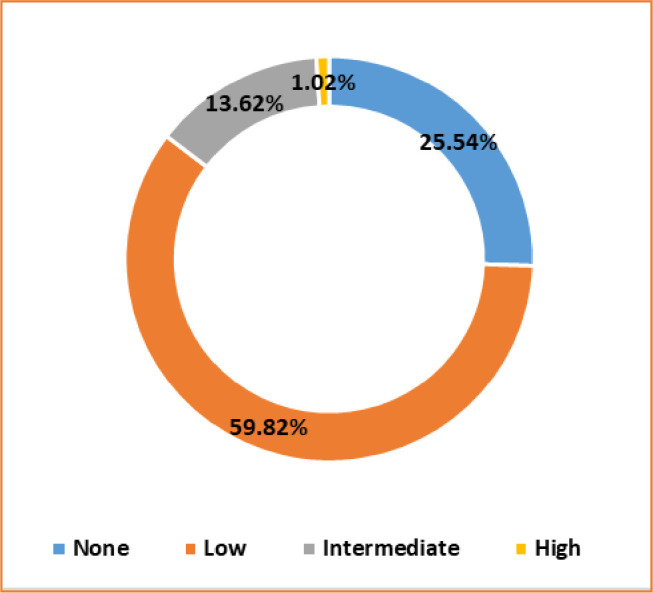
During the COVID-19 pandemic, workplace violence was widespread against healthcare personnel. Workplace violence (WPV) against nurses exhilarates their turnover intention (TI). The objective of this study was to investigate the association between workplace violence and turnover intention and also identify other factors associated with TI among Bangladeshi female nurses. An exploratory cross-sectional study was carried out among 881 female nurses between April 26 and July 10, 2021. The TI of the female nurses was the outcome variable of this study. The primary exposure variable was WPV faced by the nurses. Workplace Violence Scale (WPVS) was used to measure the WPV, and Turnover Intention Scale-6 (TIS-6) was used to measure the TI of the nurses. Multiple linear regression model was fitted to find the adjusted association of TI with WPV and other study variables. A stratified analysis by type of job (government vs. private) was also performed. The majority of the nurses (74.46%) faced low to high levels of WPV. The overall mean score of TIS was found 16.33 (± 4.72). Multiple linear regression analysis revealed that compared to government jobholders, the mean score of TIS (15.81 vs. 17.20) was found significantly higher among the private jobholders (p < 0.001). Nurses exposed to the intermediate and high level of WPV had a significantly higher TI score (β = 4.35, 95% CI: 3.36, 5.34) than the non-exposures. The TI of private jobholders was found significantly higher (β = 2.04, 95% CI: 1.09, 3.00) than the government jobholders. Compared to diploma degree holders, significantly higher TI was observed among the B.Sc. degree holders (β = 0.86, 95% CI: 0.22, 1.55) and M.Sc. degree holders (β = 1.46, 95% CI: 0.58, 2.34). Besides, the nurses who did not get timely salaries scored higher TI (β = 1.17, 95% CI: 0.12, 2.22). Moreover, the nurses who did not receive any training against WPV scored significantly higher TI (β = 1.89, 95% CI: 1.03, 2.74). The stratified analysis by type of job also revealed significant factors of TI in government and private settings. This study found a high prevalence of WPV and a high rate of TI among Bangladeshi female nurses. Moreover, this study explored an association between WPV and TI. The study findings could help policymakers facilitate a comfortable working environment by preventing WPV and addressing the factors to reduce nurses' frequent TI.
在新冠疫情期间,针对医护人员的职场暴力行为十分普遍。针对护士的职场暴力会加剧她们的离职意愿。本研究的目的是调查职场暴力与离职意愿之间的关联,并确定孟加拉国女性护士中与离职意愿相关的其他因素。2021年4月26日至7月10日期间,对881名女性护士进行了一项探索性横断面研究。女性护士的离职意愿是本研究的结果变量。主要暴露变量是护士所面临的职场暴力。使用职场暴力量表(WPVS)来衡量职场暴力,使用离职意向量表-6(TIS-6)来衡量护士的离职意愿。采用多元线性回归模型来找出离职意愿与职场暴力及其他研究变量之间的校正关联。还按工作类型(政府部门与私营部门)进行了分层分析。大多数护士(74.46%)面临低到高水平的职场暴力。TIS的总体平均得分是16.33(±4.72)。多元线性回归分析显示,与政府部门工作人员相比,私营部门工作人员的TIS平均得分(15.81对17.20)显著更高(p<0.001)。暴露于中等和高水平职场暴力的护士的离职意愿得分显著高于未暴露者(β=4.35,95%置信区间:3.36,5.34)。私营部门工作人员的离职意愿显著高于政府部门工作人员(β=2.04,95%置信区间:1.09,3.00)。与文凭持有者相比,理学学士持有者(β=0.86,95%置信区间:0.22,1.55)和理学硕士持有者(β=1.46,95%置信区间:0.58,2.34)的离职意愿显著更高。此外,未按时拿到工资的护士离职意愿得分更高(β=1.17,95%置信区间:0.12,2.22)。此外,未接受过任何职场暴力培训的护士离职意愿得分显著更高(β=1.89,95%置信区间:1.03,2.74)。按工作类型进行的分层分析也揭示了政府部门和私营部门环境中离职意愿的显著影响因素。本研究发现孟加拉国女性护士职场暴力的高发生率和高离职率。此外,本研究探索了职场暴力与离职意愿之间的关联。研究结果有助于政策制定者通过预防职场暴力和解决相关因素来减少护士频繁的离职意愿,从而营造一个舒适的工作环境。