Nishizuka Satoshi S, Nakatochi Masahiro, Koizumi Yuka, Hishida Asahi, Okada Rieko, Kawai Sayo, Sutoh Yoichi, Koeda Keisuke, Shimizu Atsushi, Naito Mariko, Wakai Kenji
Division of Biomedical Research & Development, Iwate Medical University Institute for Biomedical Sciences, Yahaba, Japan.
Department of Integrated Health Sciences, Public Health Informatics Unit, Nagoya University Graduate School of Medicine, Nagoya, Japan.
PLOS Glob Public Health. 2023 Feb 8;3(2):e0001125. doi: 10.1371/journal.pgph.0001125. eCollection 2023.
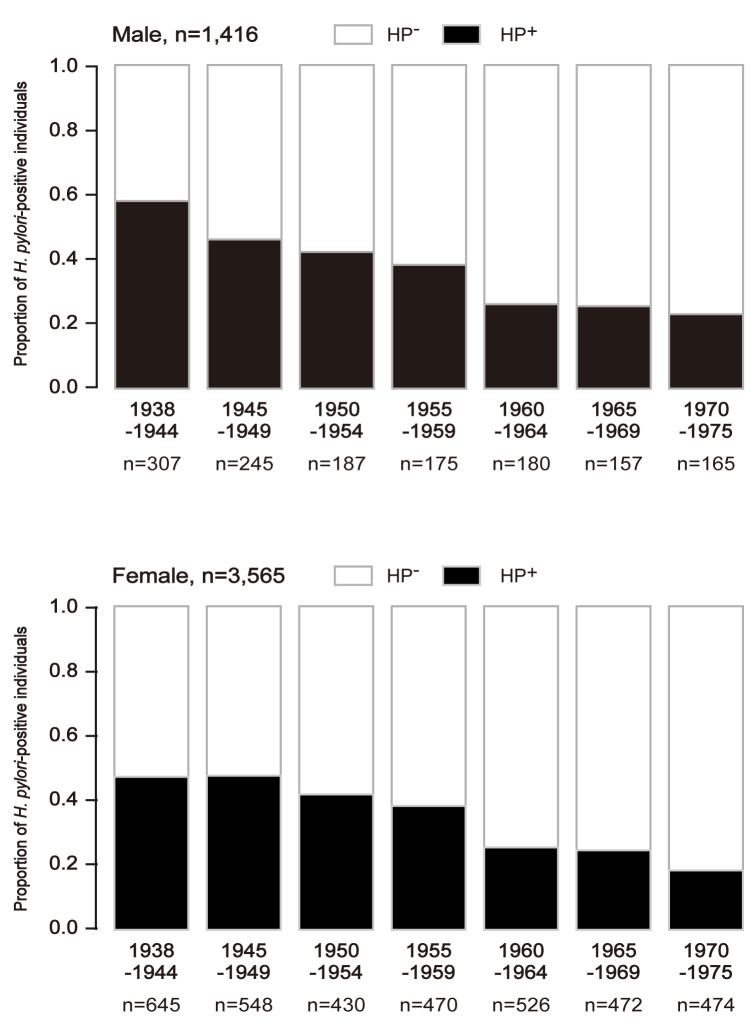
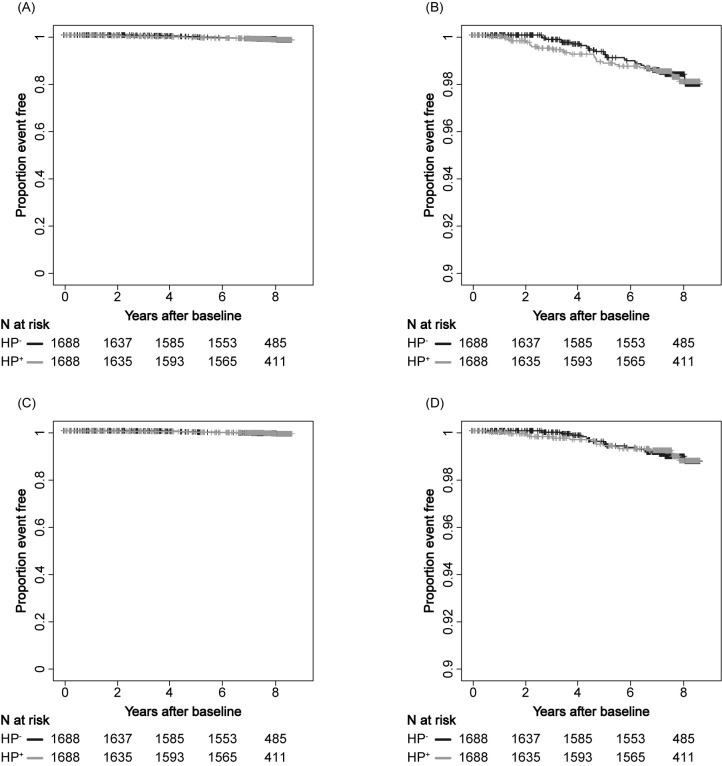
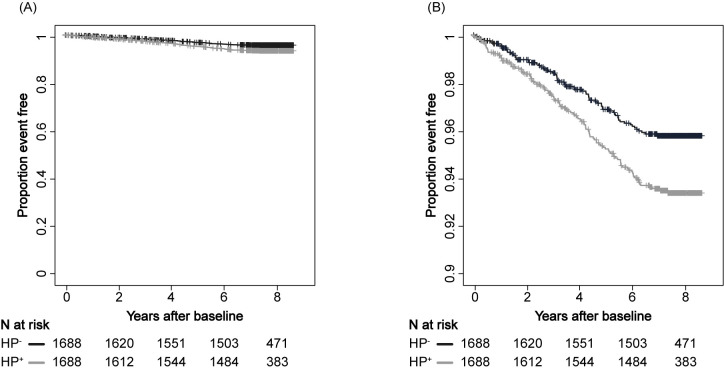
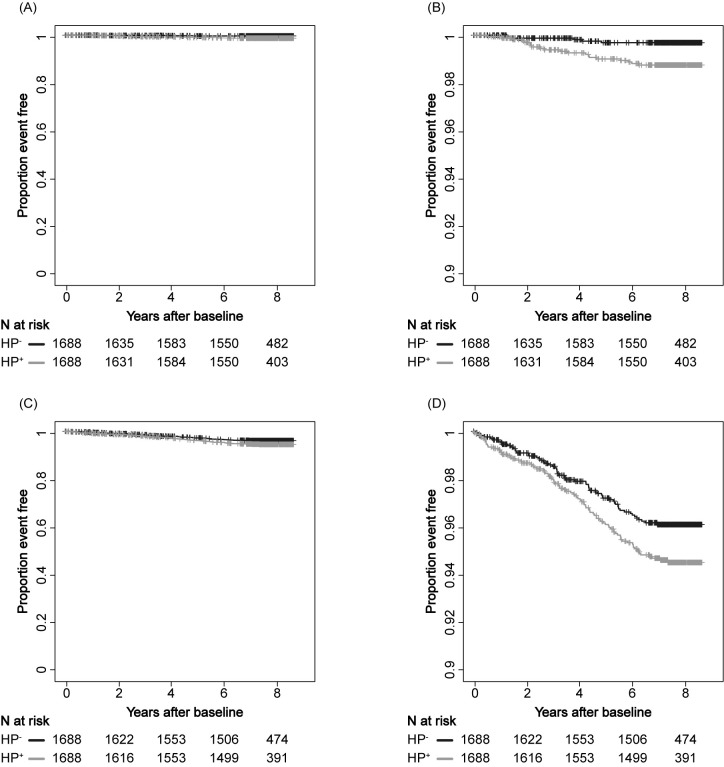
Paradoxically, patients with advanced stomach cancer who are Helicobacter pylori-positive (HP+) have a higher survival rate than those who are HP-. This finding suggests that HP infection has beneficial effects for cancer treatment. The present study examines whether HP+ individuals have a lower likelihood of death from cancer than those who are HP-. Prospective cohort data (n = 4,982 subjects enrolled in the DAIKO study between 2008-2010) were used to assess whether anti-HP antibody status was associated with cancer incidence. The median age in the primary registry was 53 years-old (range 35-69 years-old). Over the 8-year observation period there were 234 (4.7%) cancer cases in the cohort and 88 (1.8%) all-cause deaths. Urine anti-HP antibody data was available for all but one participant (n = 4,981; 99.98%). The number of HP+ and HP- individuals was 1,825 (37%) and 3,156 (63%), respectively. Anti-HP antibody distribution per birth year revealed that earlier birth year was associated with higher HP+ rates. With a birth year-matched cohort (n = 3,376), all-cancer incidence was significantly higher in HP+ individuals than those who were HP- (p = 0.00328), whereas there was no significant difference in the cancer death rate between HP+ and HP- individuals (p = 0.888). Cox regression analysis for prognostic factors revealed that the hazards ratio of HP+ was 1.59-fold (95%CI 1.17-2.26) higher than HP- in all-cancer incidence. Potential systemic effects of HP+ status may contribute to reduced likelihood of death for patients after an initial diagnosis of cancer.
矛盾的是,晚期胃癌患者中幽门螺杆菌阳性(HP+)者的生存率高于幽门螺杆菌阴性(HP-)者。这一发现表明,HP感染对癌症治疗具有有益作用。本研究调查了HP+个体相较于HP-个体死于癌症的可能性是否更低。前瞻性队列数据(2008年至2010年期间参加DAIKO研究的4982名受试者)用于评估抗HP抗体状态与癌症发病率是否相关。主要登记处的中位年龄为53岁(范围35至69岁)。在8年的观察期内,该队列中有234例(4.7%)癌症病例和88例(1.8%)全因死亡。除一名参与者外,所有参与者(n = 4981;99.98%)均有尿液抗HP抗体数据。HP+和HP-个体的数量分别为1825例(37%)和3156例(63%)。按出生年份划分的抗HP抗体分布显示,较早的出生年份与较高的HP+率相关。在出生年份匹配的队列(n = 3376)中,HP+个体的所有癌症发病率显著高于HP-个体(p = 0.00328),而HP+和HP-个体之间的癌症死亡率无显著差异(p = 0.888)。对预后因素的Cox回归分析显示,在所有癌症发病率方面,HP+的风险比高于HP- 1.59倍(95%CI 1.17 - 2.26)。HP+状态的潜在全身效应可能有助于降低癌症初诊患者的死亡可能性。