Sulay Rehin, Mathew Jintumol, Krishnan Anandhu, Thomas Dr Vibin Ipe
Department of Chemistry, CMS College (Autonomous), Kottayam, 686001, Kerala, India.
Heliyon. 2023 Mar 16;9(3):e14511. doi: 10.1016/j.heliyon.2023.e14511. eCollection 2023 Mar.
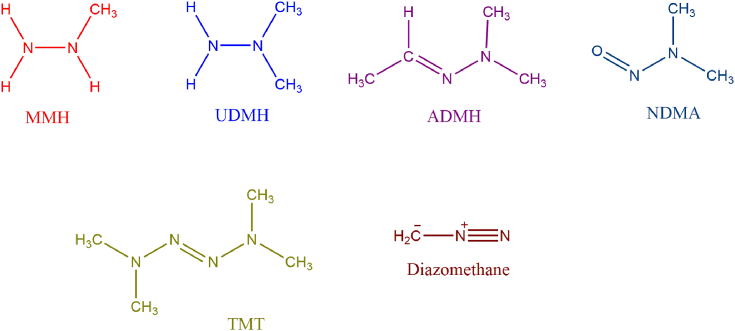
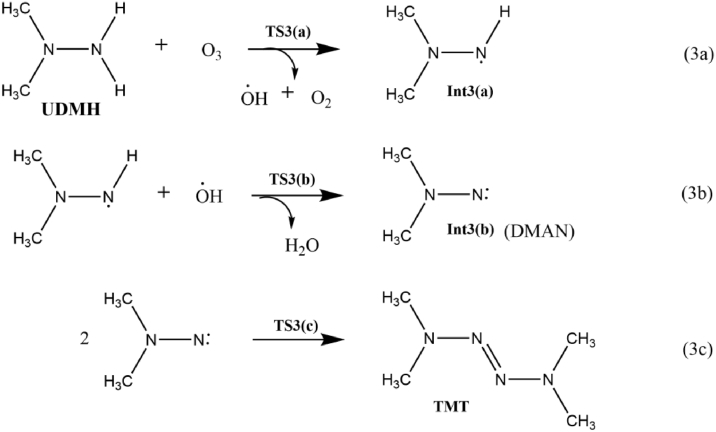
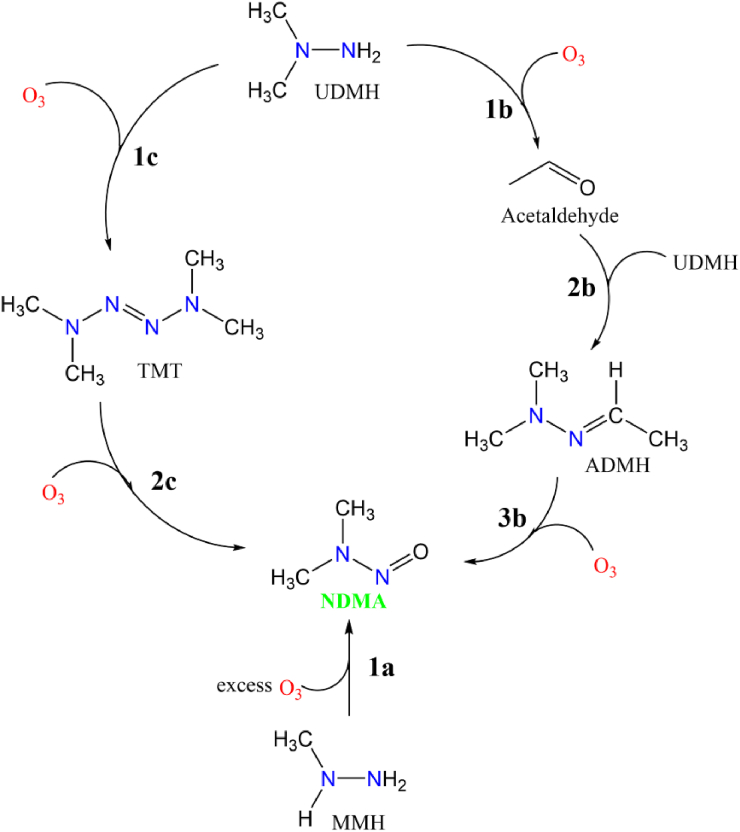
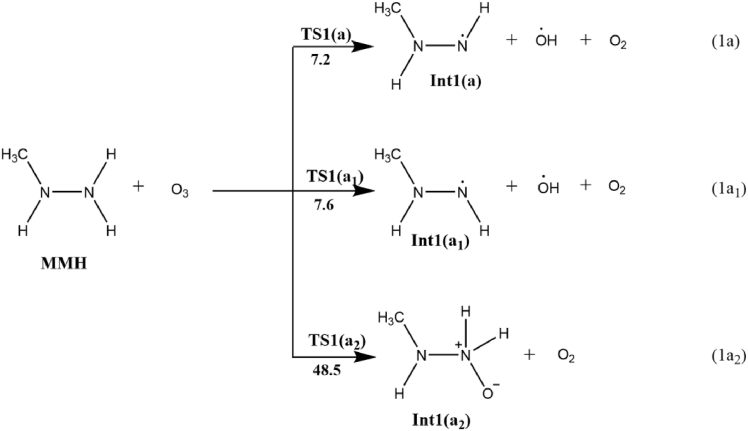
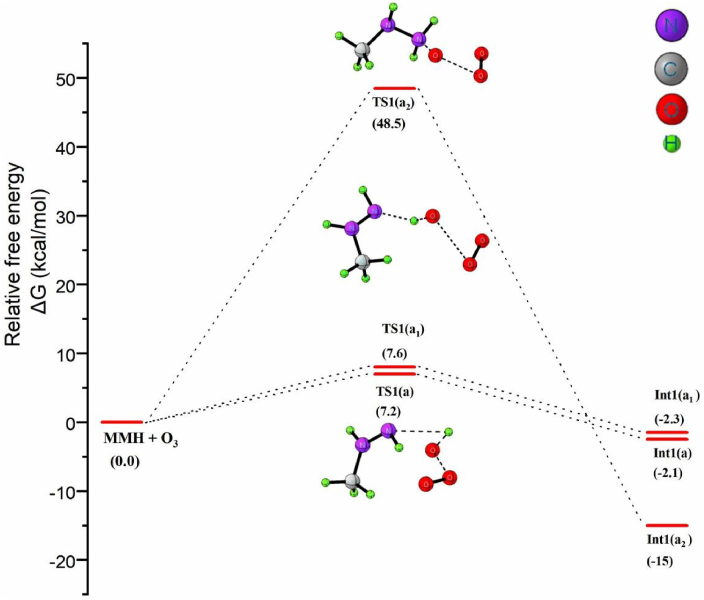
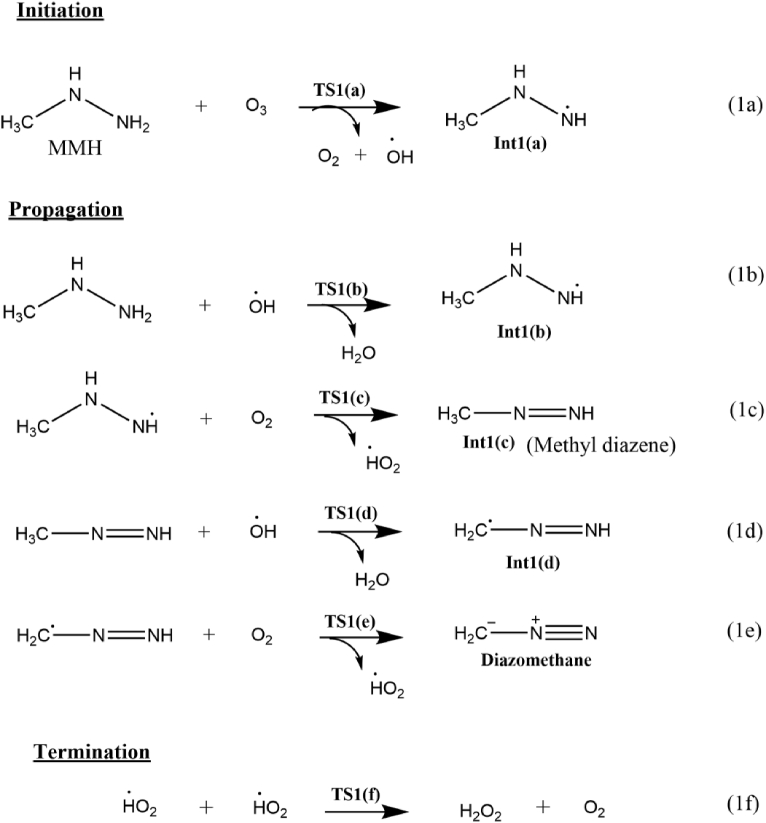
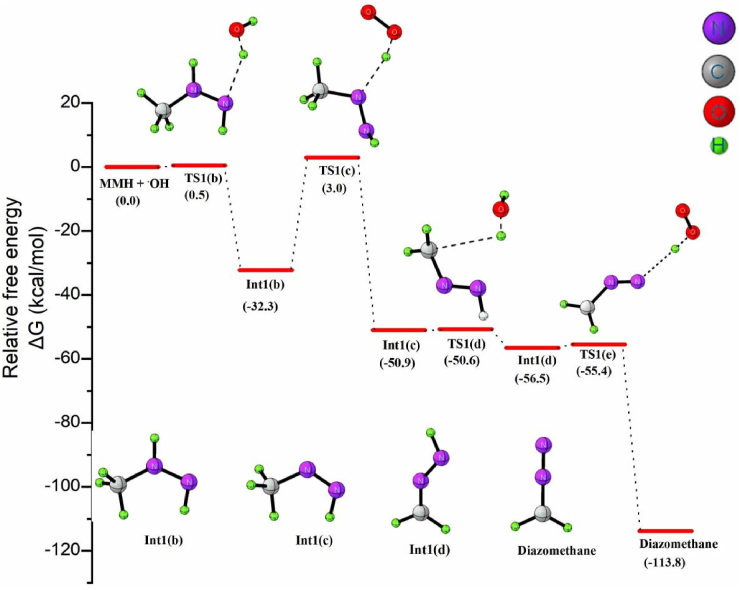
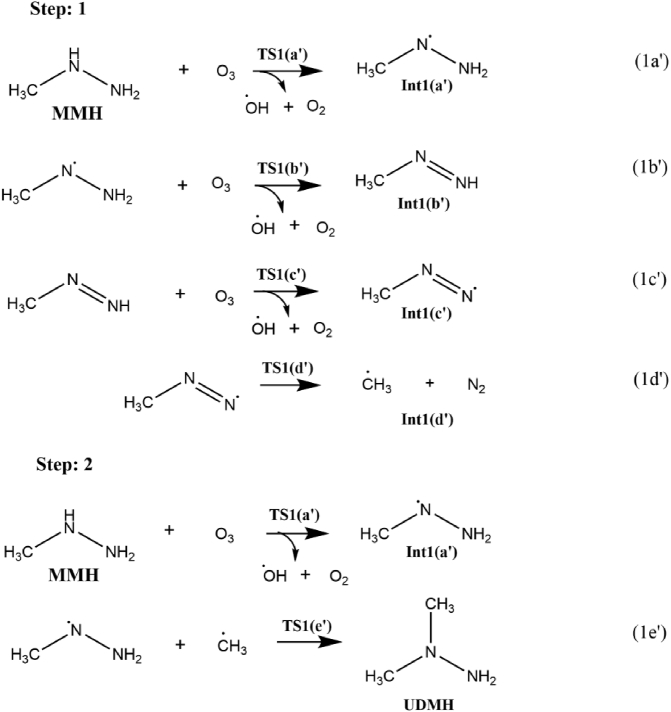
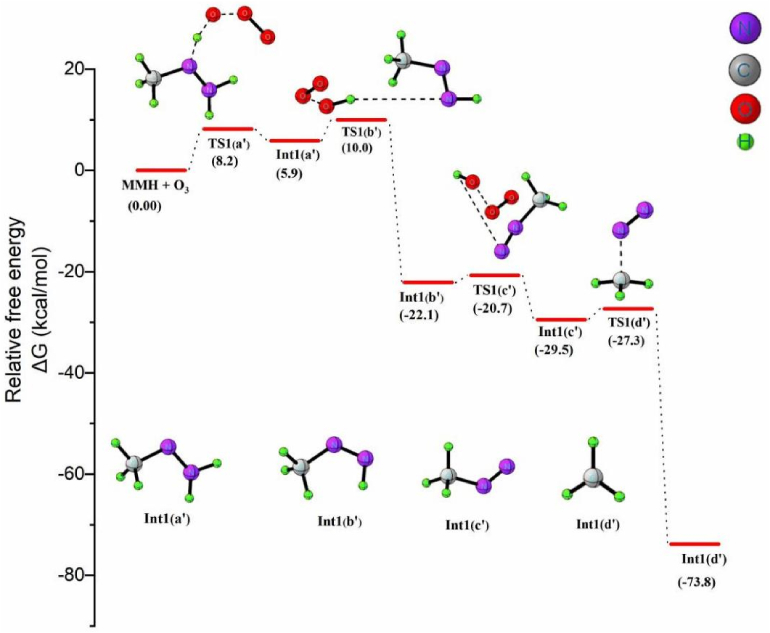
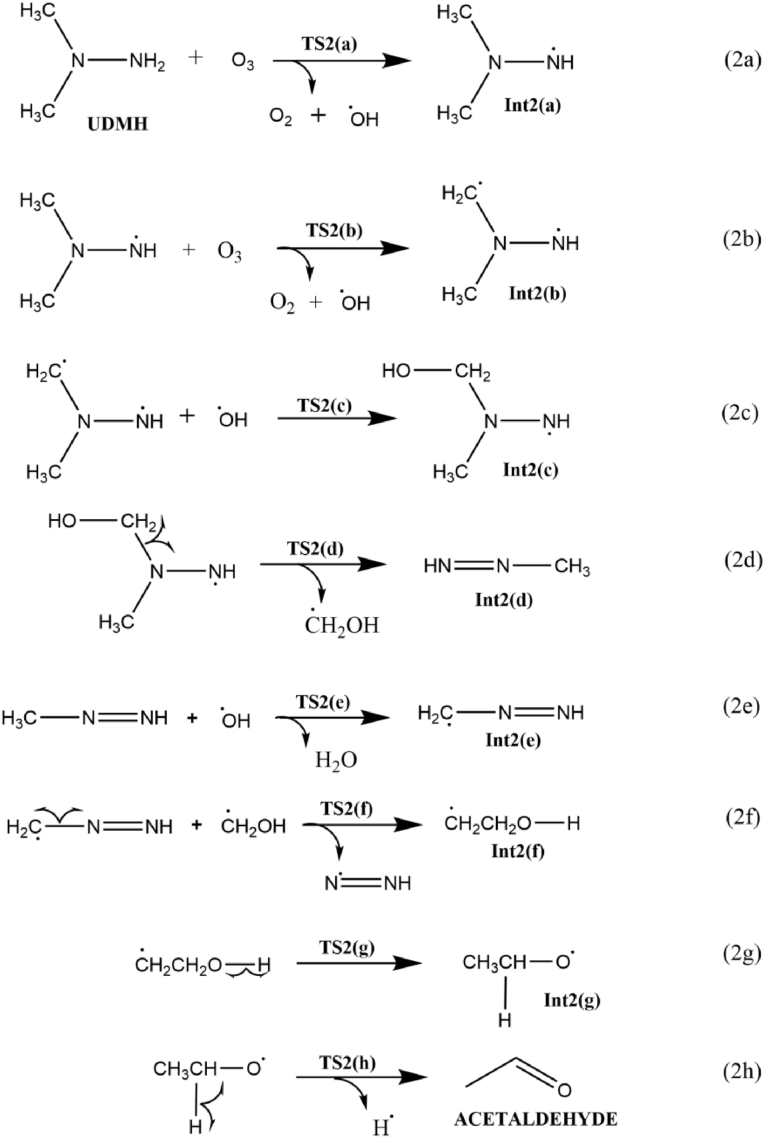
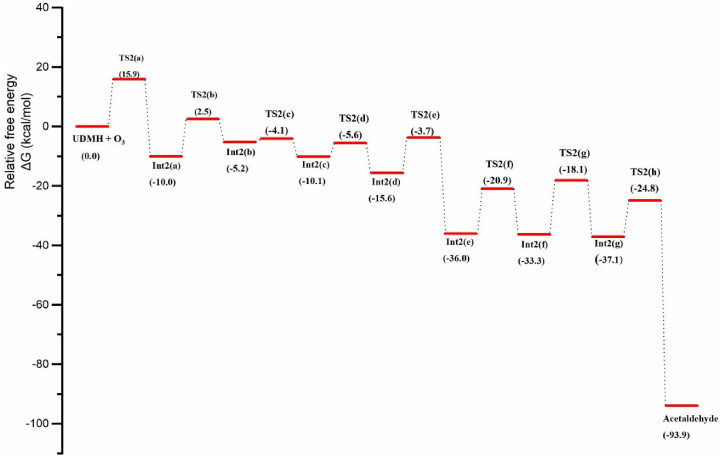
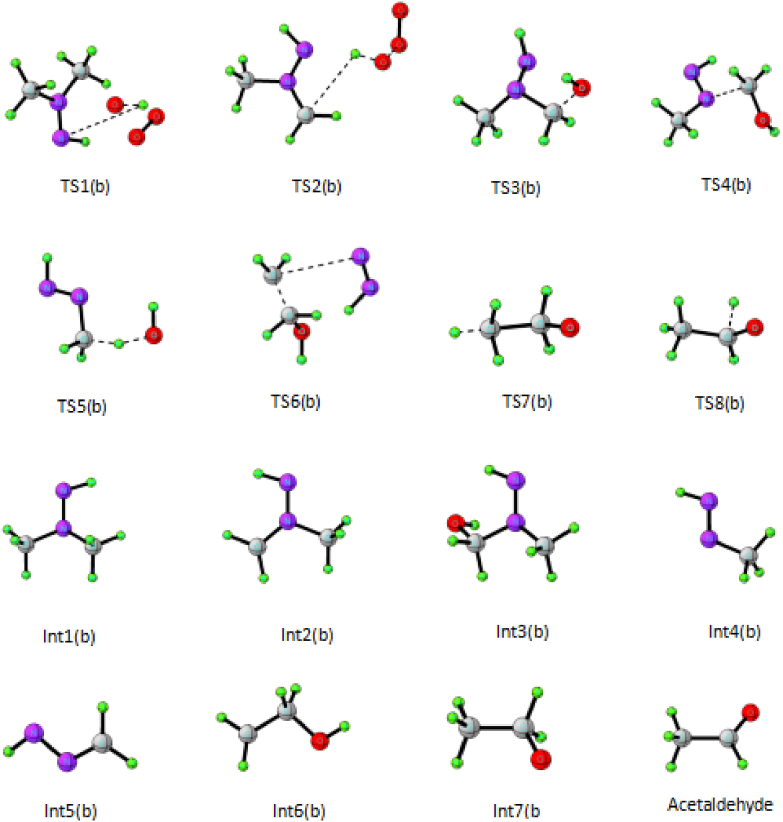
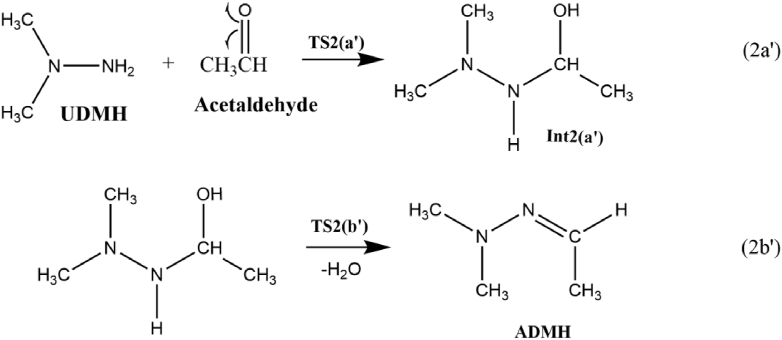
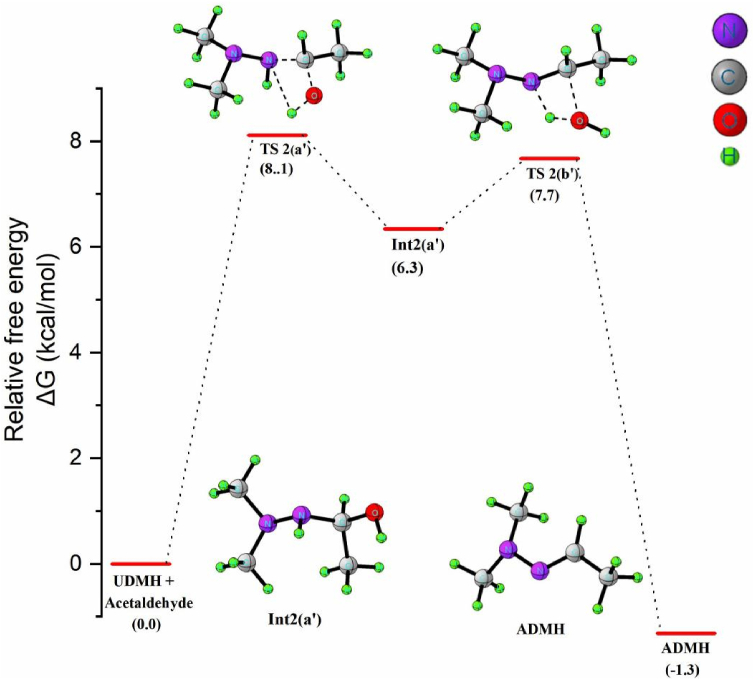
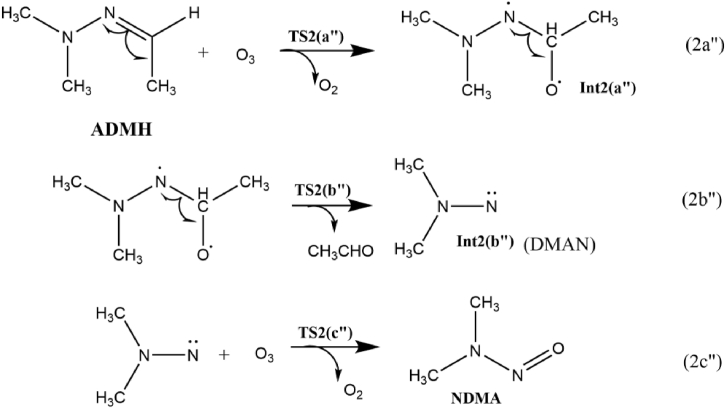
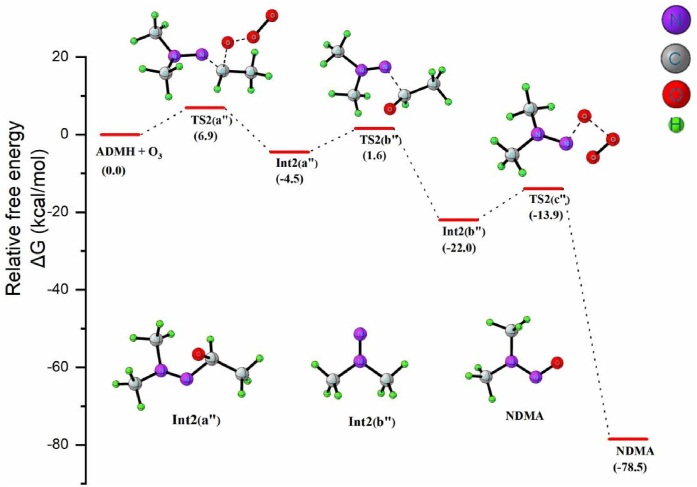
N- Nitrosodimethyl amine, the simplest member of the N-Nitrosamine family, is a carcinogenic and mutagenic agent that has gained considerable research interest owing to its toxic nature. Ozonation of industrially important hydrazines, such as unsymmetrical dimethylhydrazine (UDMH) or monomethylhydrazine (MMH), has been associated with NDMA formation and accumulation in the environment. UDMH/MMH - ozonation also leads to several other transformation products such as acetaldehyde dimethyl hydrazine (ADMH), tetramethyl tetra azene (TMT), diazomethane, methyl diazene, etc, which can be either precursors or competitors for NDMA formation. However, the relevant chemistry detailing the formation of these transformation products from UDMH/MMH -ozone reaction and their subsequent conversion to NDMA is not well understood. In this work, we explored the formation mechanism of ADMH and TMT from UDMH-ozonation and their further oxidation to NDMA using the second-order Moller Plesset perturbation theory employing the 6-311G(d) basis set. We have also investigated how MMH selectively forms methyl diazene and diazomethane under normal conditions and NDMA in the presence of excess ozone. Our calculations indicate that the reactions proceed via an initial H abstraction from the hydrazine -NH group, followed by the oxidation of the generated N-radical species. The formation of ADMH from the UDMH-ozone reaction involves an acetaldehyde intermediate, which then reacts with a second UDMH molecule to generate ADMH. The preferable attack of ozone molecule on N=C bond of ADMH generates DMAN intermediate, which subsequently undergoes oxidation to form NDMA. Unlike other transformation products, TMT formation occurs via the dimerization of DMAN. Though there exists an N=N bond in the TMT, which are preferable attacking sites for ozone, experimental studies show the lower yields of NDMA formation, which corroborates with the high activation barrier required for the process (42 kcal/mol). Overall, our calculated results agree well with the experimental observations and rate constants. Computational calculations bring new insights into the electronic nature and kinetics of the elementary reactions of this pathway, enabled by computed energies of structures that are not possible to access experimentally.
N-亚硝基二甲胺是N-亚硝胺家族中最简单的成员,是一种致癌和致突变剂,因其毒性本质而引起了广泛的研究兴趣。对工业上重要的肼类进行臭氧化反应,如不对称二甲基肼(UDMH)或一甲基肼(MMH),已与环境中NDMA的形成和积累相关联。UDMH/MMH臭氧化反应还会产生其他几种转化产物,如乙醛二甲基肼(ADMH)、四甲基四氮烯(TMT)、重氮甲烷、甲基二氮烯等,这些产物可能是NDMA形成的前体或竞争者。然而,详细描述这些由UDMH/MMH-臭氧反应形成的转化产物及其随后转化为NDMA的相关化学过程尚未得到很好的理解。在这项工作中,我们使用二阶Moller Plesset微扰理论并采用6-311G(d)基组,探索了UDMH臭氧化反应中ADMH和TMT的形成机制以及它们进一步氧化为NDMA的过程。我们还研究了MMH在正常条件下如何选择性地形成甲基二氮烯和重氮甲烷,以及在过量臭氧存在下如何形成NDMA。我们的计算表明,反应首先通过从肼的-NH基团夺取一个氢原子进行,随后是生成的N自由基物种的氧化。UDMH-臭氧反应中ADMH的形成涉及一个乙醛中间体,该中间体然后与第二个UDMH分子反应生成ADMH。臭氧分子对ADMH的N=C键的优先攻击产生DMAN中间体,该中间体随后进行氧化形成NDMA。与其他转化产物不同,TMT的形成是通过DMAN的二聚化发生的。尽管TMT中存在一个N=N键,这是臭氧优先攻击的位点,但实验研究表明NDMA形成的产率较低,这与该过程所需的高活化能垒(42千卡/摩尔)相符。总体而言,我们的计算结果与实验观察结果和速率常数吻合良好。计算计算为该途径的基本反应的电子性质和动力学带来了新的见解,这得益于对实验上无法获得的结构的计算能量。