Iravani Siavash, Varma Rajender S
Faculty of Pharmacy and Pharmaceutical Sciences, Isfahan University of Medical Sciences 81746-73461 Isfahan Iran
Institute for Nanomaterials, Advanced Technologies and Innovation (CxI), Technical University of Liberec (TUL) Studentská 1402/2 Liberec 1 461 17 Czech Republic.
RSC Adv. 2023 Mar 24;13(14):9665-9677. doi: 10.1039/d3ra01276j. eCollection 2023 Mar 20.
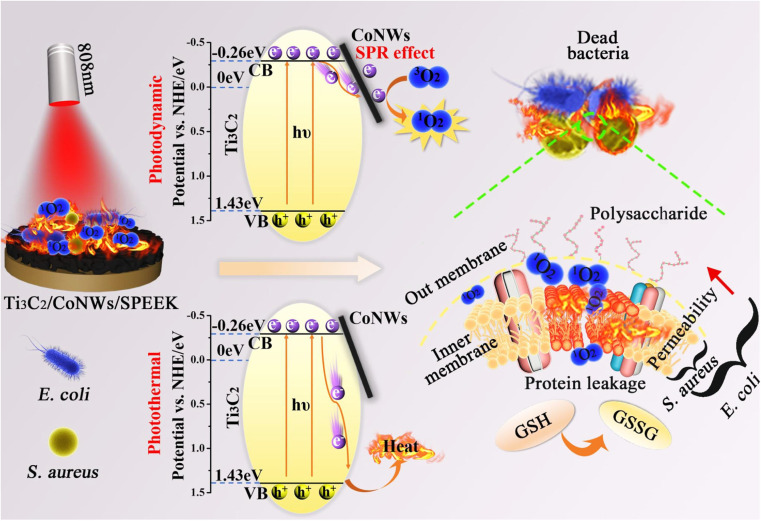
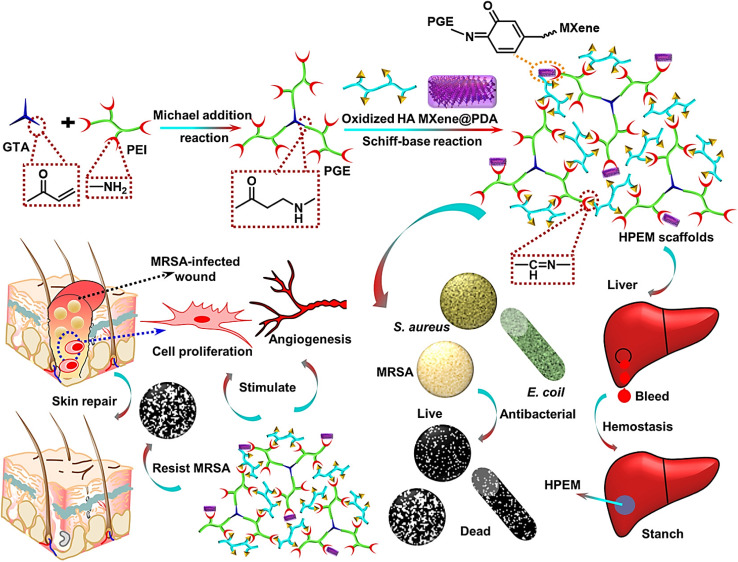
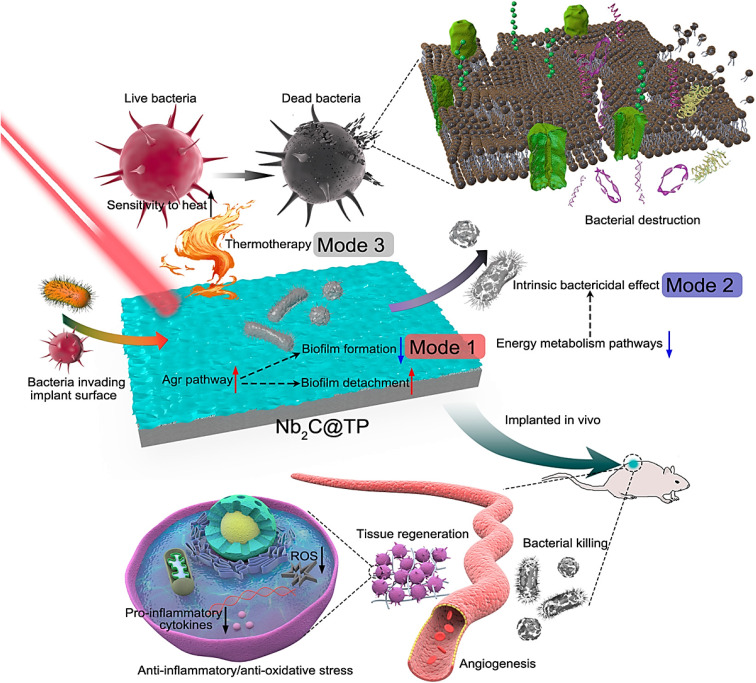
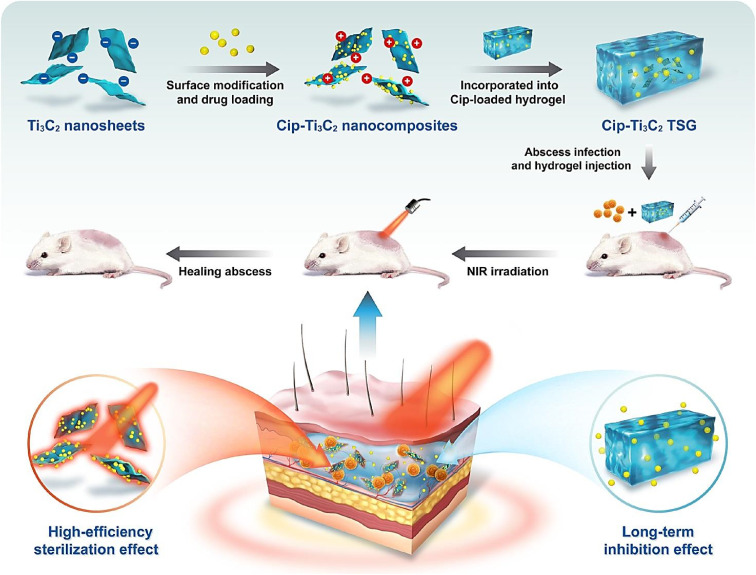
Today, finding novel nanomaterial-based strategies to combat bacterial resistance is an important field of science. MXene-based composites have shown excellent antimicrobial potential owing to their fascinating properties such as excellent photothermal effects, highly active sites, large interlayer spacing, unique chemical structures, and hydrophilicity; they have great potential to damage the bacterial cells by rupturing the bacterial cell membranes, enhancing the permeability across the membrane, causing DNA damages, reducing the metabolic activity, and generating oxidative stress. After inserting into or attaching on the surface of pathogenic bacteria, these two-dimensional structures can cause bacterial membrane disruption and cell content leakage owing to their sharp edges. Remarkably, MXenes and their composites with excellent photothermal performance have been studied in photothermal antibacterial therapy to combat antibiotic-resistant bacteria and suppress chronic wound infections, thus providing new opportunities for multidrug-resistant bacteria-infected wound healing. But, details about the possible interactions between MXene-based nanosystems and bacterial cell membranes are rather scarce. Also, the mechanisms of photothermal antibacterial therapy as well as synergistic tactics including photothermal, photodynamic or chemo-photothermal therapy still need to be uncovered. This review endeavors to delineate critical issues pertaining to the application of MXene-based composites against antibiotic-resistant bacteria, focusing on their photocatalytic inactivation, physical damage, and photothermal antibacterial therapy.
如今,寻找基于新型纳米材料的抗细菌耐药性策略是一个重要的科学领域。基于MXene的复合材料因其具有出色的光热效应、高活性位点、大的层间距、独特的化学结构和亲水性等迷人特性,展现出了优异的抗菌潜力;它们极有可能通过破坏细菌细胞膜、增强膜通透性、造成DNA损伤、降低代谢活性以及产生氧化应激来损伤细菌细胞。插入病原菌内部或附着在其表面后,这些二维结构因其尖锐边缘可导致细菌膜破裂和细胞内容物泄漏。值得注意的是,MXenes及其具有优异光热性能的复合材料已在光热抗菌治疗中得到研究,用于对抗耐抗生素细菌并抑制慢性伤口感染,从而为多重耐药菌感染伤口的愈合提供了新机会。但是,关于基于MXene的纳米系统与细菌细胞膜之间可能的相互作用的细节相当稀少。此外,光热抗菌治疗的机制以及包括光热、光动力或化学-光热疗法在内的协同策略仍有待揭示。本综述致力于阐述与基于MXene的复合材料对抗耐抗生素细菌应用相关的关键问题,重点关注其光催化失活、物理损伤和光热抗菌治疗。