College of Clinical Medicine for Obstetrics & Gynecology and Pediatrics, Fujian Medical University, Fuzhou, China.
Fujian Maternity and Child Health Hospital College of Clinical Medicine for Obstetrics & Gynecology and Pediatrics, Fujian Medical University, Fuzhou, China.
Front Cell Infect Microbiol. 2023 Mar 10;13:1152349. doi: 10.3389/fcimb.2023.1152349. eCollection 2023.
There is a close relationship between the intestinal microbiota and heart failure, but no study has assessed this relationship in infants with congenital heart disease. This study aimed to explore the relationship between heart failure and intestinal microbiota in infants with congenital heart disease.
Twenty-eight infants with congenital heart disease with heart failure admitted to a provincial children's hospital from September 2021 to December 2021 were enrolled in this study. A total of 22 infants without heart disease and matched for age, sex, and weight were selected as controls. Faecal samples were collected from every participant and subjected to 16S rDNA gene sequencing.
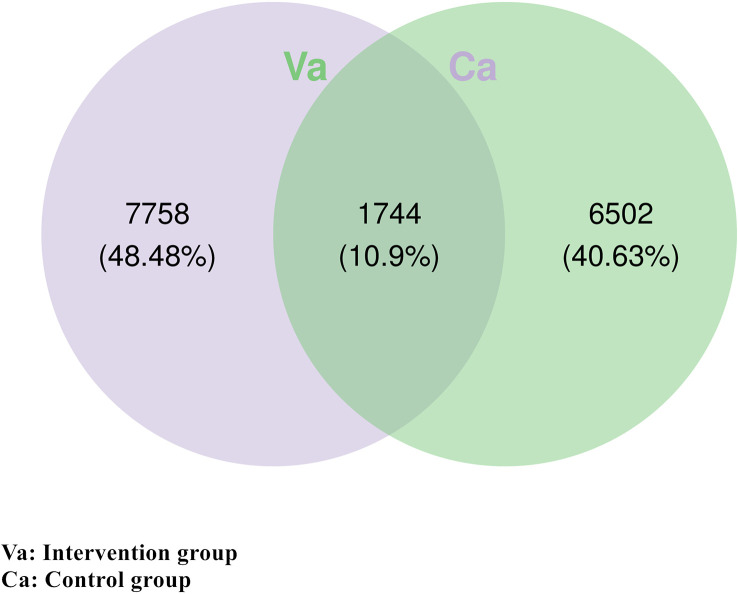
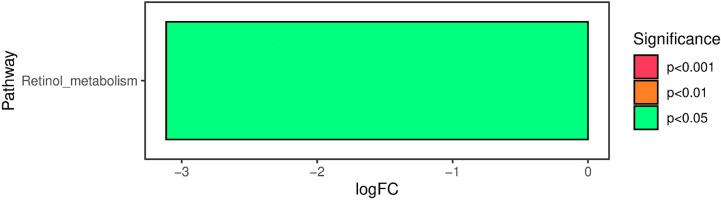
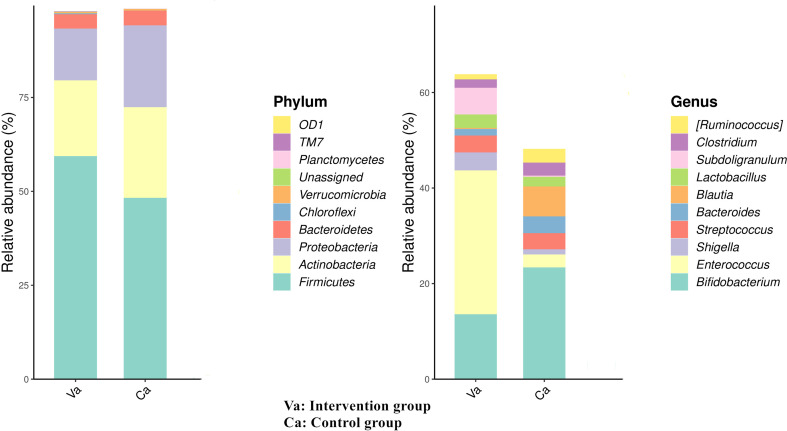
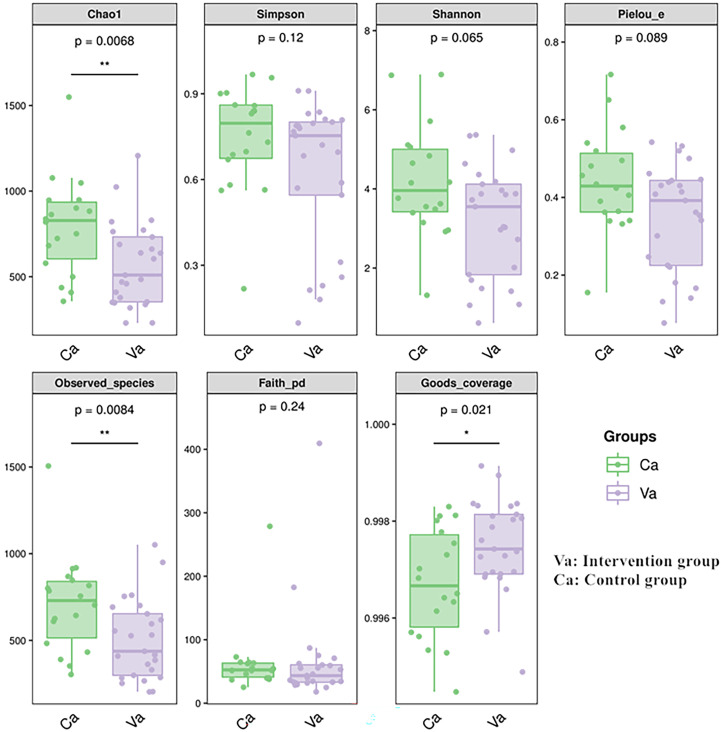
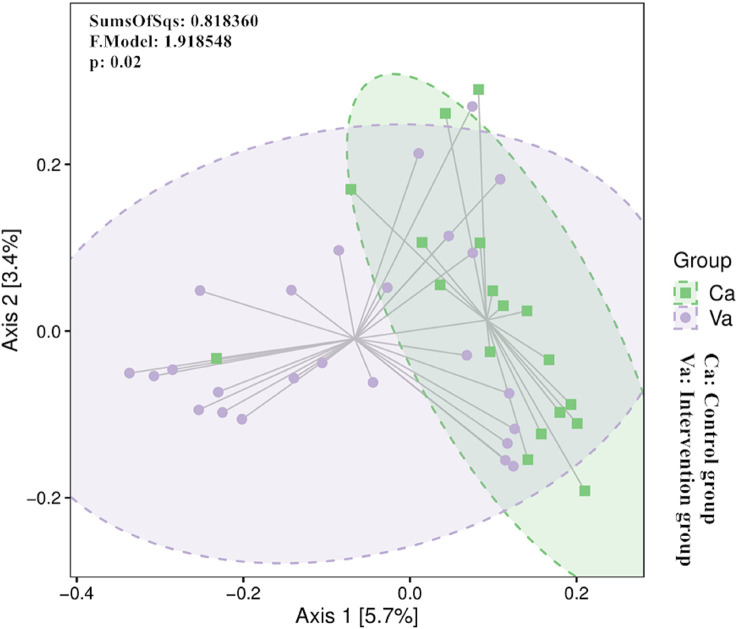
The composition of the intestinal microbiota was significantly disordered in infants with heart failure caused by congenital heart disease compared with that in infants without heart disease. At the phylum level, the most abundant bacteria in the heart failure group were Firmicutes, Actinobacteria, Proteobacteria, and Bacteroidetes, and the most abundant bacteria in the control group were Firmicutes, Proteobacteria, Actinobacteria, and Bacteroidetes. At the genus level, the most abundant bacteria in the heart failure group were , , , , and , and the most abundant bacteria in the control group were , , , , and . The alpha and beta diversities of the gut bacterial community in the heart failure group were significantly lower than those in the control group (p<0.05). Compared with the control group, retinol metabolism was significantly downregulated in the heart failure group.
Heart failure in infants with congenital heart disease caused intestinal microbiota disorder, which was characterised by an increase in pathogenic bacteria, a decrease in beneficial bacteria, and decreases in diversity and richness. The significant downregulation of retinol metabolism in the intestinal microbiota of infants with heart failure may be related to the progression of heart failure, and further study of the underlying mechanism is needed.
肠道微生物群与心力衰竭之间存在密切关系,但尚无研究评估先天性心脏病婴儿的这种关系。本研究旨在探讨先天性心脏病心力衰竭婴儿与肠道微生物群的关系。
本研究纳入 2021 年 9 月至 2021 年 12 月期间因先天性心脏病心力衰竭入住省级儿童医院的 28 例婴儿。共选择 22 例无心脏病且年龄、性别和体重相匹配的婴儿作为对照。采集每位参与者的粪便样本并进行 16S rDNA 基因测序。
与无心脏病的婴儿相比,先天性心脏病心力衰竭婴儿的肠道微生物群组成明显紊乱。在门水平上,心力衰竭组中最丰富的细菌为厚壁菌门、放线菌门、变形菌门和拟杆菌门,对照组中最丰富的细菌为厚壁菌门、变形菌门、放线菌门和拟杆菌门。在属水平上,心力衰竭组中最丰富的细菌为 、 、 、 、 ,对照组中最丰富的细菌为 、 、 、 、 。心力衰竭组肠道细菌群落的 alpha 和 beta 多样性明显低于对照组(p<0.05)。与对照组相比,心力衰竭组视黄醇代谢明显下调。
先天性心脏病心力衰竭婴儿的心力衰竭导致肠道微生物群紊乱,其特征为致病菌增加、有益菌减少以及多样性和丰富度降低。心力衰竭婴儿肠道微生物群中视黄醇代谢的显著下调可能与心力衰竭的进展有关,需要进一步研究其潜在机制。