Li Anqi, He Hailun, Chen Yanjing, Liao Feng, Tang Jie, Li Li, Fan Yumei, Li Li, Xiong Lidan
Cosmetics Safety and Efficacy Evaluation Center, West China Hospital, Sichuan University, Chengdu, Sichuan, China.
NMPA Key Laboratory for Human Evaluation and Big Data of Cosmetics, Chengdu, China.
Front Nutr. 2023 Mar 9;10:1121498. doi: 10.3389/fnut.2023.1121498. eCollection 2023.
Dairy products have long been regarded as a controversial nutrient for the skin. However, a clear demonstration of donkey milk (DM) on skincare is required.
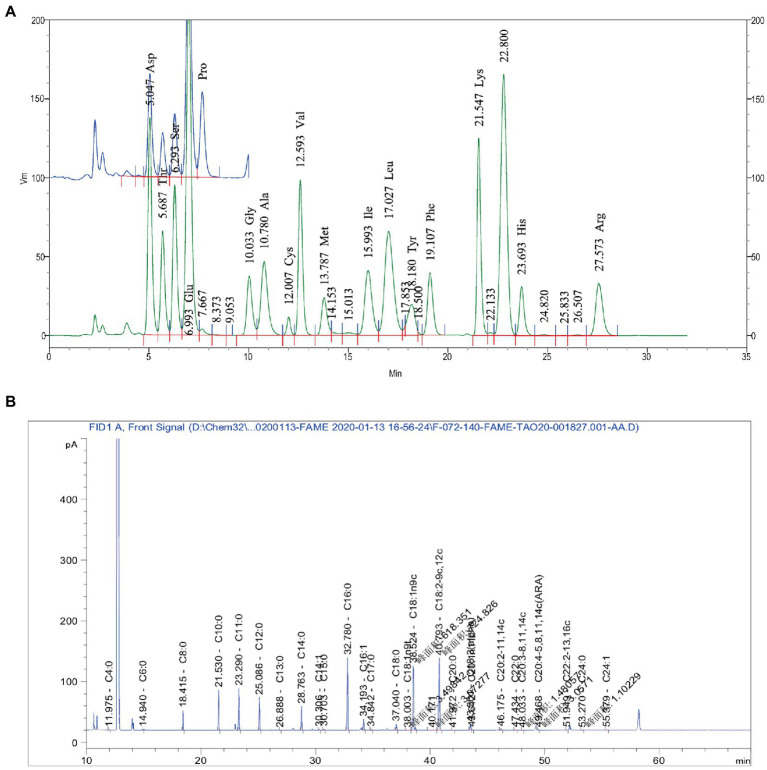
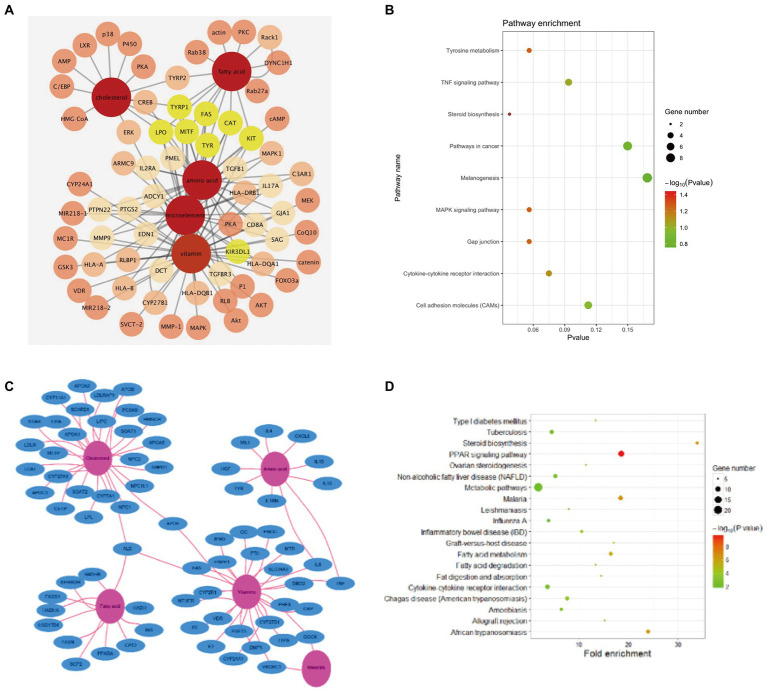
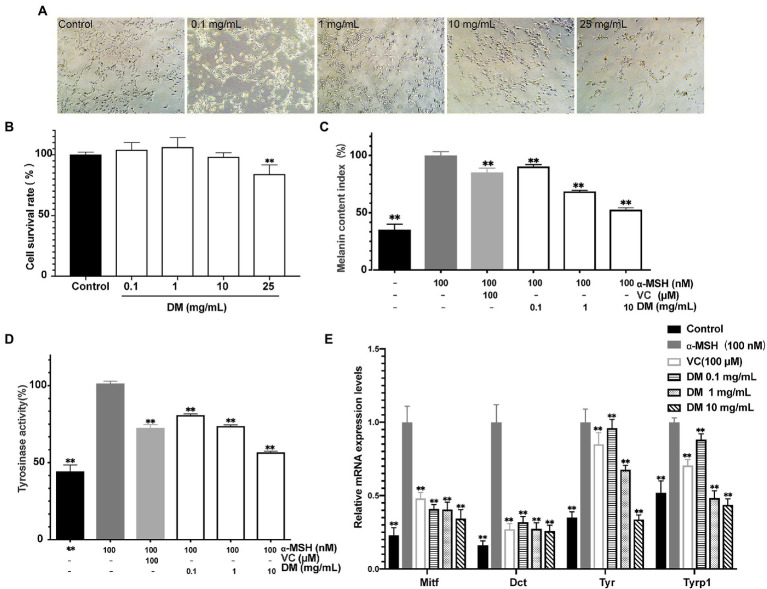
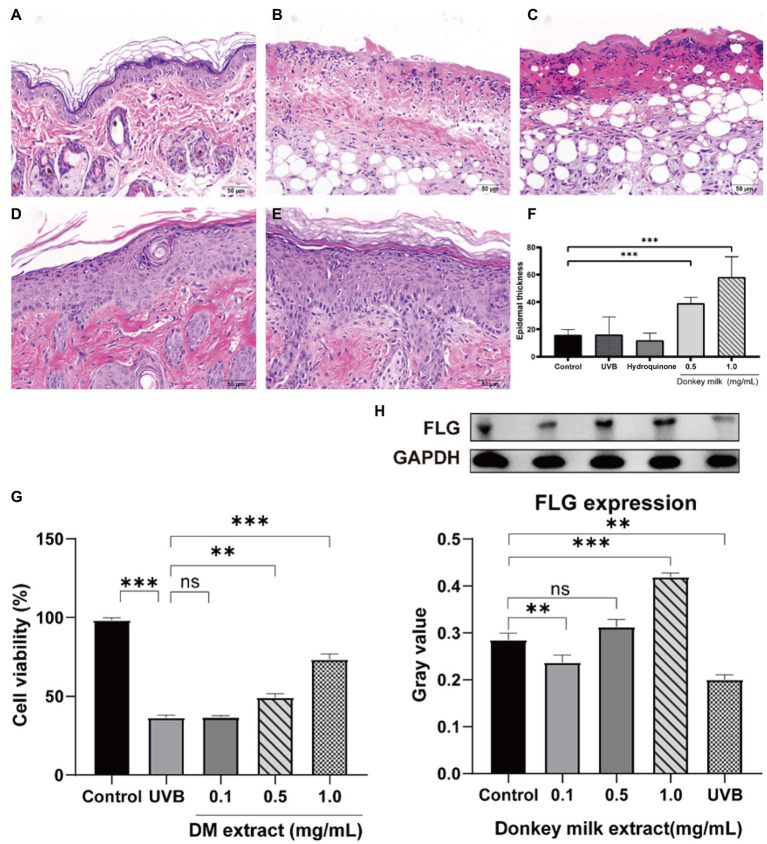
In this study, spectrum and chemical component analyses were applied to DM. Then, the effects of DM on UVB-induced skin barrier damage and melanin pigmentation were first evaluated and . Cell survival, animal models, and expression of filaggrin (FLG) were determined to confirm the effect of DM on UVB-induced skin barrier damage. Melanogenesis and tyrosinase (TYR) activity were assessed after UVB irradiation to clarify the effect of DM on whitening activities. Further, a network pharmacology method was applied to study the interaction between DM ingredients and UVB-induced skin injury. Meanwhile, an analysis of the melanogenesis molecular target network was developed and validated to predict the melanogenesis regulators in DM.
DM was rich in cholesterols, fatty acids, vitamins and amino acids. The results of evaluation of whitening activities and indicated that DM had a potent inhibitory effect on melanin synthesis. The results of effects of DM on UVB‑induced skin barrier damage indicated that DM inhibited UVB-induced injury and restored skin barrier function up-regulation expression of FLG (filaggrin). The pharmacological network of DM showed that DM regulated steroid biosynthesis and fatty acid metabolism in keratinocytes and 64 melanin targets which the main contributing role of DM might target melanogenesis, cell adhesion molecules (CAMs), and Tumor necrosis factor (TNF) pathway.
These results highlight the potential use of DM as a promising agent for whitening and anti-photoaging applications.
长期以来,乳制品一直被视为对皮肤有争议的营养素。然而,需要明确证明驴奶(DM)对皮肤护理的作用。
在本研究中,对驴奶进行了光谱和化学成分分析。然后,首先评估了驴奶对紫外线B(UVB)诱导的皮肤屏障损伤和黑色素沉着的影响。通过测定细胞存活率、动物模型和丝聚蛋白(FLG)的表达来确认驴奶对UVB诱导的皮肤屏障损伤的作用。在UVB照射后评估黑色素生成和酪氨酸酶(TYR)活性,以阐明驴奶对美白活性的影响。此外,应用网络药理学方法研究驴奶成分与UVB诱导的皮肤损伤之间的相互作用。同时,开发并验证了黑色素生成分子靶标网络分析,以预测驴奶中的黑色素生成调节剂。
驴奶富含胆固醇、脂肪酸、维生素和氨基酸。美白活性评估结果表明,驴奶对黑色素合成有显著抑制作用。驴奶对UVB诱导的皮肤屏障损伤的影响结果表明,驴奶抑制UVB诱导的损伤并恢复皮肤屏障功能,上调FLG(丝聚蛋白)的表达。驴奶的药理学网络表明,驴奶调节角质形成细胞中的类固醇生物合成和脂肪酸代谢以及64个黑色素靶标,驴奶的主要作用靶点可能是黑色素生成、细胞粘附分子(CAMs)和肿瘤坏死因子(TNF)途径。
这些结果突出了驴奶作为一种有前景的美白和抗光老化应用剂的潜在用途。