Lognathan Vignesh, Malhotra Sumit, Kumar Rakesh, Krishnan Anand, Gupta Sanjeev K, Nongkynrih Baridalyne
Centre for Community Medicine, All India Institute of Medical Sciences, New Delhi, New Delhi, IND.
Cureus. 2023 Feb 22;15(2):e35330. doi: 10.7759/cureus.35330. eCollection 2023 Feb.
We aimed to estimate the coverage of a population-based Non-communicable Disease (NCD) screening program using lot quality assurance sampling (LQAS) and identify factors affecting its implementation in district Nuh of Haryana, India.
A mixed-methods study was conducted with an initial LQAS coverage survey, followed by in-depth interviews. Thirty lots (villages or towns) were sampled in the district, and 20 people aged ≥ 30 years were randomly sampled from each lot. Participants were asked about receiving services under the program. Weighted coverage estimates, which is the proportion of people who had received screening services, were estimated. Using a decision value of more than nine negative responses out of 20 persons, all 30 lots were classified as good or poor performing. In-depth interviews of healthcare providers of good performing lots and district-level health officials were conducted, and factors affecting program implementation were identified.
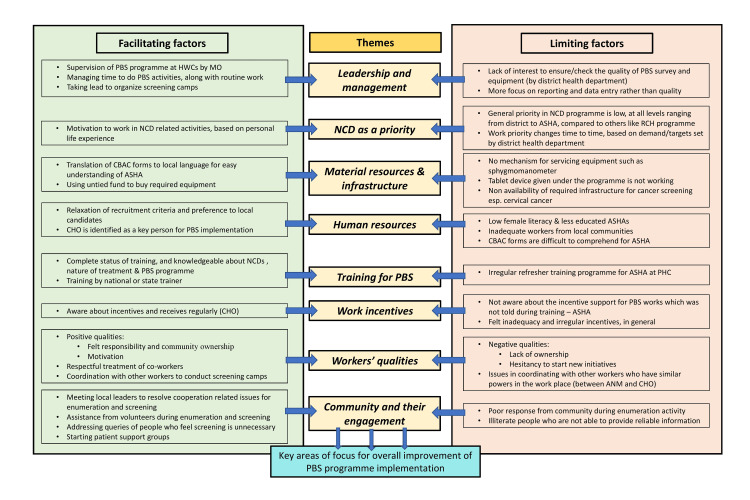
Six hundred participants were interviewed (mean age of 44.8 years, 57.2% women). The proportion of people who reported having undergone screening for diabetes or hypertension was 2.1%, and all lots performed poorly based on decision value. Key factors affecting the program were leadership, prioritization of NCD activities, ensuring human resource and material requirements, regular incentives, qualities of workers, and community engagement.
The screening coverage under the population-based NCD screening program was low in district Nuh, Haryana. This needs to be improved by addressing the identified health system and community-related factors.
我们旨在使用批质量保证抽样法(LQAS)估算一项基于人群的非传染性疾病(NCD)筛查项目的覆盖率,并确定影响该项目在印度哈里亚纳邦努赫区实施的因素。
开展了一项混合方法研究,首先进行LQAS覆盖率调查,随后进行深入访谈。在该地区抽取了30个批次(村庄或城镇),每个批次随机抽取20名年龄≥30岁的人。询问参与者是否接受了该项目下的服务。估算了加权覆盖率,即接受筛查服务的人群比例。使用20人中超过9个负面回答的判定值,将所有30个批次分为表现良好或不佳。对表现良好批次的医疗服务提供者和区级卫生官员进行了深入访谈,确定了影响项目实施的因素。
对600名参与者进行了访谈(平均年龄44.8岁,女性占57.2%)。报告接受过糖尿病或高血压筛查的人群比例为2.1%,根据判定值所有批次表现不佳。影响该项目的关键因素包括领导力、非传染性疾病活动的优先级、确保人力资源和物资需求、定期激励、工作人员素质以及社区参与。
在印度哈里亚纳邦努赫区,基于人群的非传染性疾病筛查项目的筛查覆盖率较低。需要通过解决已确定的卫生系统和社区相关因素来加以改善。