Gondane Aishwarya, Itkonen Harri M
Department of Biochemistry and Developmental Biology, Faculty of Medicine, University of Helsinki, 00014 Helsinki, Finland.
Curr Issues Mol Biol. 2023 Feb 24;45(3):1860-1874. doi: 10.3390/cimb45030120.
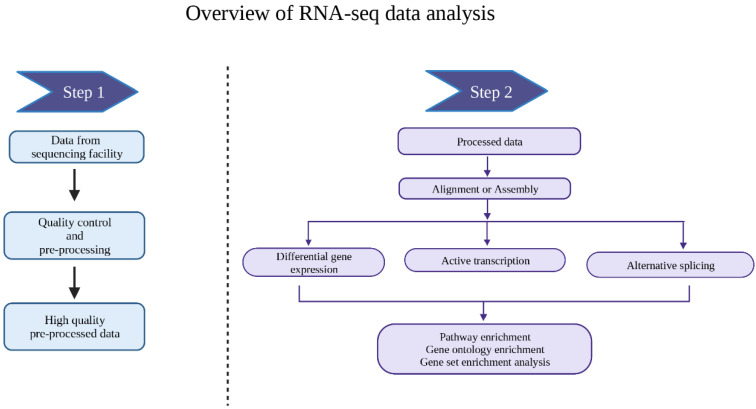
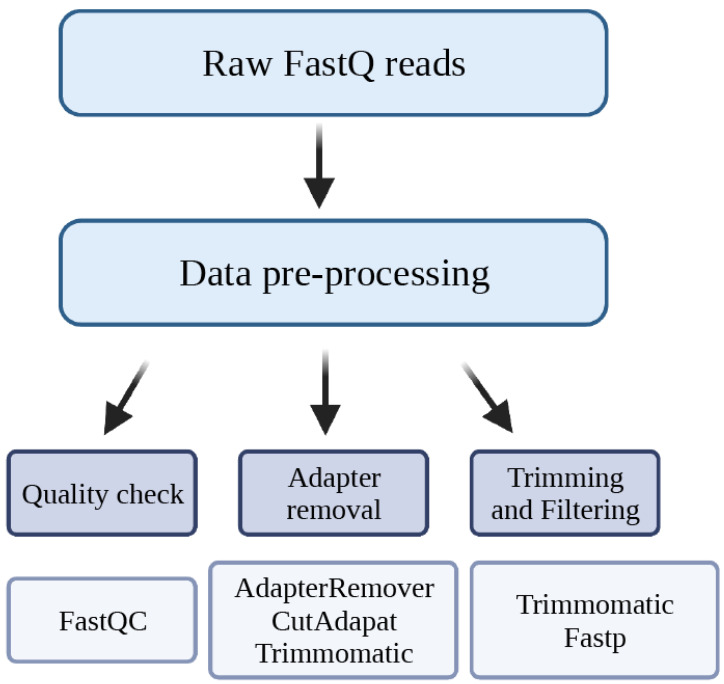
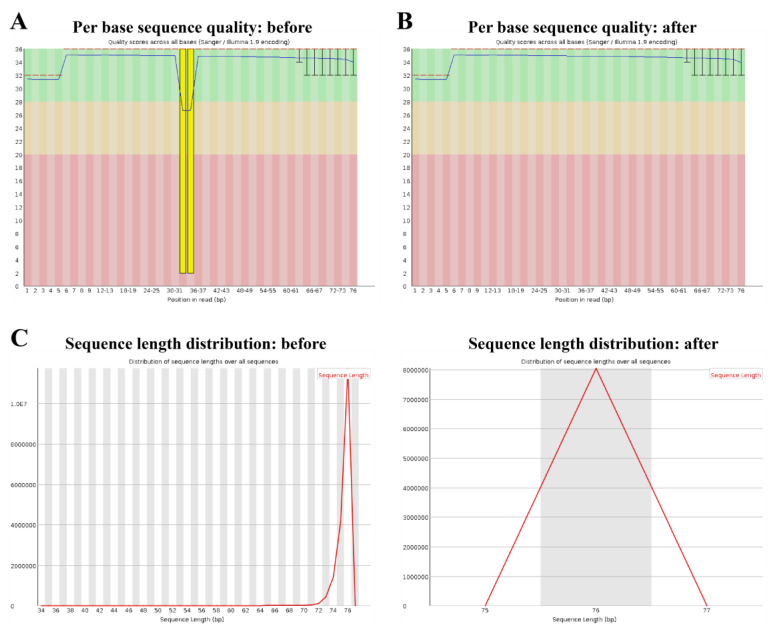
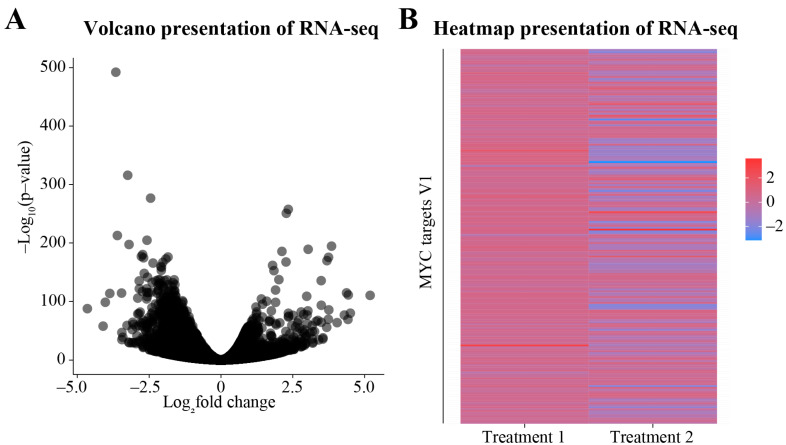
Advances in RNA-sequencing technologies have led to the development of intriguing experimental setups, a massive accumulation of data, and high demand for tools to analyze it. To answer this demand, computational scientists have developed a myriad of data analysis pipelines, but it is less often considered what the most appropriate one is. The RNA-sequencing data analysis pipeline can be divided into three major parts: data pre-processing, followed by the main and downstream analyses. Here, we present an overview of the tools used in both the bulk RNA-seq and at the single-cell level, with a particular focus on alternative splicing and active RNA synthesis analysis. A crucial part of data pre-processing is quality control, which defines the necessity of the next steps; adapter removal, trimming, and filtering. After pre-processing, the data are finally analyzed using a variety of tools: differential gene expression, alternative splicing, and assessment of active synthesis, the latter requiring dedicated sample preparation. In brief, we describe the commonly used tools in the sample preparation and analysis of RNA-seq data.
RNA测序技术的进步带来了有趣的实验设置、大量数据的积累以及对分析工具的高需求。为满足这一需求,计算科学家开发了无数的数据分析流程,但较少有人考虑哪种是最合适的。RNA测序数据分析流程可分为三个主要部分:数据预处理,随后是主要分析和下游分析。在此,我们概述了在批量RNA测序和单细胞水平上使用的工具,特别关注可变剪接和活性RNA合成分析。数据预处理的一个关键部分是质量控制,它决定了后续步骤的必要性;去除接头、修剪和过滤。预处理后,最终使用各种工具对数据进行分析:差异基因表达、可变剪接以及活性合成评估,后者需要专门的样本制备。简而言之,我们描述了RNA测序数据样本制备和分析中常用的工具。