
脂蛋白(a)及其自身抗体与钙化性主动脉瓣狭窄的关系
Lipoprotein(a) and Its Autoantibodies in Association with Calcific Aortic Valve Stenosis.
作者信息
Burdeynaya Anna L, Afanasieva Olga I, Ezhov Marat V, Klesareva Elena A, Saidova Marina A, Pokrovsky Sergey N
机构信息
Laboratory of Lipid Disorders, Department of Atherosclerosis, A.L. Myasnikov Institute of Clinical Cardiology, Federal State Budgetary Institution National Medical Research Center of Cardiology Named after Academician E.I. Chazov, Ministry of Health of the Russian Federation, 121552 Moscow, Russia.
Laboratory of Atherosclerosis, Institute of Experimental Cardiology Named after Academician V.N. Smirnov, Federal State Budgetary Institution National Medical Research Center of Cardiology Named after Academician E.I. Chazov, Ministry of Health of the Russian Federation, 121552 Moscow, Russia.
出版信息
Diseases. 2023 Mar 3;11(1):43. doi: 10.3390/diseases11010043.
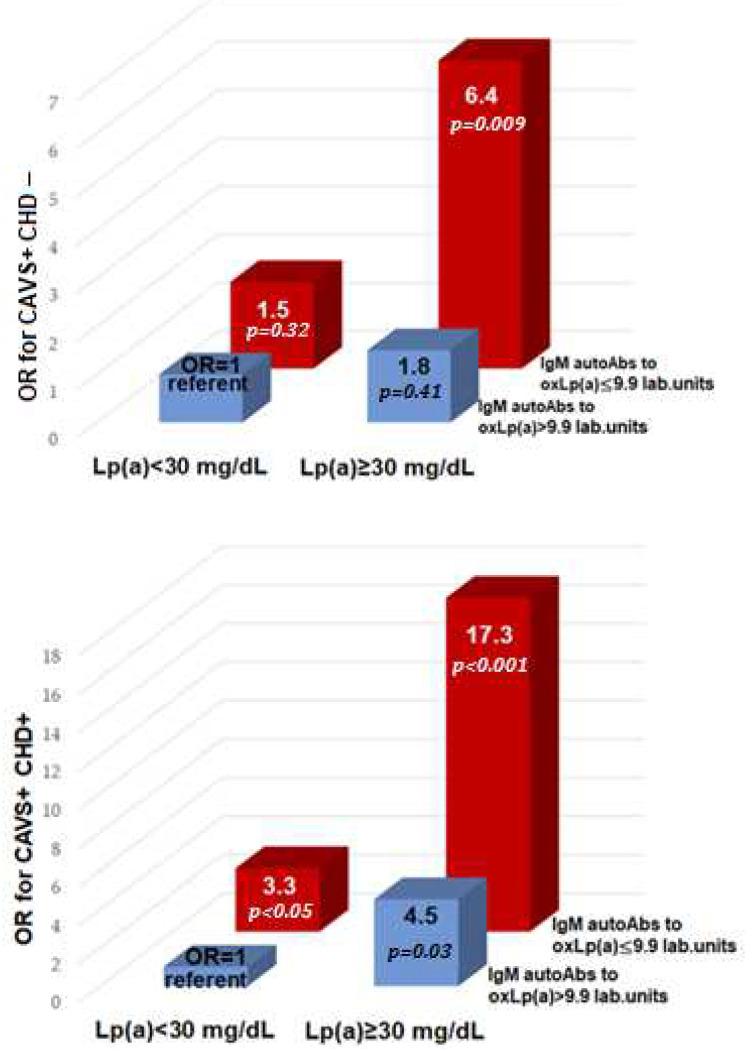
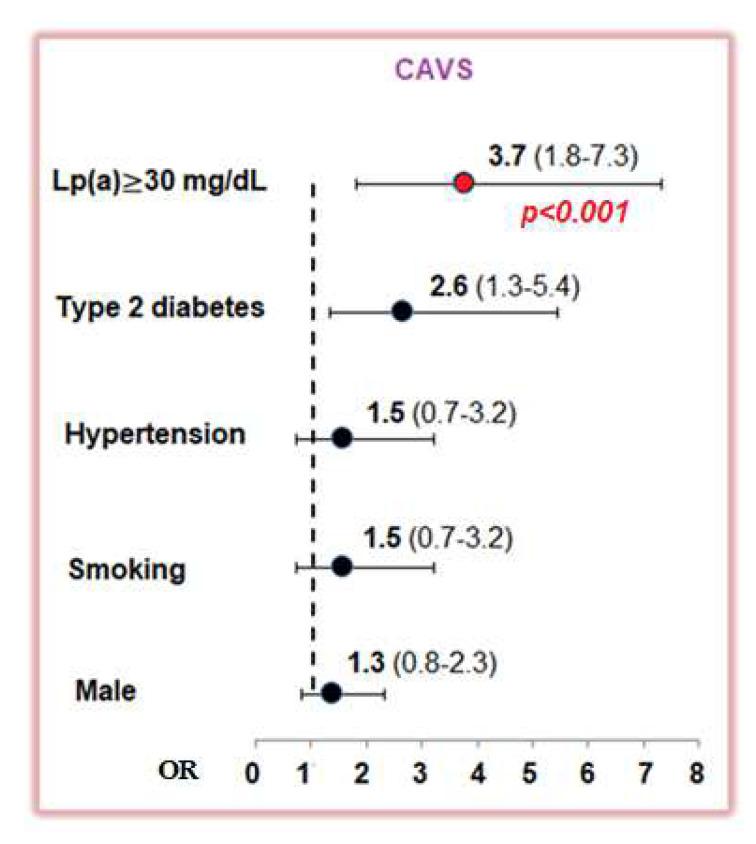
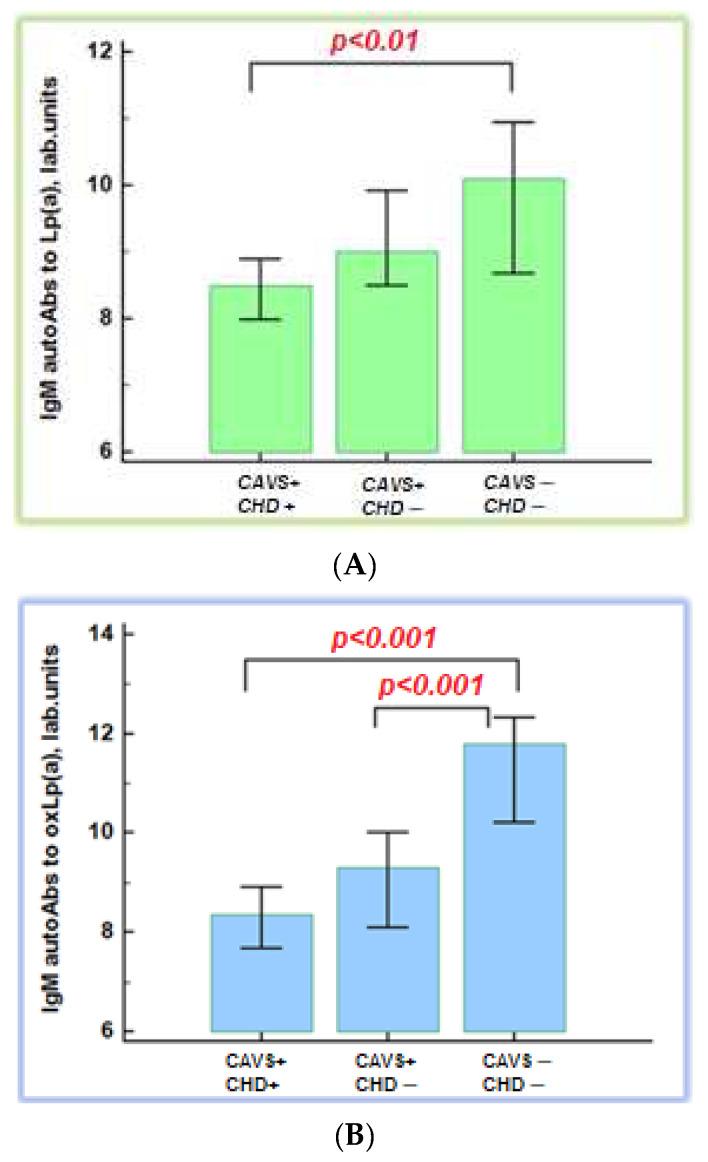
Aortic valve stenosis is the most common valvular heart disease in the Western world. Lipoprotein(a) (Lp(a)) is an independent risk factor of coronary heart disease (CHD) and calcific aortic valve stenosis (CAVS). The aim of this study was to assess the role of Lp(a) and its autoantibodies [autoAbs] in CAVS in patients with and without CHD. We included 250 patients (mean age 69 ± 3 years, males 42%) and divided them into three groups. There were two groups of patients with CAVS depending on the presence (group 1) or absence of CHD (group 2). The control group included the patients without CHD or CAVS. According to logistic regression analysis, levels of Lp(a), IgM autoAbs to oxidized Lp(a) (oxLp(a)), and age were independent predictors of CAVS. A concomitant increase in Lp(a) level (≥30 mg/dL) and a decrease in IgM autoAbs concentration (<9.9 lab. Units) are associated with CAVS with an odds ratio (OR) of 6.4, < 0.01, and with CAVS and CHD with an OR of 17.3, < 0.001. IgM autoantibodies to oxLp(a) are associated with calcific aortic valve stenosis regardless of Lp(a) concentration and other risk factors. Higher Lp(a) and lower IgM autoantibodies to oxLp(a) levels are associated with a much higher risk of calcific aortic valve stenosis.
主动脉瓣狭窄是西方世界最常见的心脏瓣膜病。脂蛋白(a) [Lp(a)] 是冠心病 (CHD) 和钙化性主动脉瓣狭窄 (CAVS) 的独立危险因素。本研究旨在评估Lp(a) 及其自身抗体 [自身抗体] 在有和没有CHD的CAVS患者中的作用。我们纳入了250例患者(平均年龄69±3岁,男性占42%),并将他们分为三组。根据是否存在CHD,有两组CAVS患者(第1组)或无CHD(第2组)。对照组包括无CHD或CAVS的患者。根据逻辑回归分析,Lp(a)、氧化Lp(a) [oxLp(a)] 的IgM自身抗体水平和年龄是CAVS的独立预测因素。Lp(a) 水平升高(≥30 mg/dL)和IgM自身抗体浓度降低(<9.9实验室单位)与CAVS相关,比值比(OR)为6.4,<0.01,与CAVS和CHD相关,OR为17.3,<0.001。无论Lp(a) 浓度和其他危险因素如何,oxLp(a) 的IgM自身抗体都与钙化性主动脉瓣狭窄相关。较高的Lp(a) 和较低的oxLp(a) IgM自身抗体水平与钙化性主动脉瓣狭窄的风险高得多相关。
 Zotero 插件