Kato Anne E, Scherbaum Charles A
School of Business, Government, and Economics, Seattle Pacific University, Seattle, WA 98119, USA.
Department of Psychology, Baruch College, City University of New York, New York, NY 10010, USA.
J Intell. 2023 Feb 23;11(3):44. doi: 10.3390/jintelligence11030044.
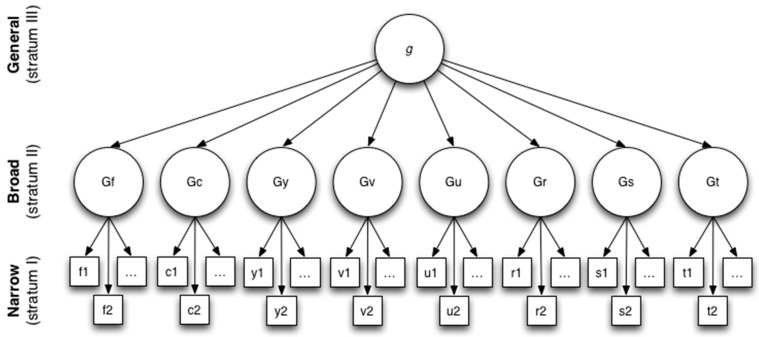
Most of the work examining the relationship between intelligence and job performance has conceptualized intelligence as . Recent findings, however, have supported the claim that more specific factors of intelligence contribute to the prediction of job performance. The present study builds upon prior work on specific cognitive abilities by investigating the relationship between ability tilt, a measure representing differential strength between two specific abilities, and job performance. It was hypothesized that ability tilt would differentially relate to job performance based on whether or not the tilt matched the ability requirements of the job, and that ability tilt would provide incremental validity over and specific abilities for predicting performance when the tilt matched job requirements. Hypotheses were tested using a large sample from the General Aptitude Test Battery (GATB) database. Ability tilt related with job performance in the expected direction for 27 of the 36 tilt-job combinations examined, with a mean effect size of .04 when the tilt matched job requirements. The mean incremental validities for ability tilt were .007 over and .003 over and specific abilities, and, on average, tilt explained 7.1% of the total variance in job performance. The results provide limited evidence that ability tilt may be a useful predictor in addition to ability level, and contribute to our understanding of the role of specific abilities in the workplace.
大多数研究智力与工作绩效之间关系的工作都将智力概念化为 。然而,最近的研究结果支持了这样一种观点,即智力的更具体因素有助于预测工作绩效。本研究在先前关于特定认知能力的工作基础上,通过调查能力倾斜(一种表示两种特定能力之间差异强度的指标)与工作绩效之间的关系来展开。研究假设,能力倾斜与工作绩效的关系会因倾斜是否与工作的能力要求相匹配而有所不同,并且当倾斜与工作要求匹配时,能力倾斜在预测绩效方面将比 和特定能力具有增量效度。使用来自一般能力倾向成套测验(GATB)数据库的大样本对假设进行了检验。在所考察的36种倾斜 - 工作组合中,有27种组合的能力倾斜与工作绩效呈预期方向相关,当倾斜与工作要求匹配时,平均效应大小为0.04。能力倾斜相对于 的平均增量效度为0.007,相对于 和特定能力的平均增量效度为0.003,平均而言,倾斜解释了工作绩效总方差的7.1%。结果提供了有限的证据表明,除了能力水平之外,能力倾斜可能是一个有用的预测指标,并有助于我们理解特定能力在工作场所中的作用。