Zhu Wenya, Chen Qianqian, Li Yi, Wan Jun, Li Jia, Tang Shuai
Medical School of Chinese PLA, Beijing 100039, China.
Department of Geriatrics, The Sixth Medical Center, Chinese PLA General Hospital, Beijing 100048, China.
Biomedicines. 2023 Mar 8;11(3):825. doi: 10.3390/biomedicines11030825.
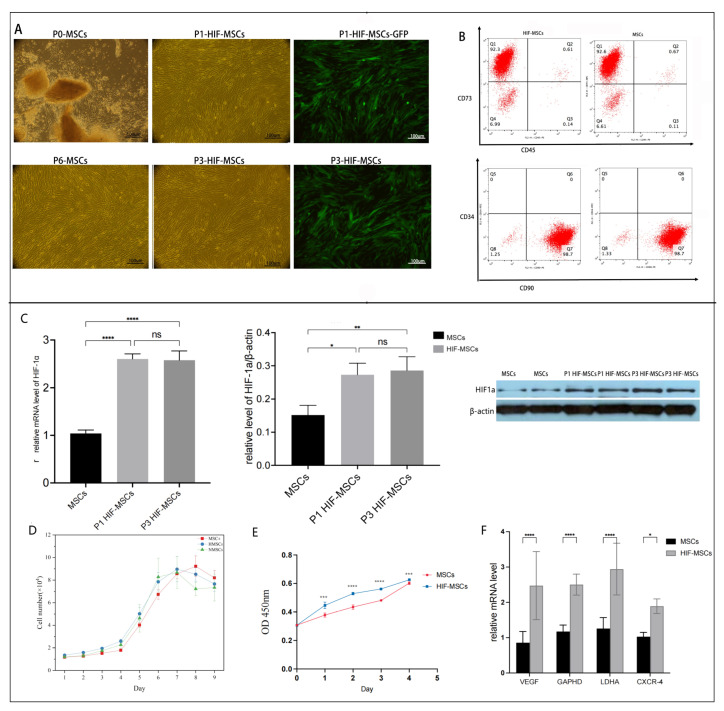
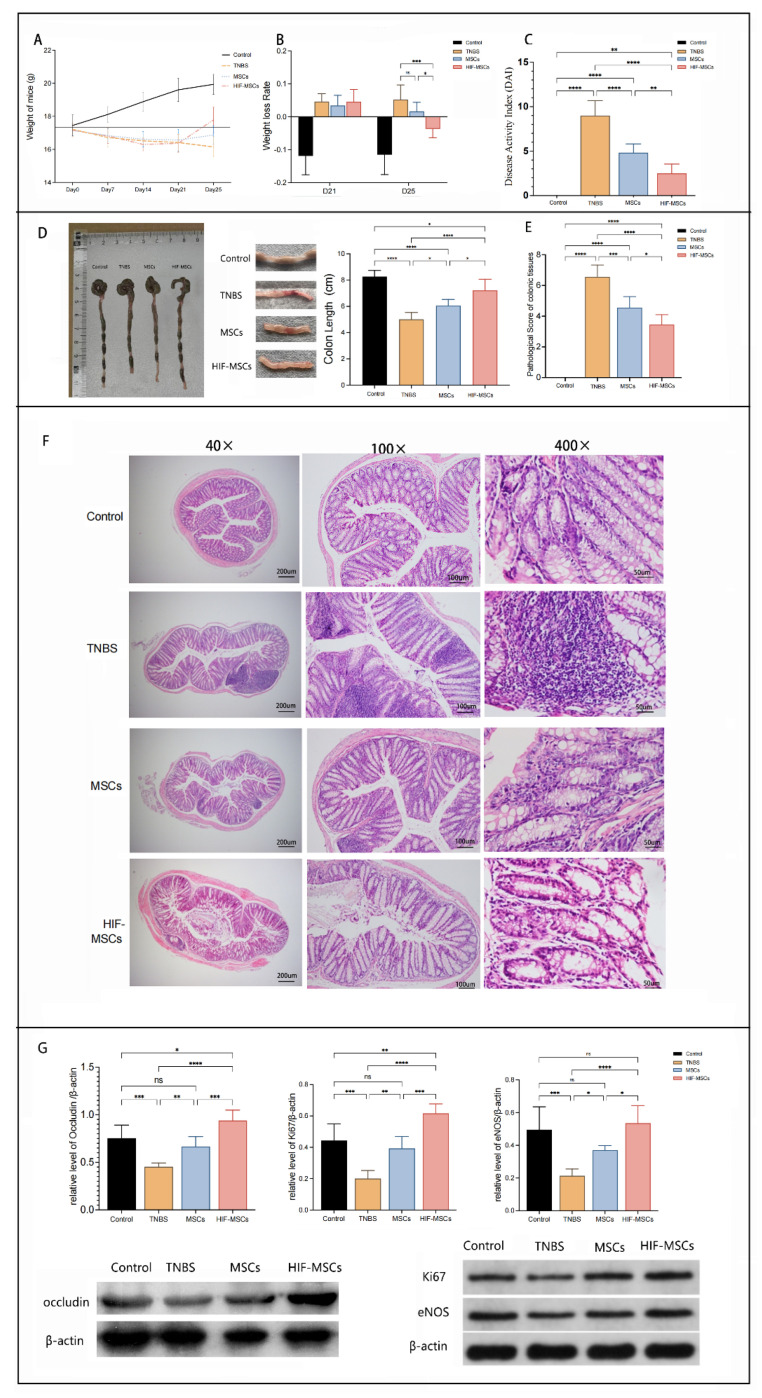
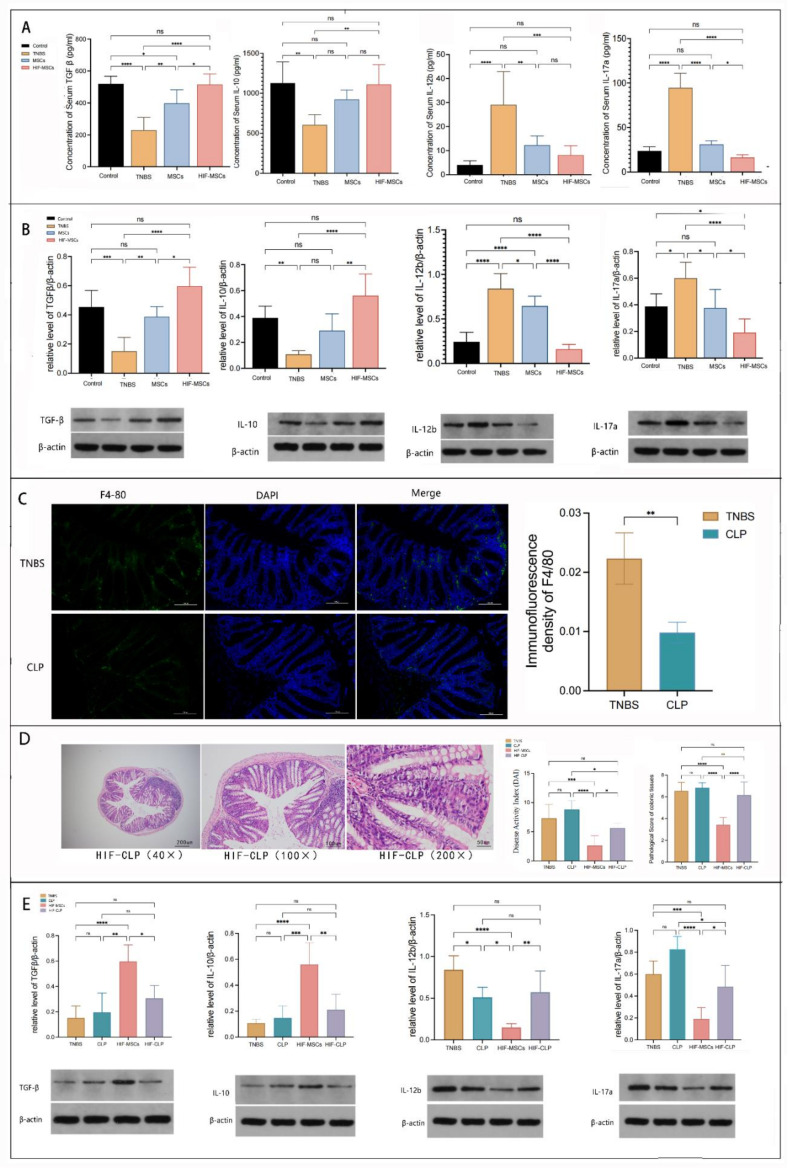
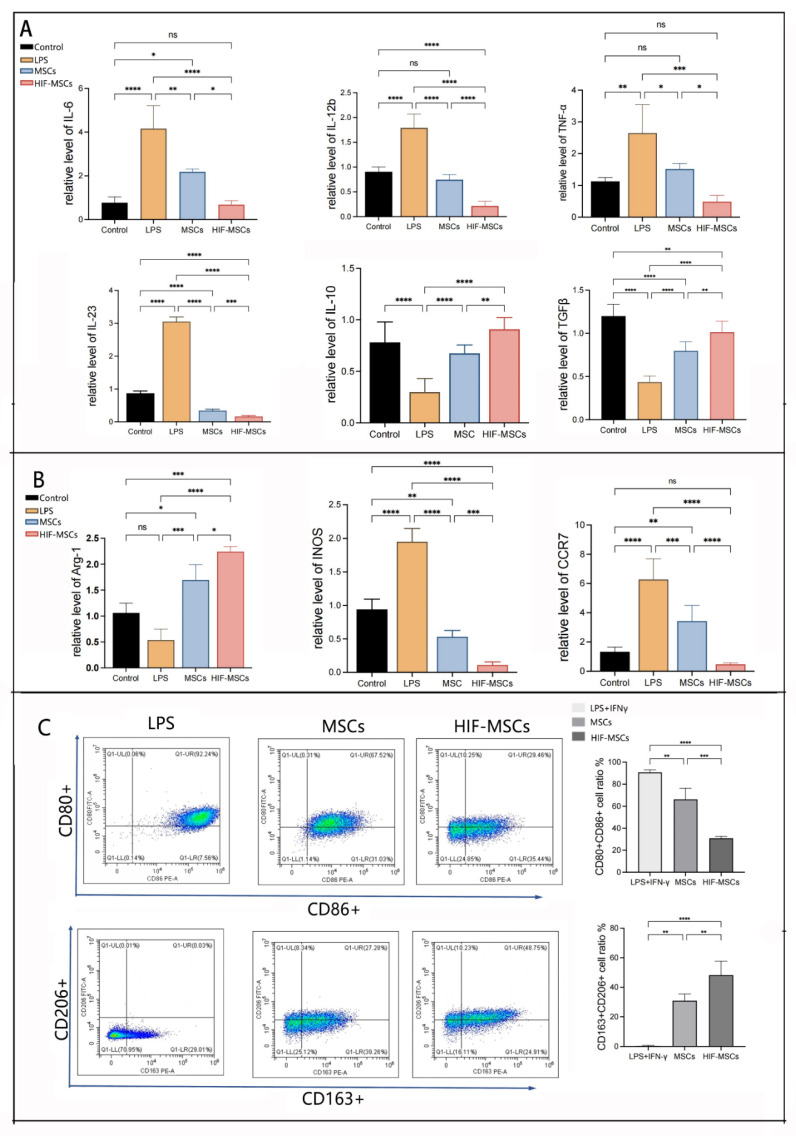
A modified mesenchymal stem cell (MSC) transplantation is a highly effective and precise treatment for inflammatory bowel disease (IBD), with a significant curative effect. Thus, we aim to examine the efficacy of hypoxia-inducible factor (HIF)-1α-overexpressing MSC (HIF-MSC) transplantation in experimental colitis and investigate the immunity regulation mechanisms of HIF-MSC through macrophages. A chronic experimental colitis mouse model was established using 2,4,6-trinitrobenzene sulfonic acid. HIF-MSC transplantation significantly attenuated colitis in weight loss rate, disease activity index (DAI), colon length, and pathology score and effectively rebuilt the local and systemic immune balance. Macrophage depletion significantly impaired the benefits of HIF-MSCs on mice with colitis. Immunofluorescence analysis revealed that HIF-MSCs significantly decreased the number of M1-like macrophages and increased the number of M2-like macrophages in colon tissues. In vitro, co-culturing with HIF-MSCs significantly decreased the expression of pro-inflammatory factors, C-C chemokine receptor 7 (CCR-7), and inducible nitric oxide synthase (INOS) and increased the expression of anti-inflammatory factors and arginase I (Arg-1) in induced M1-like macrophages. Flow cytometry revealed that co-culturing with HIF-MSCs led to a decrease in the proportions of M1-like macrophages and an increase in that of M2-like macrophages. HIF-MSCs treatment notably upregulated the expression of downstream molecular targets of phosphatidylinositol 3-kinase-γ (PI3K-γ), including HIF-1α and p-AKT/AKT in the colon tissue. A selected PI3K-γ inhibitor, IPI549, attenuated these effects, as well as the effect on M2-like macrophage polarization and inflammatory cytokines in colitis mice. In vitro, HIF-MSCs notably upregulated the expression of C/EBPβ and AKT1/AKT2, and PI3K-γ inhibition blocked this effect. Modified MSCs stably overexpressed HIF-1α, which effectively regulated macrophage polarization through PI3K-γ. HIF-MSC transplantation may be a potentially effective precision therapy for IBD.
改良间充质干细胞(MSC)移植是治疗炎症性肠病(IBD)的一种高效且精准的疗法,具有显著疗效。因此,我们旨在研究过表达缺氧诱导因子(HIF)-1α的MSC(HIF-MSC)移植在实验性结肠炎中的疗效,并通过巨噬细胞探究HIF-MSC的免疫调节机制。使用2,4,6-三硝基苯磺酸建立慢性实验性结肠炎小鼠模型。HIF-MSC移植显著减轻了结肠炎的体重减轻率、疾病活动指数(DAI)、结肠长度和病理评分,并有效重建了局部和全身免疫平衡。巨噬细胞清除显著削弱了HIF-MSC对结肠炎小鼠的益处。免疫荧光分析显示,HIF-MSC显著减少了结肠组织中M1样巨噬细胞的数量,并增加了M2样巨噬细胞的数量。在体外,与HIF-MSC共培养显著降低了促炎因子、C-C趋化因子受体7(CCR-7)和诱导型一氧化氮合酶(INOS)的表达,并增加了诱导的M1样巨噬细胞中抗炎因子和精氨酸酶I(Arg-1)的表达。流式细胞术显示,与HIF-MSC共培养导致M1样巨噬细胞比例降低,M2样巨噬细胞比例增加。HIF-MSC治疗显著上调了磷脂酰肌醇3-激酶-γ(PI3K-γ)下游分子靶点的表达,包括结肠组织中的HIF-1α和p-AKT/AKT。一种选定的PI3K-γ抑制剂IPI549减弱了这些作用,以及对结肠炎小鼠M2样巨噬细胞极化和炎性细胞因子的作用。在体外,HIF-MSC显著上调了C/EBPβ和AKT1/AKT2的表达,PI3K-γ抑制阻断了这一作用。改良的MSC稳定过表达HIF-1α,通过PI3K-γ有效调节巨噬细胞极化。HIF-MSC移植可能是一种潜在有效的IBD精准疗法。