Institute of Basic Biological Problems, FRC PSCBR RAS, 142290 Pushchino, Russia.
Cells. 2023 Mar 15;12(6):907. doi: 10.3390/cells12060907.
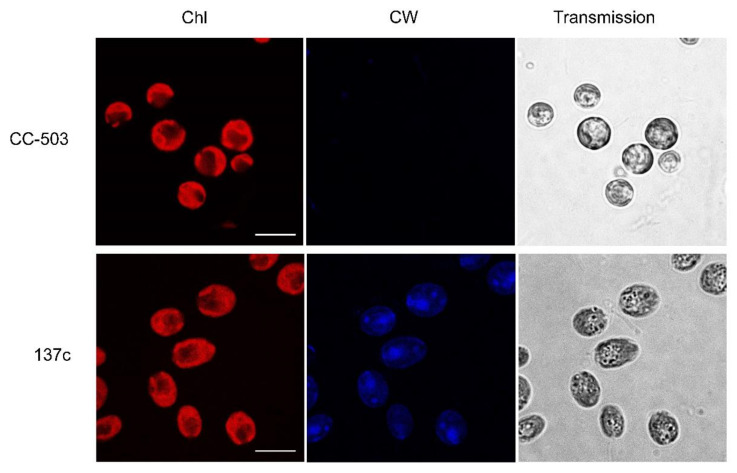
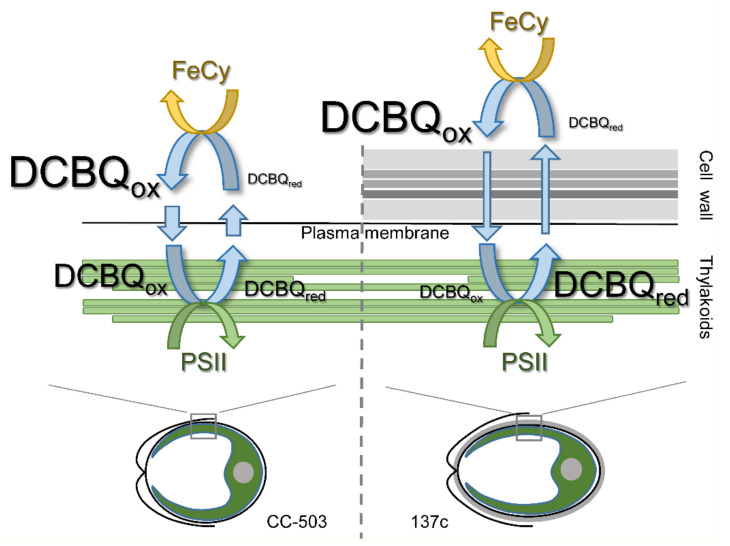
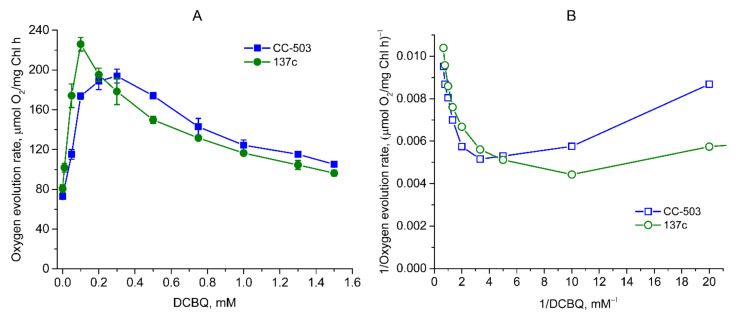
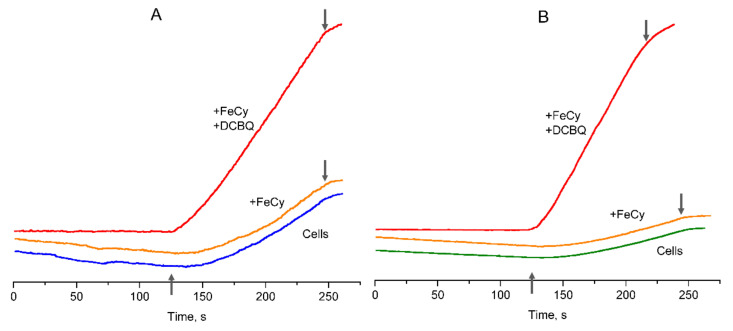
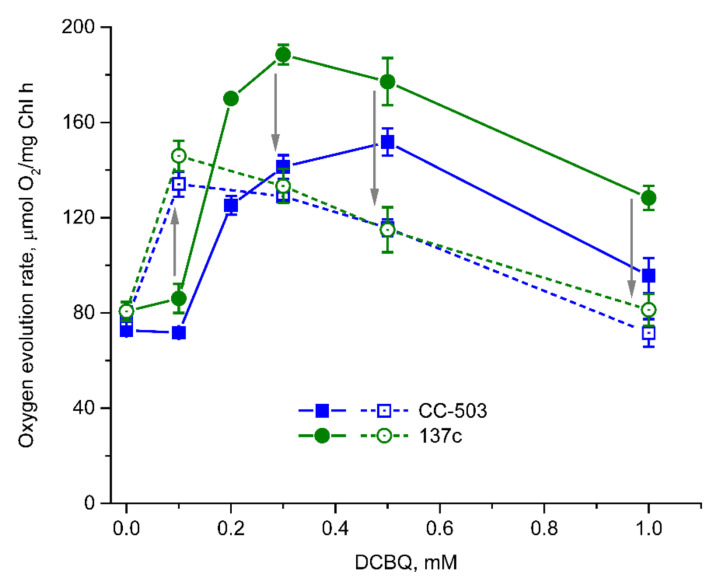
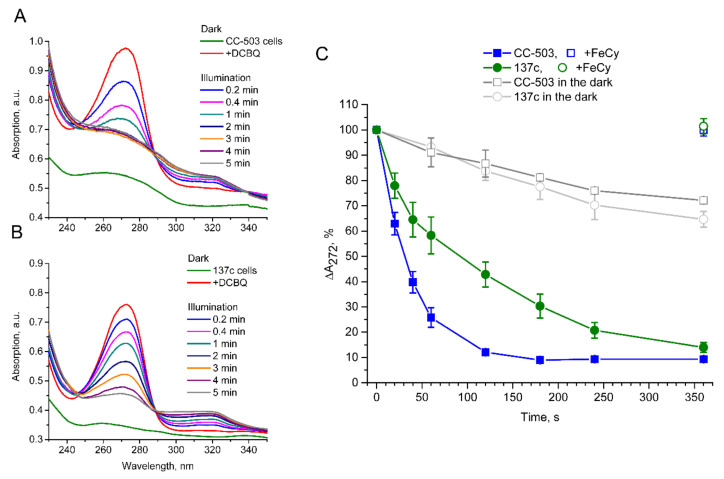
is a widely used object in studies on green algae concerning both photosynthesis aspects and possible biotechnological approaches. The measurement of the maximum O evolution by photosystem II (PSII) in living algal cells in the presence of artificial acceptors is one of the commonly used methods for determining the photosynthetic apparatus state or its change as compared to a control, parent strain, etc., because PSII is the most sensitive component of the thylakoid membrane. The present study shows the need to use low concentrations of 2,6-dichloro-1,4-benzoquinone (DCBQ) paired with potassium ferricyanide (FeCy) for achieving the maximum O evolution rate, while a DCBQ concentration above certain threshold results in strong suppression of O evolution. The required DCBQ concentration depends on the presence of the cell wall and should be exactly ~0.1 mM or in the range of 0.2-0.4 mM for cells with and without a cell wall, respectively. The inhibition effect is caused, probably, by a higher content of DCBQ in the oxidized form inside cells; this depends on the presence of the cell wall, which influences the efficiency of DCBQ diffusion into and out of the cell, where it is maintained by FeCy in the oxidized state. The possible mechanism of DCBQ inhibition action is discussed.
是一种广泛应用于绿藻光合作用研究和可能的生物技术方法的研究对象。在人工受体存在的情况下,测量活藻细胞中光系统 II(PSII)的最大 O 释放量,是一种常用的方法,用于确定光合作用装置的状态或与对照、亲本菌株等相比的变化,因为 PSII 是类囊体膜中最敏感的组件。本研究表明,需要使用低浓度的 2,6-二氯-1,4-苯醌(DCBQ)与铁氰化钾(FeCy)配对,以达到最大 O 释放速率,而超过一定阈值的 DCBQ 浓度会强烈抑制 O 释放。所需的 DCBQ 浓度取决于细胞壁的存在,对于有和没有细胞壁的细胞,分别应精确为~0.1mM 或在 0.2-0.4mM 范围内。抑制作用可能是由细胞内氧化形式的 DCBQ 含量较高引起的;这取决于细胞壁的存在,细胞壁会影响 DCBQ 向细胞内外扩散的效率,而在细胞内,FeCy 保持氧化状态以维持 DCBQ 的扩散。讨论了 DCBQ 抑制作用的可能机制。