Department of Pharmacology and Therapeutics, College of Medicine and Health Sciences, United Arab Emirates University, Al Ain P.O. Box 15551, United Arab Emirates.
School of Bioengineering and Biosciences, Lovely Professional University, Phagwara 144411, Punjab, India.
Int J Mol Sci. 2023 Mar 9;24(6):5222. doi: 10.3390/ijms24065222.
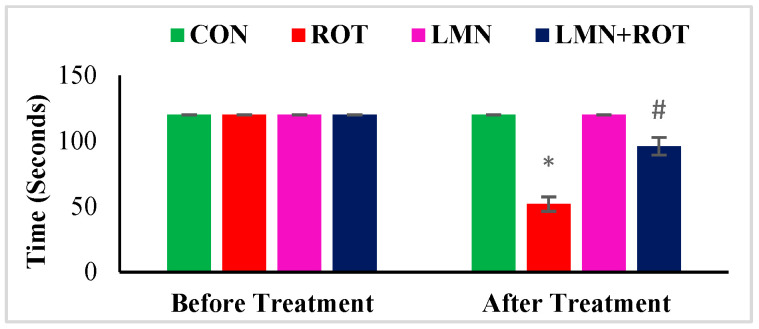
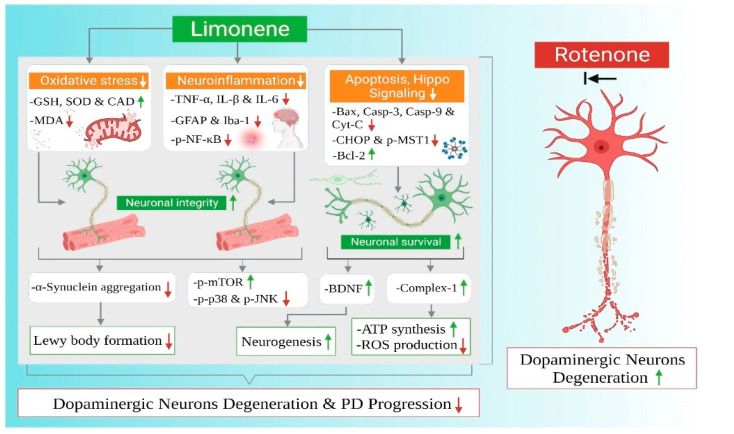
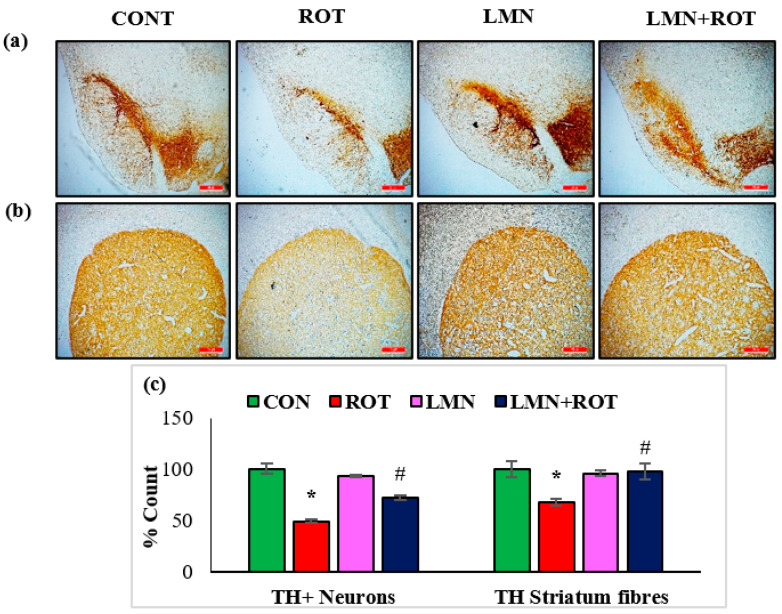
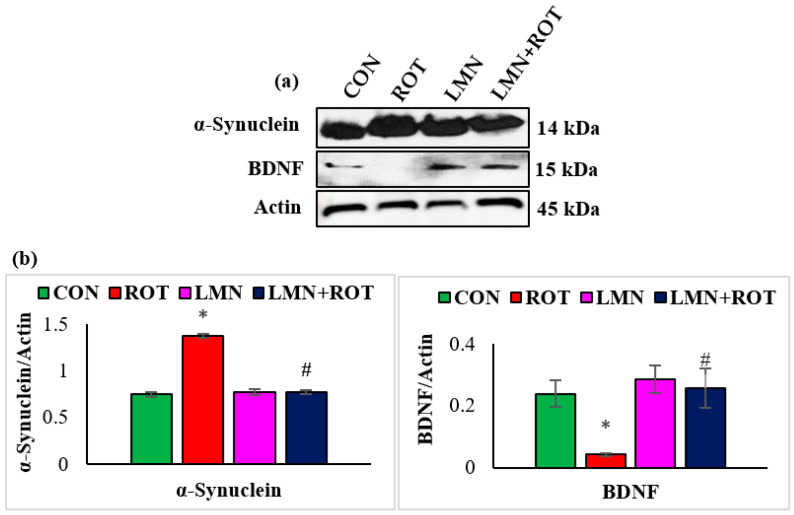
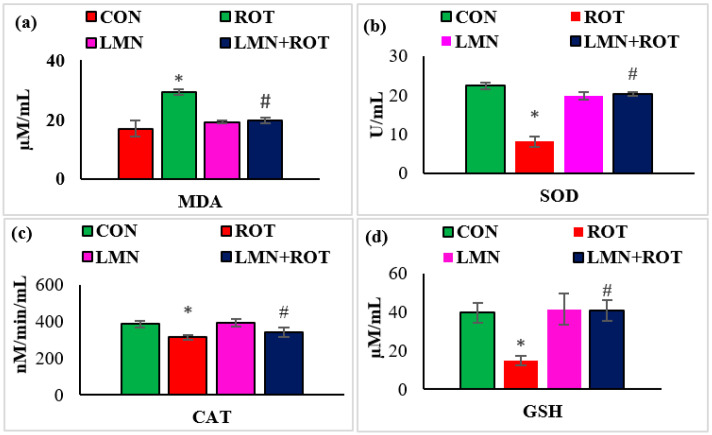
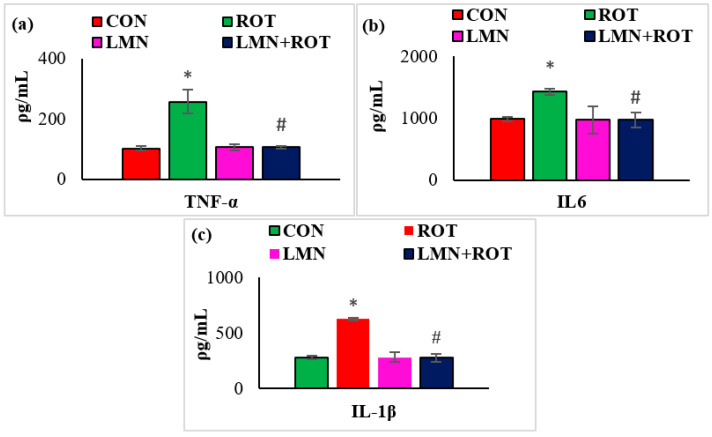
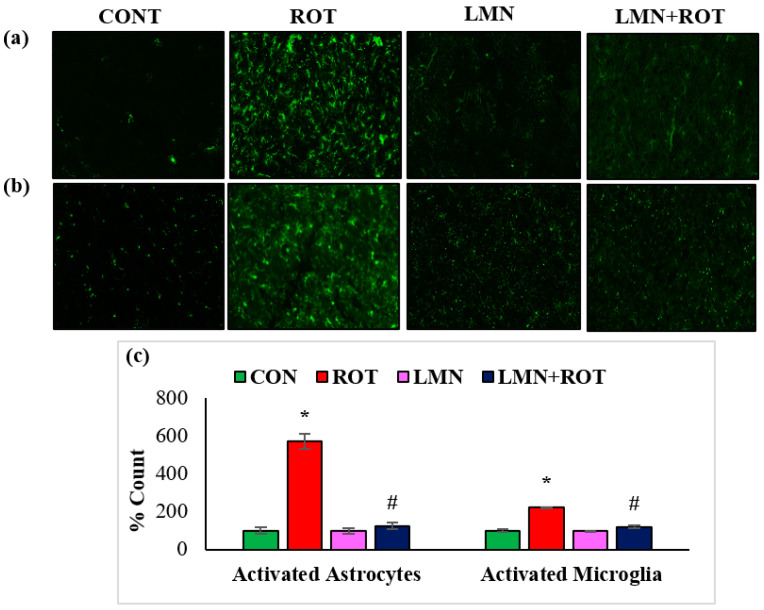
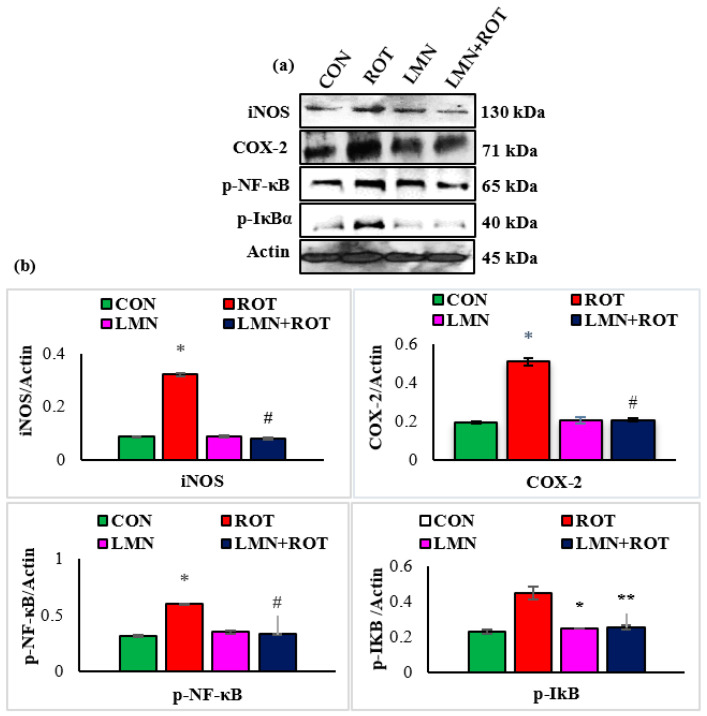
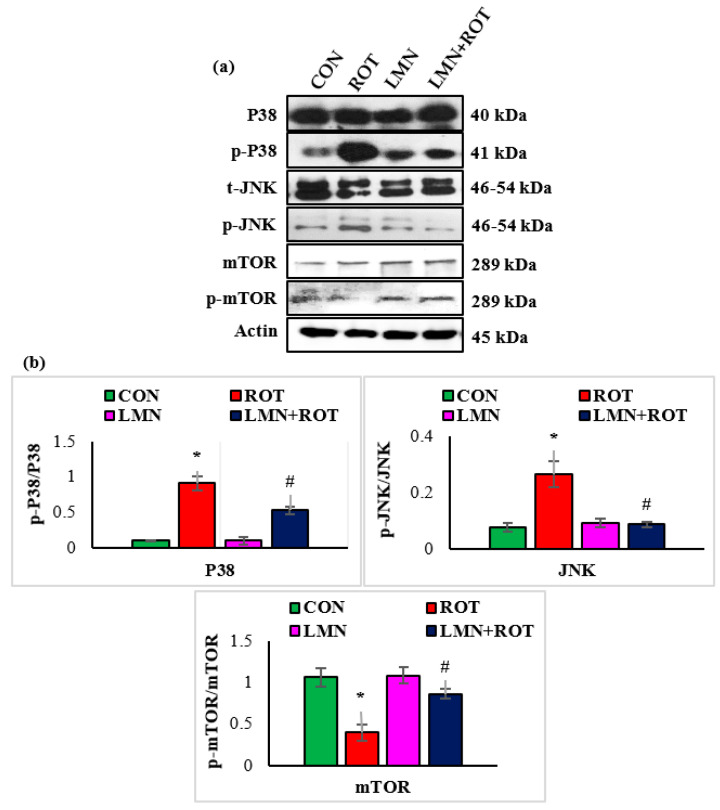
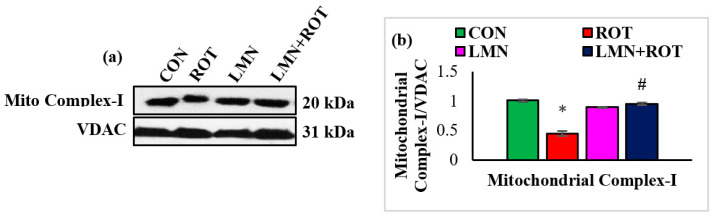
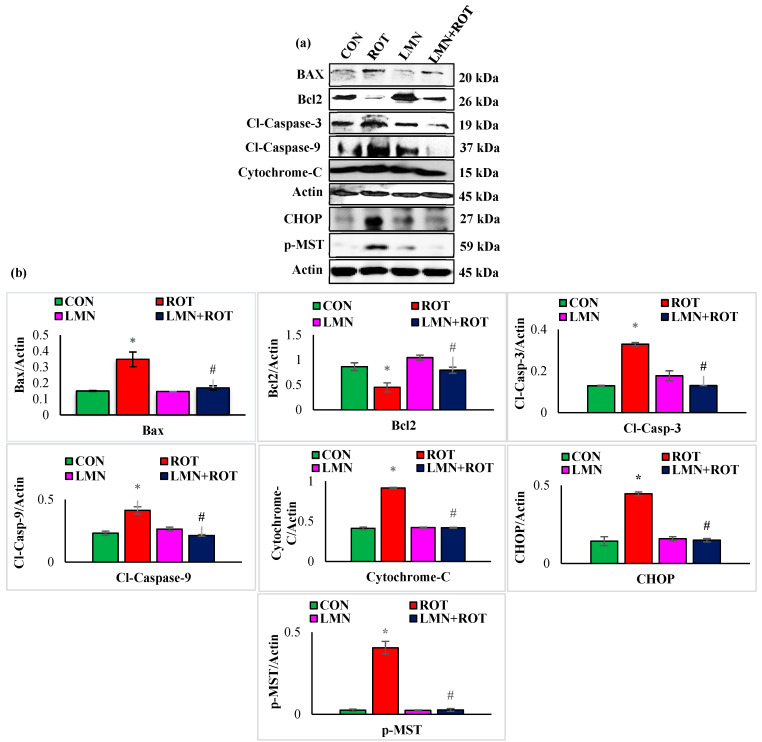
Rotenone (ROT) is a naturally derived pesticide and a well-known environmental neurotoxin associated with induction of Parkinson's disease (PD). Limonene (LMN), a naturally occurring monoterpene, is found ubiquitously in citrus fruits and peels. There is enormous interest in finding novel therapeutic agents that can cure or halt the progressive degeneration in PD; therefore, the main aim of this study is to investigate the potential neuroprotective effects of LMN employing a rodent model of PD measuring parameters of oxidative stress, neuro-inflammation, and apoptosis to elucidate the underlying mechanisms. PD in experimental rats was induced by intraperitoneal injection of ROT (2.5 mg/kg) five days a week for a total of 28 days. The rats were treated with LMN (50 mg/kg, orally) along with intraperitoneal injection of ROT (2.5 mg/kg) for the same duration as in ROT-administered rats. ROT injections induced a significant loss of dopaminergic (DA) neurons in the substantia nigra pars compacta (SNpc) and DA striatal fibers following activation of glial cells (astrocytes and microglia). ROT treatment enhanced oxidative stress, altered NF-κB/MAPK signaling and motor dysfunction, and enhanced the levels/expressions of inflammatory mediators and proinflammatory cytokines in the brain. There was a concomitant mitochondrial dysfunction followed by the activation of the Hippo signaling and intrinsic pathway of apoptosis as well as altered mTOR signaling in the brain of ROT-injected rats. Oral treatment with LMN corrected the majority of the biochemical, pathological, and molecular parameters altered following ROT injections. Our study findings demonstrate the efficacy of LMN in providing protection against ROT-induced neurodegeneration.
鱼藤酮(ROT)是一种天然衍生的杀虫剂,也是一种与帕金森病(PD)诱导相关的著名环境神经毒素。柠檬烯(LMN)是一种天然存在的单萜烯,广泛存在于柑橘类水果和果皮中。寻找能够治愈或阻止 PD 进行性退化的新型治疗剂的兴趣非常浓厚;因此,本研究的主要目的是研究 LMN 的潜在神经保护作用,采用 PD 啮齿动物模型测量氧化应激、神经炎症和细胞凋亡的参数,以阐明潜在机制。通过每周腹腔注射 ROT(2.5mg/kg)5 天,共 28 天,诱导实验大鼠 PD。用 LMN(50mg/kg,口服)与 ROT(2.5mg/kg,腹腔内注射)一起治疗,持续时间与 ROT 给药大鼠相同。ROT 注射可激活神经胶质细胞(星形胶质细胞和小胶质细胞),导致黑质致密部(SNpc)中多巴胺能(DA)神经元和 DA 纹状体纤维明显丢失。ROT 处理增强了氧化应激,改变了 NF-κB/MAPK 信号和运动功能障碍,并增强了大脑中炎症介质和促炎细胞因子的水平/表达。ROT 注射大鼠大脑中存在线粒体功能障碍,随后 Hippo 信号和内在凋亡途径以及 mTOR 信号被激活。LMN 口服治疗纠正了 ROT 注射后大多数生化、病理和分子参数的改变。我们的研究结果表明,LMN 对提供 ROT 诱导的神经退行性变保护具有疗效。