Bongiovanni Marco, Barda Beatrice
Division of Infectious Diseases, Ente Ospedaliero Cantonale, 6900 Lugano, Switzerland.
J Clin Med. 2023 Mar 14;12(6):2252. doi: 10.3390/jcm12062252.
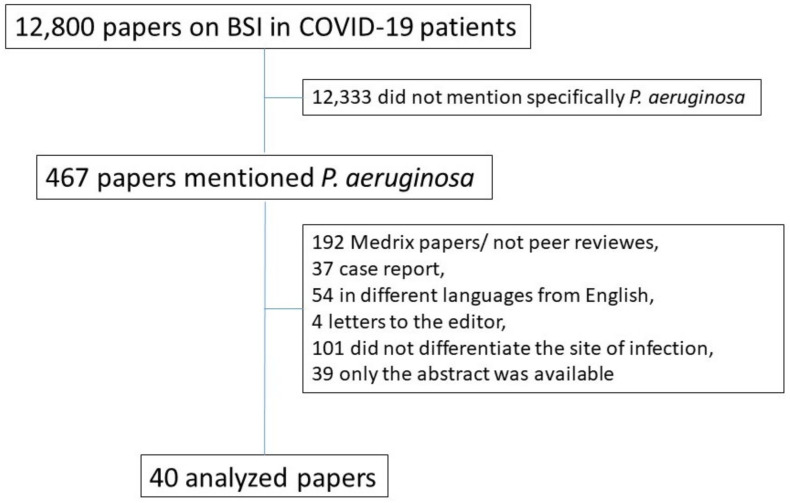
Bacterial co-infections increase the severity of respiratory viral infections and are frequent causes of mortality in COVID-19 infected subjects. During the COVID-19 period, especially at the beginning of the pandemic, an inappropriate use of broad-spectrum antibiotic treatments has been frequently described, mainly due to prolonged hospitalization, especially in intensive care unit departments, and the use of immune-suppressive treatments as steroids. This misuse has finally led to the occurrence of infections by multi-drug resistant (MDR) bacteria in hospitalized COVID-19 patients. Although different reports assessed the prevalence of Gram-negative infections in COVID-19 infected patients, scarce data are currently available on bloodstream infections caused by in hospitalized COVID-19 patients. The aim of our systematic review is to describe data on this specific population and to discuss the possible implications that these co-infections could have in the management of COVID-19 pandemics in the future. We systematically analysed the current literature to find all the relevant articles that describe the occurrence of bloodstream infections in COVID-19 patients. We found 40 papers that described in detail HAIs-BSI in COVID-19 patients, including 756,067 patients overall. The occurrence of severe infections due to MDR bacteria had a significant impact in the management of hospitalized patients with COVID-19 infections, leading to a prolonged time of hospitalization and to a consequent increase in mortality. In the near future, the increased burden of MDR bacteria due to the COVID-19 pandemic might partially be reduced by maintaining the preventive measures of infection control implemented during the acute phase of the COVID-19 pandemic. Finally, we discuss how the COVID-19 pandemic changed the role of antimicrobial stewardship in healthcare settings, according to the isolation of MDR bacteria and how to restore on a large scale the optimization of antibiotic strategies in COVID-19 patients.
细菌合并感染会增加呼吸道病毒感染的严重程度,并且是新冠病毒感染患者死亡的常见原因。在新冠疫情期间,尤其是在疫情初期,经常有人描述广谱抗生素治疗的不当使用情况,这主要是由于住院时间延长,特别是在重症监护病房,以及使用了如类固醇等免疫抑制治疗。这种滥用最终导致住院的新冠患者出现耐多药(MDR)细菌感染。尽管不同报告评估了新冠感染患者中革兰氏阴性菌感染的患病率,但目前关于住院新冠患者血流感染的数据却很少。我们系统评价的目的是描述这一特定人群的数据,并讨论这些合并感染在未来新冠疫情管理中可能产生的影响。我们系统地分析了当前文献,以找到所有描述新冠患者血流感染情况的相关文章。我们找到了40篇详细描述新冠患者医院获得性血流感染(HAIs-BSI)的论文,总共涉及756,067名患者。耐多药细菌导致的严重感染的发生对住院新冠感染患者的管理产生了重大影响,导致住院时间延长,进而死亡率上升。在不久的将来,通过维持新冠疫情急性期实施的感染控制预防措施,可能会部分减轻新冠疫情导致的耐多药细菌负担增加的问题。最后,我们根据耐多药细菌的分离情况,讨论新冠疫情如何改变了医疗机构中抗菌药物管理的作用,以及如何大规模恢复新冠患者抗生素策略的优化。