Gago Juan, Filardo Thomas D, Conderino Sarah, Magaziner Samuel J, Dubrovskaya Yanina, Inglima Kenneth, Iturrate Eduardo, Pironti Alejandro, Schluter Jonas, Cadwell Ken, Hochman Sarah, Li Huilin, Torres Victor J, Thorpe Lorna E, Shopsin Bo
Vilcek Institute of Graduate Biomedical Sciences, New York University Grossman School of Medicine, New York, New York, USA.
Division of Infectious Diseases and Immunology, Department of Medicine, New York University Grossman School of Medicine, New York, New York, USA.
Open Forum Infect Dis. 2022 Apr 5;9(6):ofac083. doi: 10.1093/ofid/ofac083. eCollection 2022 Jun.
The epidemiology of nosocomial bloodstream infections (NBSIs) in patients with coronavirus disease 2019 (COVID-19) is poorly understood, due in part to substantial disease heterogeneity resulting from multiple potential pathogens.
We identified risk factors for NBSIs and examined the association between NBSIs and mortality in a retrospective cohort of patients hospitalized with COVID-19 in 2 New York City hospitals during the height of the pandemic. We adjusted for the potential effects of factors likely to confound that association, including age, race, illness severity upon admission, and underlying health status.
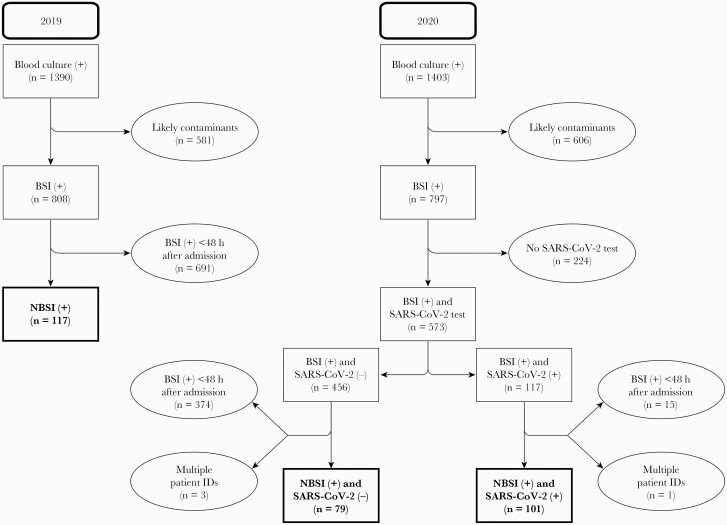
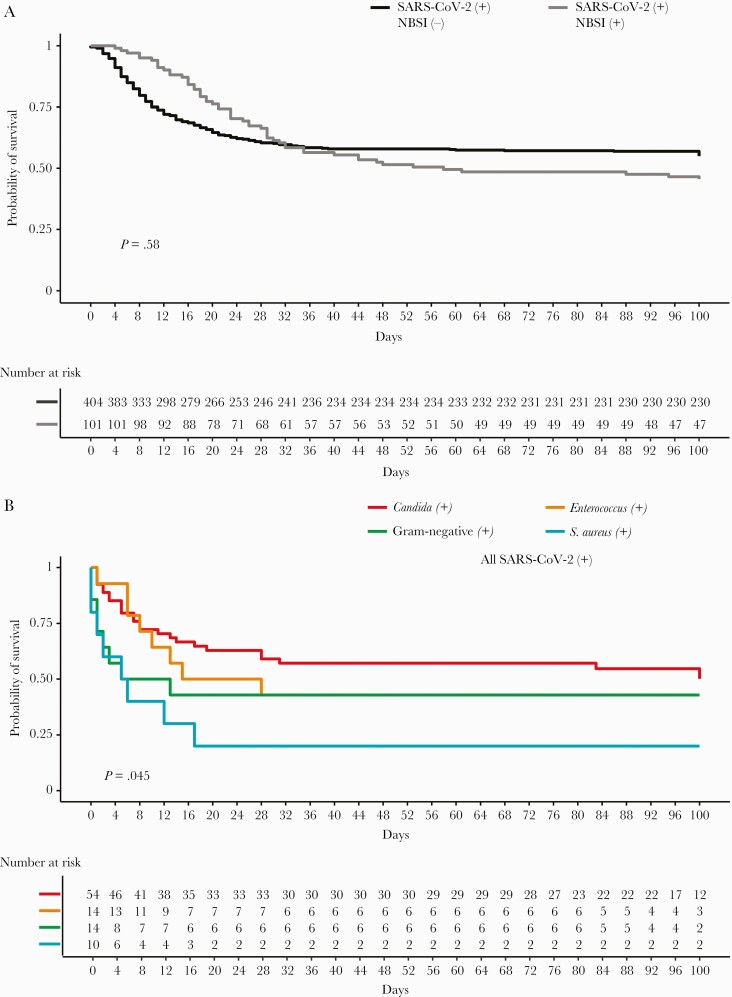
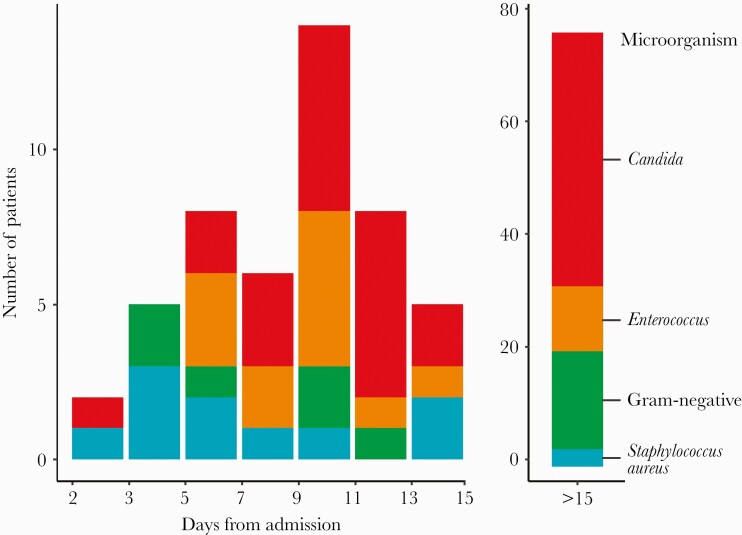
Between January 1 and October 1, 2020, 1403 patients had a positive blood culture, and 79 and 101 met the stringent criteria for NBSI among non-COVID-19 and COVID-19 patients, respectively. NBSIs occurred almost exclusively among patients who were severely ill with COVID-19 at hospital admission. NBSIs were associated with elevated mortality, even after adjusting for baseline differences in COVID-19 illness (55% cases vs 45% controls; = .13). Mortality was concentrated in patients with early-onset pneumonia caused by and gram-negative bacteria. Less virulent (49%) and (12%) species were the predominant cause of NBSI in the latter stages of hospitalization, after antibiotic treatment and COVID-19 treatments that attenuate immune response. Most and infections did not have an identifiable source and were not associated with common risk factors for infection by these organisms.
Pathogen species and mortality exhibited temporal differences. Early recognition of risk factors among COVID-19 patients could potentially decrease NBSI-associated mortality through early COVID-19 and antimicrobial treatment.
2019年冠状病毒病(COVID-19)患者的医院血流感染(NBSIs)流行病学尚不清楚,部分原因是多种潜在病原体导致疾病存在很大异质性。
我们确定了NBSIs的危险因素,并在疫情高峰期对纽约市两家医院住院的COVID-19患者进行回顾性队列研究,以检查NBSIs与死亡率之间的关联。我们对可能混淆该关联的因素的潜在影响进行了调整,包括年龄、种族、入院时疾病严重程度和基础健康状况。
2020年1月1日至10月1日期间,1403例患者血培养呈阳性,非COVID-19患者和COVID-19患者中分别有79例和101例符合NBSI的严格标准。NBSIs几乎只发生在入院时患有重症COVID-19的患者中。即使在调整了COVID-19疾病的基线差异后,NBSIs仍与死亡率升高相关(55%的病例vs 45%的对照;=0.13)。死亡率集中在由金黄色葡萄球菌和革兰氏阴性菌引起的早发性肺炎患者中。在抗生素治疗和减弱免疫反应的COVID-19治疗后,致病性较弱的凝固酶阴性葡萄球菌(49%)和棒状杆菌属(12%)是住院后期NBSI的主要原因。大多数凝固酶阴性葡萄球菌和棒状杆菌感染没有可识别的来源,也与这些病原体感染的常见危险因素无关。
病原体种类和死亡率存在时间差异。早期识别COVID-19患者中的危险因素可能通过早期的COVID-19和抗菌治疗降低与NBSI相关的死亡率。