Jahangiri Leila
School of Science and Technology, Nottingham Trent University, Clifton Site, Nottingham NG11 8NS, UK.
Division of Cellular and Molecular Pathology, Department of Pathology, Addenbrooke's Hospital, University of Cambridge, Cambridge CB2 0QQ, UK.
Life (Basel). 2023 Mar 17;13(3):818. doi: 10.3390/life13030818.
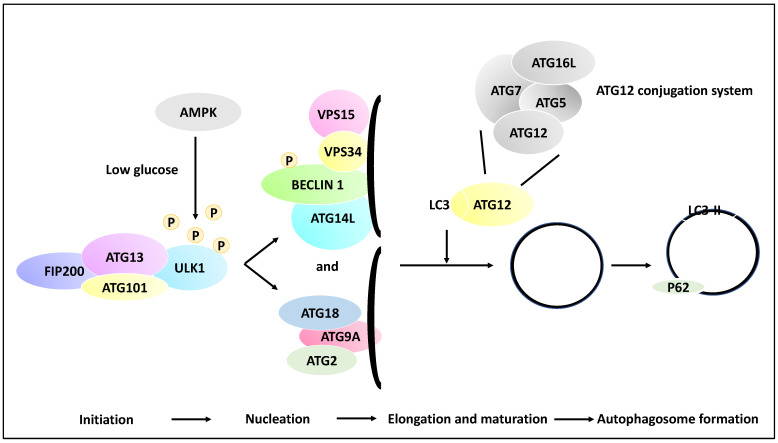
Neuroblastoma is a paediatric malignancy originating from the neural crest that commonly occurs in the abdomen and adrenal gland, leading to cancer-related deaths in children. Distant metastasis can be encountered at diagnosis in greater than half of these neuroblastoma patients. Autophagy, a self-degradative process, plays a key role in stress-related responses and the survival of cells and has been studied in neuroblastoma. Accordingly, in the early stages of metastasis, autophagy may suppress cancer cell invasion and migration, while its role may be reversed in later stages, and it may facilitate metastasis by enhancing cancer cell survival. To that end, a body of literature has revealed the mechanistic link between autophagy and metastasis in neuroblastoma in multiple steps of the metastatic cascade, including cancer cell invasion and migration, anoikis resistance, cancer cell dormancy, micrometastasis, and metastatic outbreak. This review aims to take a step forward and discuss the significance of multiple molecular players and compounds that may link autophagy to metastasis and map their function to various metastatic steps in neuroblastoma.
神经母细胞瘤是一种起源于神经嵴的儿科恶性肿瘤,常见于腹部和肾上腺,可导致儿童癌症相关死亡。超过半数的神经母细胞瘤患者在诊断时会出现远处转移。自噬是一种自我降解过程,在应激相关反应和细胞存活中起关键作用,并且已经在神经母细胞瘤中得到研究。因此,在转移的早期阶段,自噬可能会抑制癌细胞的侵袭和迁移,而在后期其作用可能会逆转,并且它可能通过提高癌细胞存活率促进转移。为此,大量文献揭示了在转移级联反应的多个步骤中,包括癌细胞侵袭和迁移、失巢凋亡抗性、癌细胞休眠、微转移和转移爆发,自噬与神经母细胞瘤转移之间的机制联系。本综述旨在更进一步,讨论可能将自噬与转移联系起来的多种分子参与者和化合物的意义,并将它们的功能映射到神经母细胞瘤的各种转移步骤中。