Turi Kedir N, Michel Cole R, Manke Jonathan, Doenges Katrina A, Reisdorph Nichole, Bauer Alison K
Department of Medicine, Vanderbilt University, Nashville, TN 37203, USA.
Department of Pharmaceutical Sciences, University of Colorado, Aurora, CO 80045, USA.
Metabolites. 2023 Mar 9;13(3):406. doi: 10.3390/metabo13030406.
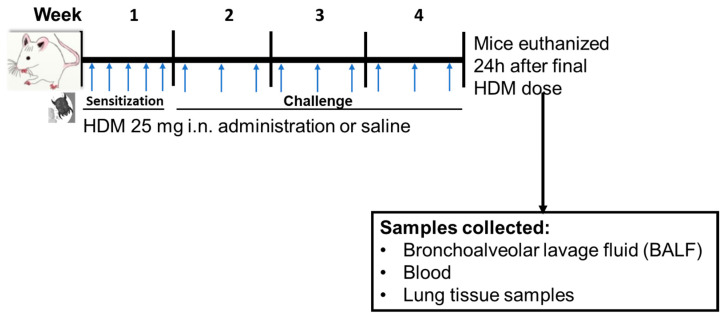
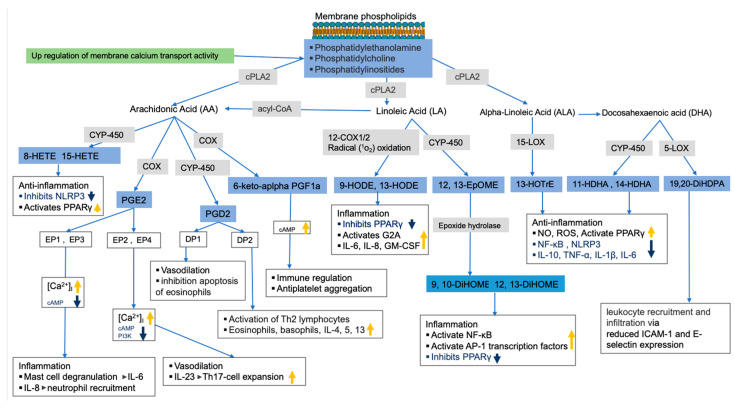
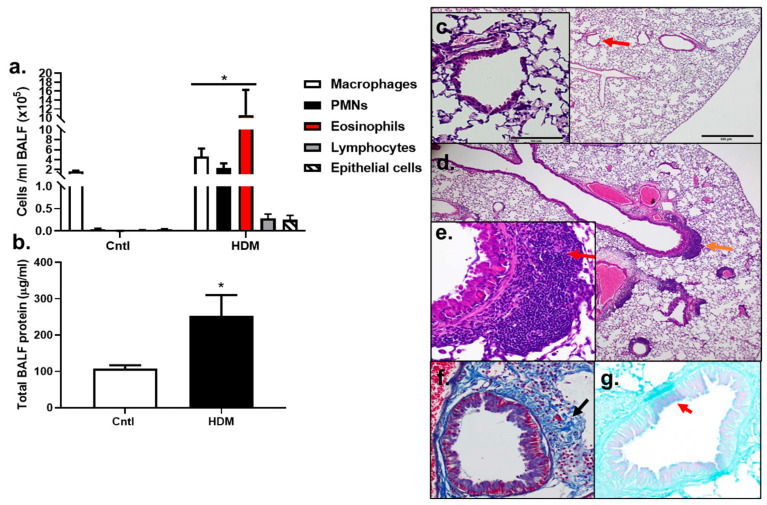
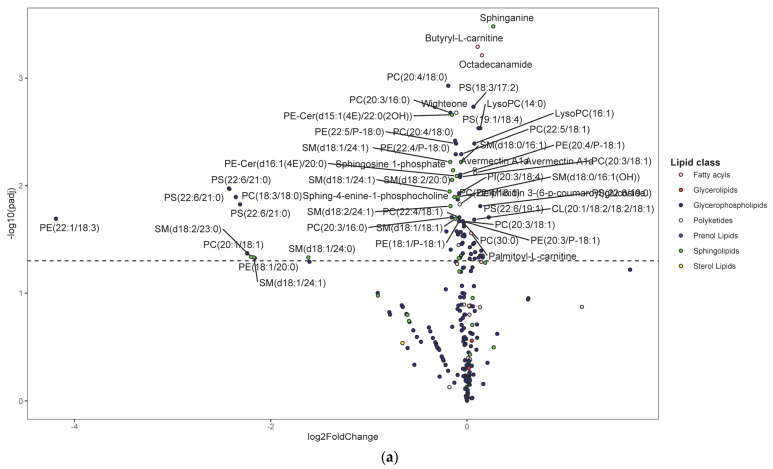
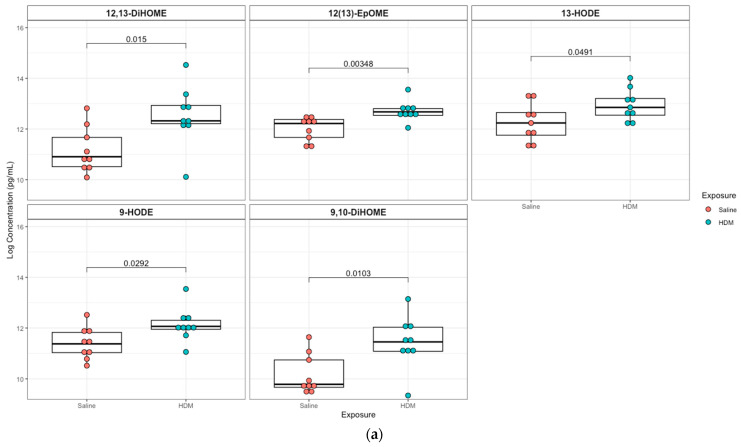
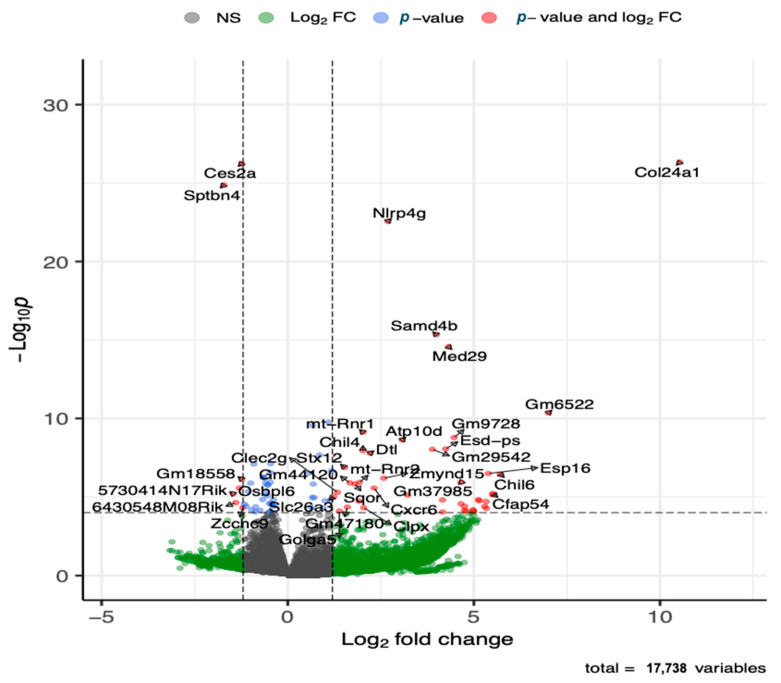
Allergy and asthma pathogenesis are associated with the dysregulation of metabolic pathways. To understand the effects of allergen sensitization on metabolic pathways, we conducted a multi-omics study using BALB/cJ mice sensitized to house dust mite (HDM) extract or saline. Lung tissue was used to perform untargeted metabolomics and transcriptomics while both lung tissue and plasma were used for targeted lipidomics. Following statistical comparisons, an integrated pathway analysis was conducted. Histopathological changes demonstrated an allergic response in HDM-sensitized mice. Untargeted metabolomics showed 391 lung tissue compounds were significantly different between HDM and control mice (adjusted < 0.05); with most compounds mapping to glycerophospholipid and sphingolipid pathways. Several lung oxylipins, including 14-HDHA, 8-HETE, 15-HETE, 6-keto-PGF1α, and PGE2 were significantly elevated in HDM-sensitized mice ( < 0.05). Global gene expression analysis showed upregulated calcium channel, G protein-signaling, and mTORC1 signaling pathways. Genes related to oxylipin metabolism such as , s, and trended upwards. Joint analysis of metabolomics and transcriptomics supported a role for glycerophospholipid and sphingolipid metabolism following HDM sensitization. Collectively, our multi-omics results linked decreased glycerophospholipid and sphingolipid compounds and increased oxylipins with allergic sensitization; concurrent upregulation of associated gene pathways supports a role for bioactive lipids in the pathogenesis of allergy and asthma.
过敏和哮喘的发病机制与代谢途径的失调有关。为了了解变应原致敏对代谢途径的影响,我们使用对屋尘螨(HDM)提取物或生理盐水致敏的BALB/cJ小鼠进行了一项多组学研究。肺组织用于进行非靶向代谢组学和转录组学分析,而肺组织和血浆均用于靶向脂质组学分析。经过统计比较后,进行了综合途径分析。组织病理学变化显示HDM致敏小鼠存在过敏反应。非靶向代谢组学显示,HDM小鼠和对照小鼠之间有391种肺组织化合物存在显著差异(校正后<0.05);大多数化合物映射到甘油磷脂和鞘脂途径。在HDM致敏小鼠中,几种肺氧化脂质,包括14-HDHA、8-HETE、15-HETE、6-酮-PGF1α和PGE2显著升高(<0.05)。全局基因表达分析显示钙通道、G蛋白信号传导和mTORC1信号通路上调。与氧化脂质代谢相关的基因,如、s和trended upwards。代谢组学和转录组学的联合分析支持了HDM致敏后甘油磷脂和鞘脂代谢的作用。总体而言,我们的多组学结果将甘油磷脂和鞘脂化合物的减少以及氧化脂质的增加与过敏致敏联系起来;相关基因途径的同时上调支持生物活性脂质在过敏和哮喘发病机制中的作用。