Arshad Muhammad Nadeem, Shafiq Iqra, Khalid Muhammad, Asad Mohammad, Asiri Abdullah M, Alotaibi Maha M, Braga Ataualpa A C, Khan Anish, Alamry Khalid A
Center of Excellence for Advanced Material Research (CEAMR), King Abdulaziz University, P.O. Box 80203, Jeddah 21589, Saudi Arabia.
Chemistry Department, Faculty of Science, King Abdulaziz University, P.O. Box 80203, Jeddah 21589, Saudi Arabia.
Polymers (Basel). 2023 Mar 17;15(6):1508. doi: 10.3390/polym15061508.
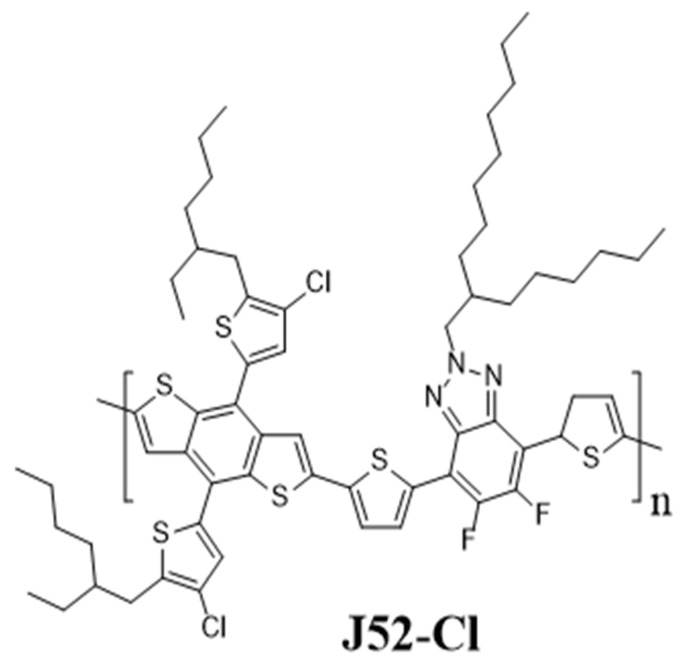
Currently, polymer organic solar cells (POSCs) are widely utilized due to their significant application, such as low-cost power conversion efficiencies (PCEs). Therefore, we designed a series of photovoltaic materials ( and ) by the incorporation of selenophene units ( = 1-7) as π-spacers by considering the importance of POSCs. Density functional theory (DFT) calculations were accomplished at MPW1PW91/6-311G (d, p) functional to explore the impact of additional selenophene units on the photovoltaic behavior of the above-mentioned compounds. A comparative analysis was conducted for designed compounds and reference compounds (). Reduction in energy gaps (∆E = 2.399 - 2.064 eV) with broader absorption wavelength (λ = 655.480 - 728.376 nm) in chloroform along with larger charge transference rate was studied with the addition of selenophene units as compared to . A significantly higher exciton dissociation rate was studied as lower values of binding energy (E = 0.508 - 0.362 eV) were noted in derivatives than in the reference (E = 0.526 eV). Moreover, transition density matrix (TDM) and density of state (DOS) data also supported the efficient charge transition origination from HOMOs to LUMOs. Open circuit voltage () was also calculated for all the aforesaid compounds to check the efficiency, and significant results were seen (1.633-1.549 V). All the analyses supported our compounds as efficient POSCs materials with significant efficacy. These compounds might encourage the experimental researchers to synthesize them due to proficient photovoltaic materials.
目前,聚合物有机太阳能电池(POSCs)因其重要应用,如低成本功率转换效率(PCEs)而被广泛使用。因此,考虑到POSCs的重要性,我们通过引入硒吩单元(n = 1 - 7)作为π间隔基,设计了一系列光伏材料(A和B)。采用MPW1PW91/6 - 311G(d, p)泛函完成密度泛函理论(DFT)计算,以探究额外的硒吩单元对上述化合物光伏行为的影响。对设计的化合物和参考化合物(C)进行了对比分析。与参考化合物相比,添加硒吩单元后,氯仿中的能隙减小(∆E = 2.399 - 2.064 eV),吸收波长变宽(λ = 655.480 - 728.376 nm),电荷转移速率增大。研究发现,衍生物的结合能(E = 0.508 - 0.362 eV)低于参考化合物(E = 0.526 eV),激子解离速率显著更高。此外,跃迁密度矩阵(TDM)和态密度(DOS)数据也支持电荷从最高占据分子轨道(HOMOs)到最低未占据分子轨道(LUMOs)的有效转移。还计算了所有上述化合物的开路电压(Voc)以检查效率,结果显著(1.633 -