School of Nursing, Jilin University, Changchun, China.
J Med Internet Res. 2023 Mar 29;25:e42845. doi: 10.2196/42845.
Cardiac rehabilitation is a class IA recommendation for patients with cardiovascular diseases. Physical activity is the core component and core competency of a cardiac rehabilitation program. However, many patients with cardiovascular diseases are failing to meet cardiac rehabilitation guidelines that recommend moderate-to-vigorous intensity physical activity.
The major objective of this study was to review the evidence of the effectiveness of eHealth interventions in increasing moderate-to-vigorous intensity physical activity among patients in cardiac rehabilitation. The secondary objective was to examine the effectiveness of eHealth interventions in improving cardiovascular-related outcomes, that is, cardiorespiratory fitness, waist circumference, and systolic blood pressure.
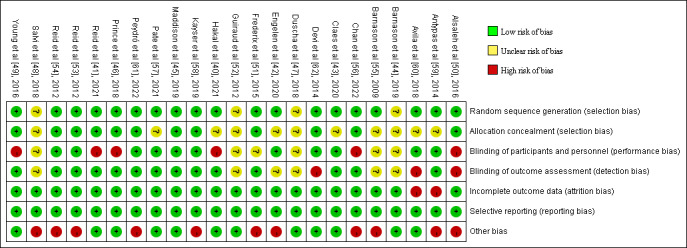
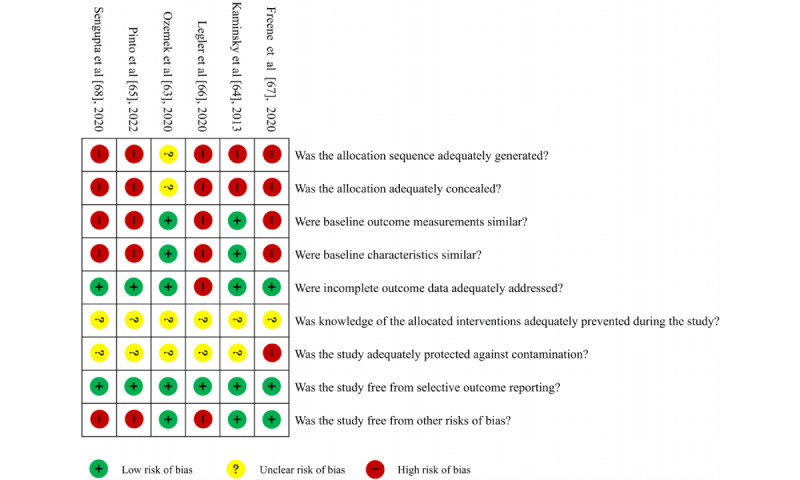
A comprehensive search strategy was developed, and a systematic search of 4 electronic databases (PubMed, Web of Science, Embase, and Cochrane Library) was conducted for papers published from the start of the creation of the database until November 27, 2022. Experimental studies reporting on eHealth interventions designed to increase moderate-to-vigorous intensity physical activity among patients in cardiac rehabilitation were included. Multiple unblinded reviewers determined the study eligibility and extracted data. Risk of bias was evaluated using the Cochrane Collaboration Tool for randomized controlled trials and the Cochrane Effective Practice and Organization of Care group methods for nonrandomized controlled trials. A random-effect model was used to provide the summary measures of effect (ie, standardized mean difference and 95% CI). All statistical analyses were performed using Stata 17.
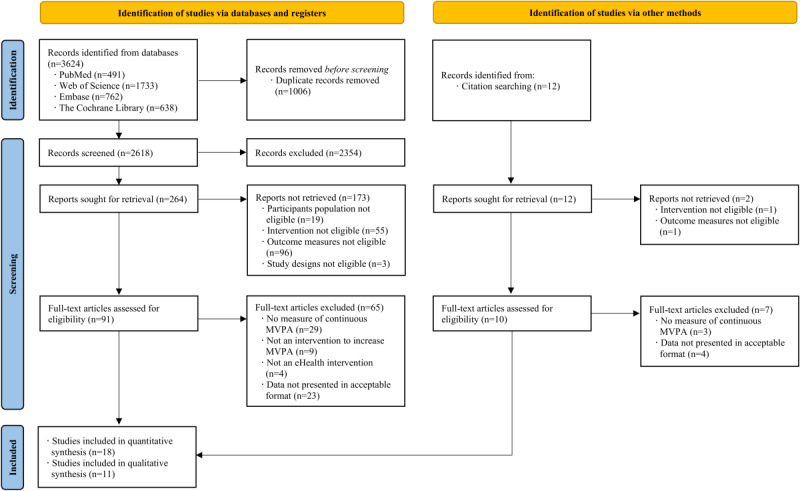
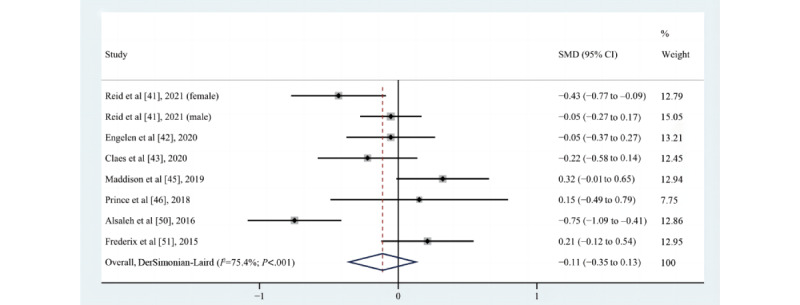
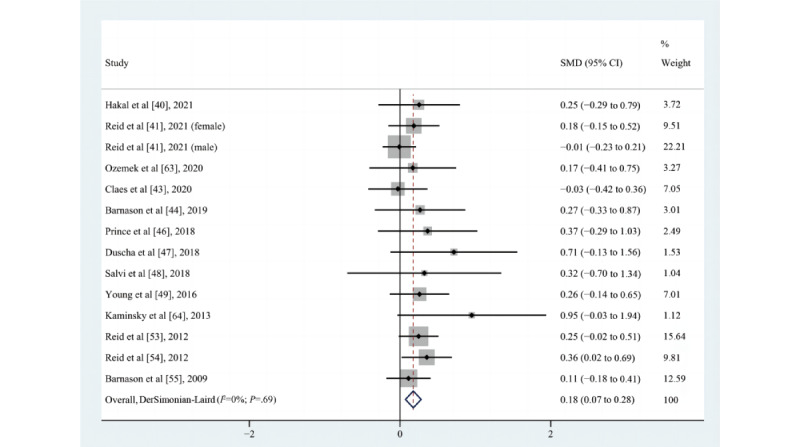
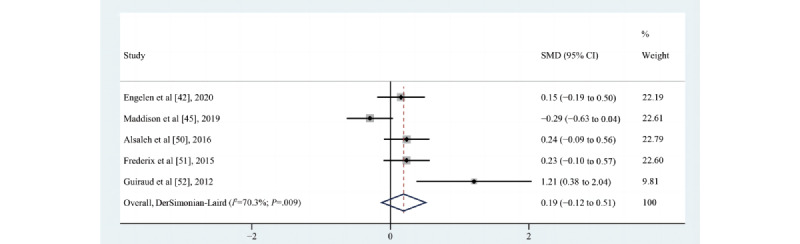
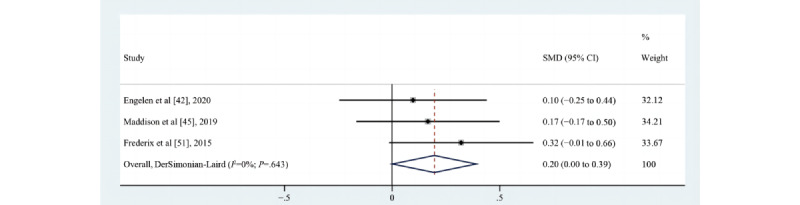
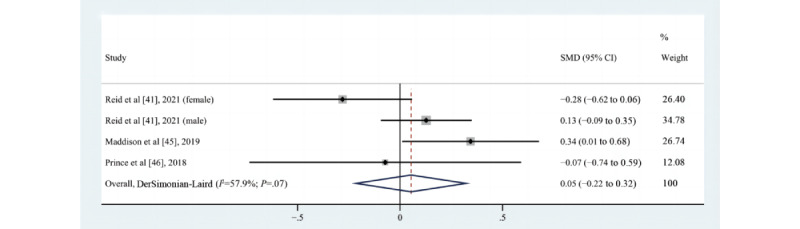
We screened 3636 studies, but only 29 studies were included in the final review, of which 18 were included in the meta-analysis. The meta-analysis demonstrated that eHealth interventions improved moderate-to-vigorous intensity physical activity (standardized mean difference=0.18, 95% CI 0.07-0.28; P=.001) and vigorous-intensity physical activity (standardized mean difference=0.2, 95% CI 0.00-0.39; P=.048) but did not improve moderate-intensity physical activity (standardized mean difference=0.19, 95% CI -0.12 to 0.51; P=.23). No changes were observed in the cardiovascular-related outcomes. Post hoc subgroup analyses identified that wearable-based, web-based, and communication-based eHealth intervention delivery methods were effective.
eHealth interventions are effective at increasing minutes per week of moderate-to-vigorous intensity physical activity among patients in cardiac rehabilitation. There was no difference in the effectiveness of the major eHealth intervention delivery methods, thereby providing evidence that in the future, health care professionals and researchers can personalize convenient and affordable interventions tailored to patient characteristics and needs to eliminate the inconvenience of visiting center-based cardiac rehabilitation programs during the COVID-19 pandemic and to provide better support for home-based maintenance of cardiac rehabilitation.
PROSPERO International Prospective Register of Systematic Reviews CRD42021278029; https://www.crd.york.ac.uk/prospero/display_record.php?RecordID=278029.
心脏康复是心血管疾病患者的 IA 类推荐。身体活动是心脏康复计划的核心组成部分和核心能力。然而,许多心血管疾病患者未能达到推荐中等至剧烈强度身体活动的心脏康复指南。
本研究的主要目的是回顾电子健康干预措施在增加心脏康复患者中等至剧烈强度身体活动方面的有效性证据。次要目的是检查电子健康干预措施在改善心血管相关结局方面的有效性,即心肺健康、腰围和收缩压。
制定了全面的搜索策略,并对从数据库创建开始到 2022 年 11 月 27 日发表的 4 个电子数据库(PubMed、Web of Science、Embase 和 Cochrane Library)进行了系统搜索。纳入了旨在增加心脏康复患者中等至剧烈强度身体活动的电子健康干预措施的实验研究。多名非盲审员确定了研究的合格性并提取了数据。使用 Cochrane 协作工具评估了随机对照试验的偏倚风险和 Cochrane 有效实践和组织护理组方法评估了非随机对照试验的偏倚风险。使用随机效应模型提供效应的汇总测量值(即标准化均数差和 95%置信区间)。所有统计分析均使用 Stata 17 进行。
我们筛选了 3636 项研究,但只有 29 项研究最终纳入了综述,其中 18 项研究纳入了荟萃分析。荟萃分析表明,电子健康干预措施改善了中等至剧烈强度的身体活动(标准化均数差=0.18,95%置信区间 0.07-0.28;P=.001)和剧烈强度的身体活动(标准化均数差=0.2,95%置信区间 0.00-0.39;P=.048),但没有改善中等强度的身体活动(标准化均数差=0.19,95%置信区间-0.12 至 0.51;P=.23)。心血管相关结局没有变化。事后亚组分析确定,基于可穿戴设备、基于网络和基于通信的电子健康干预交付方法是有效的。
电子健康干预措施可有效增加心脏康复患者每周中等至剧烈强度身体活动的分钟数。主要电子健康干预交付方法的有效性没有差异,这为未来提供了证据,即医疗保健专业人员和研究人员可以根据患者的特点和需求定制方便且经济实惠的干预措施,以消除在 COVID-19 大流行期间访问中心为基础的心脏康复计划的不便,并为在家中维持心脏康复提供更好的支持。
PROSPERO 国际前瞻性系统评价注册中心 CRD42021278029;https://www.crd.york.ac.uk/prospero/display_record.php?RecordID=278029。