Tian Cindy Yue, Mo Phoenix Kit-Han, Dong Dong, Qiu Hong, Cheung Annie Wai-Ling, Wong Eliza Lai-Yi
JC School of Public Health and Primary Care, Faculty of Medicine, The Chinese University of Hong Kong, Hong Kong 999077, China.
Centre for Health Systems and Policy Research, JC School of Public Health and Primary Care, The Chinese University of Hong Kong, Hong Kong 999077, China.
Vaccines (Basel). 2023 Mar 1;11(3):562. doi: 10.3390/vaccines11030562.
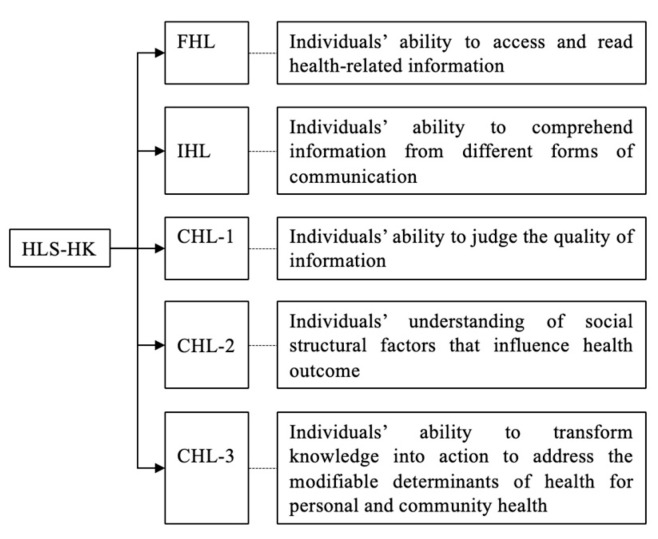
This study investigates how health literacy (HL) and trust in health information affected COVID-19 vaccine hesitancy among Chinese Hong Kong adults. A cross-sectional study was conducted in August 2022. A total of 401 participants completed the study. Participants completed a newly developed Hong Kong HL scale and self-reported their trust levels in health information from different resources. The proportions of early uptake of the first dose and booster dose of COVID-19 vaccine were 69.1% and 71.8%, respectively. The risk of delaying the first dose was higher among participants with inadequate functional HL (OR = 0.58, = 0.015), adequate levels of two subdomains of critical HL (OR = 1.82, = 0.013; OR = 1.91, < 0.01), and low-level trust in health information from the government (OR = 0.57, = 0.019). Respondents with adequate interactive HL (OR = 0.52, = 0.014) and inadequate level of one subdomain of critical HL (OR =1.71, = 0.039) were more likely to delay the booster dose. This negative association between critical HL and vaccination was suppressed by trust in health information from the government. This study shows that HL and trust in health information from the government are associated with COVID-19 vaccine hesitancy. Efforts should be directed at providing tailored communication strategies with regard to people's HL and increasing public confidence in health authorities to decrease vaccine hesitancy.
本研究调查了健康素养(HL)和对健康信息的信任如何影响中国香港成年人对新冠疫苗的犹豫态度。2022年8月进行了一项横断面研究。共有401名参与者完成了该研究。参与者完成了一项新开发的香港健康素养量表,并自行报告了他们对来自不同来源的健康信息的信任程度。新冠疫苗第一剂和加强剂的早期接种比例分别为69.1%和71.8%。功能健康素养不足的参与者延迟接种第一剂的风险更高(优势比=0.58,P=0.015),批判性健康素养两个子领域水平充足的参与者(优势比=1.82,P=0.013;优势比=1.91,P<0.01),以及对政府健康信息信任度低的参与者(优势比=0.57,P=0.019)。互动健康素养充足的受访者(优势比=0.52,P=0.014)和批判性健康素养一个子领域水平不足的受访者(优势比=1.71,P=0.039)更有可能延迟接种加强剂。政府健康信息信任度抑制了批判性健康素养与疫苗接种之间的这种负相关关系。本研究表明,健康素养和对政府健康信息的信任与新冠疫苗犹豫态度有关。应努力针对人们的健康素养提供量身定制的沟通策略,并增强公众对卫生当局的信心,以减少疫苗犹豫。