Department of Veterinary Microbiology and Pathology, College of Veterinary Medicine, Washington State University, Pullman, WA 99164, USA.
Department of Biological Sciences, University of Idaho, Moscow, ID 83844, USA.
Viruses. 2023 Mar 15;15(3):754. doi: 10.3390/v15030754.
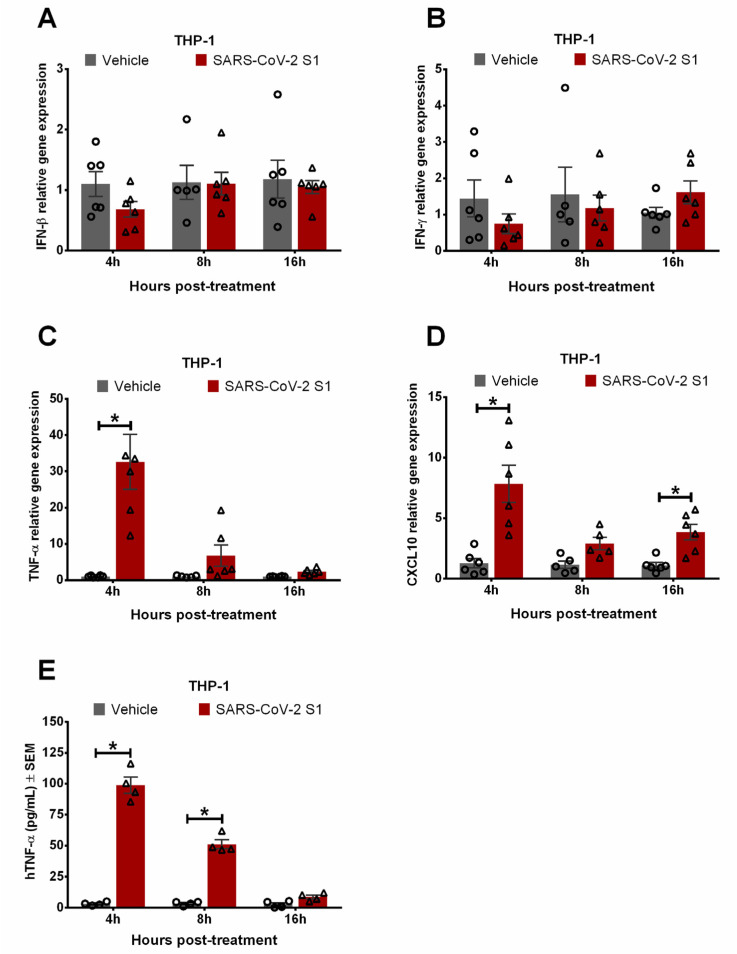
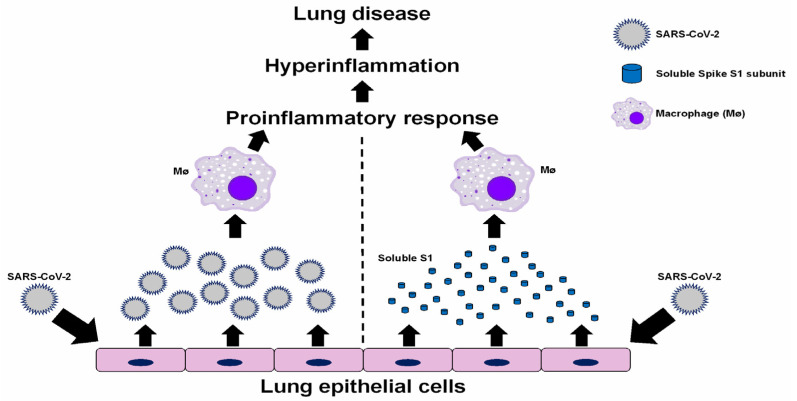
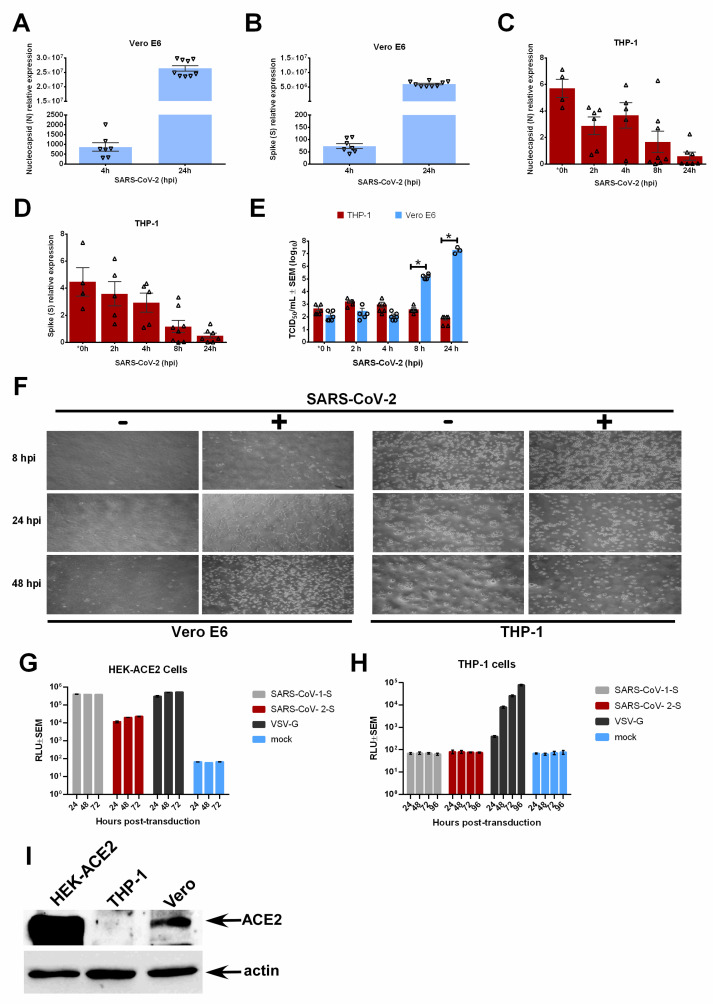
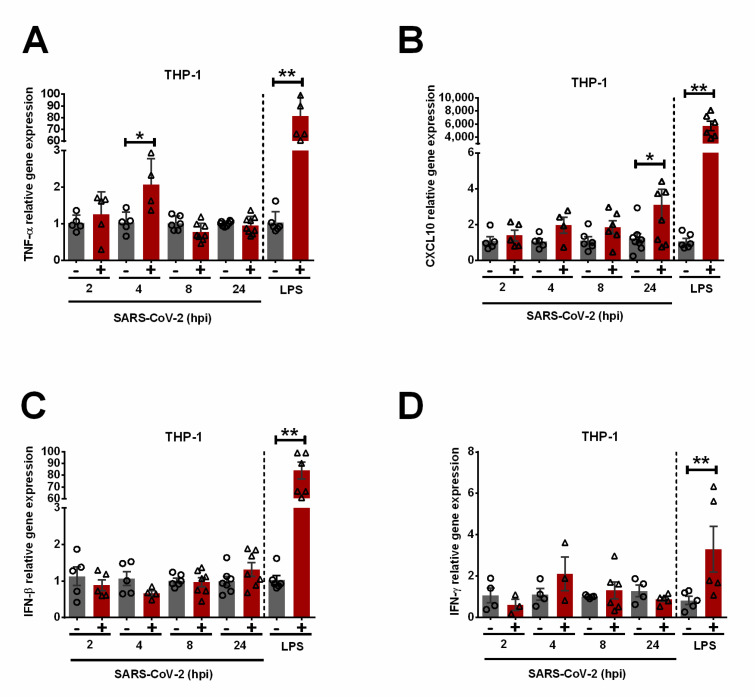
Critically ill COVID-19 patients display signs of generalized hyperinflammation. Macrophages trigger inflammation to eliminate pathogens and repair tissue, but this process can also lead to hyperinflammation and resulting exaggerated disease. The role of macrophages in dysregulated inflammation during SARS-CoV-2 infection is poorly understood. We inoculated and treated human macrophage cell line THP-1 with SARS-CoV-2 and purified, glycosylated, soluble SARS-CoV-2 spike protein S1 subunit (S1) to clarify the role of macrophages in pro-inflammatory responses. Soluble S1 upregulated TNF-α and CXCL10 mRNAs, and induced secretion of TNF-α from THP-1 macrophages. While THP-1 macrophages did not support productive SARS-CoV-2 replication or viral entry, virus exposure resulted in upregulation of both TNF-α and CXCL10 genes. Our study shows that extracellular soluble S1 protein is a key viral component inducing pro-inflammatory responses in macrophages, independent of virus replication. Thus, virus- or soluble S1-activated macrophages may become sources of pro-inflammatory mediators contributing to hyperinflammation in COVID-19 patients.
危重症 COVID-19 患者表现出全身性过度炎症的迹象。巨噬细胞触发炎症以消除病原体和修复组织,但这一过程也可能导致过度炎症和疾病加重。巨噬细胞在 SARS-CoV-2 感染期间失调性炎症中的作用尚不清楚。我们用 SARS-CoV-2 接种并处理人巨噬细胞系 THP-1,并纯化、糖基化、可溶性 SARS-CoV-2 刺突蛋白 S1 亚单位(S1),以阐明巨噬细胞在促炎反应中的作用。可溶性 S1 上调了 TNF-α 和 CXCL10 的 mRNA,并诱导 THP-1 巨噬细胞分泌 TNF-α。虽然 THP-1 巨噬细胞不能支持 SARS-CoV-2 的有效复制或病毒进入,但病毒暴露导致 TNF-α 和 CXCL10 基因的上调。我们的研究表明,细胞外可溶性 S1 蛋白是诱导巨噬细胞产生促炎反应的关键病毒成分,与病毒复制无关。因此,病毒或可溶性 S1 激活的巨噬细胞可能成为导致 COVID-19 患者过度炎症的促炎介质的来源。