Levy Daniel, Abadchi Sanaz Nourmohammadi, Shababi Niloufar, Ravari Mohsen Rouhani, Pirolli Nicholas H, Bergeron Cade, Obiorah Angel, Mokhtari-Esbuie Farzad, Gheshlaghi Shayan, Abraham John M, Smith Ian M, Powsner Emily, Solomon Talia, Harmon John W, Jay Steven M
Fischell Department of Bioengineering, University of Maryland, College Park, MD 20742, USA.
Department of Surgery, Johns Hopkins University School of Medicine, Baltimore, MD 21224, USA.
bioRxiv. 2023 Mar 23:2023.03.19.533334. doi: 10.1101/2023.03.19.533334.
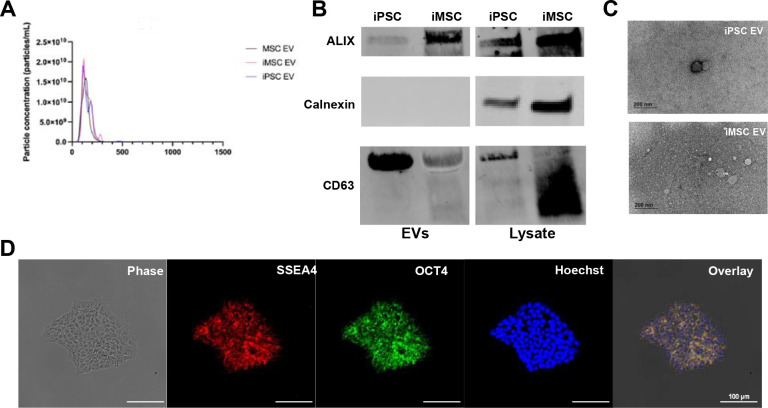
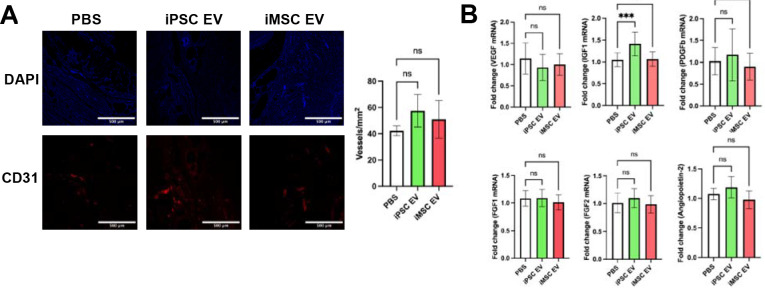
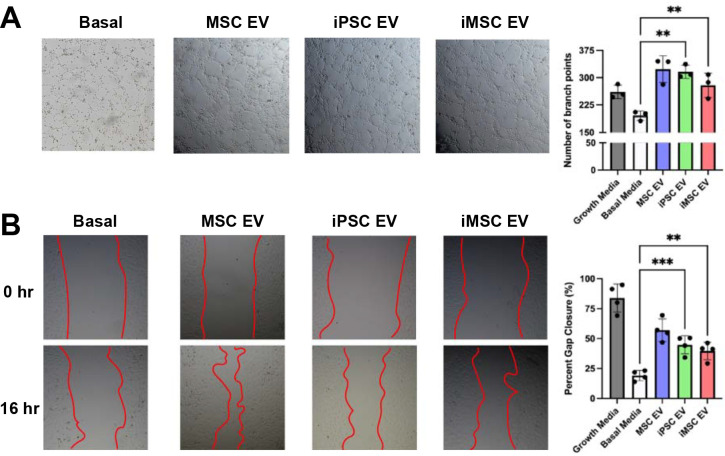
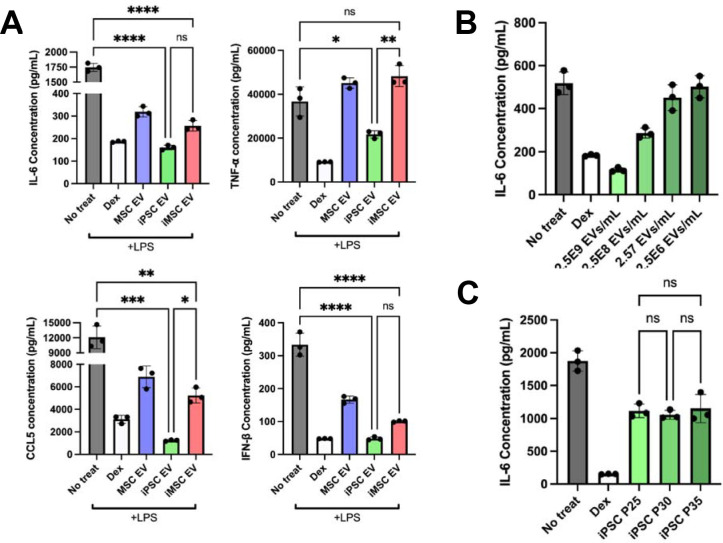
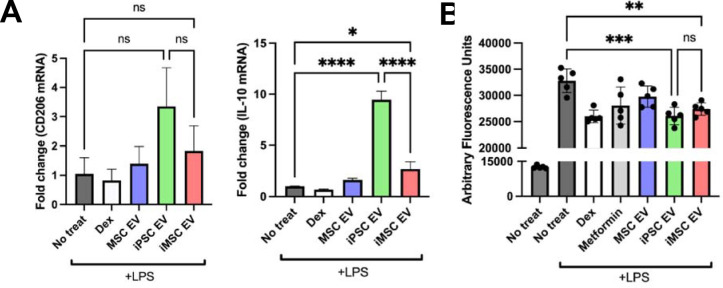
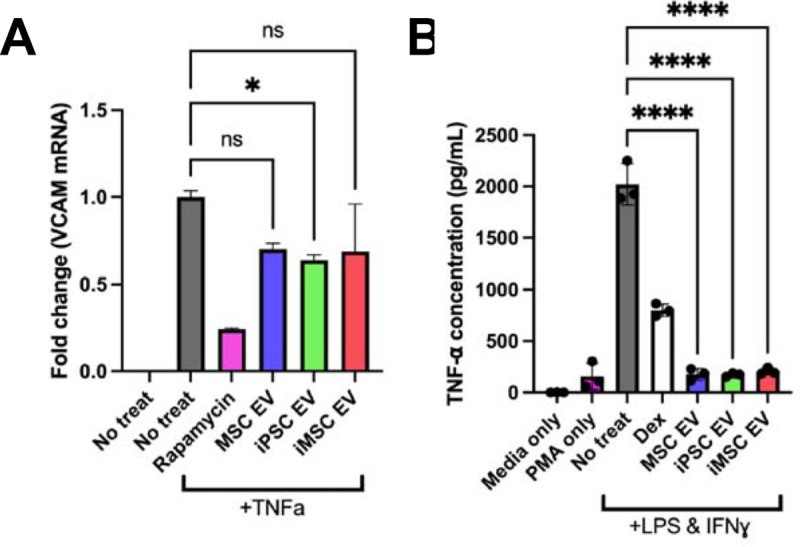
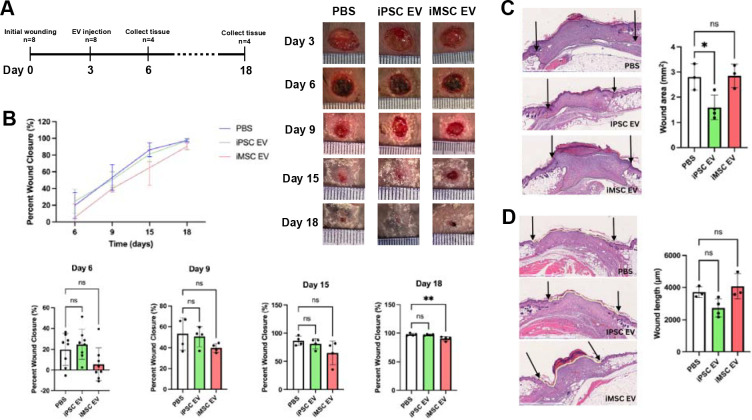
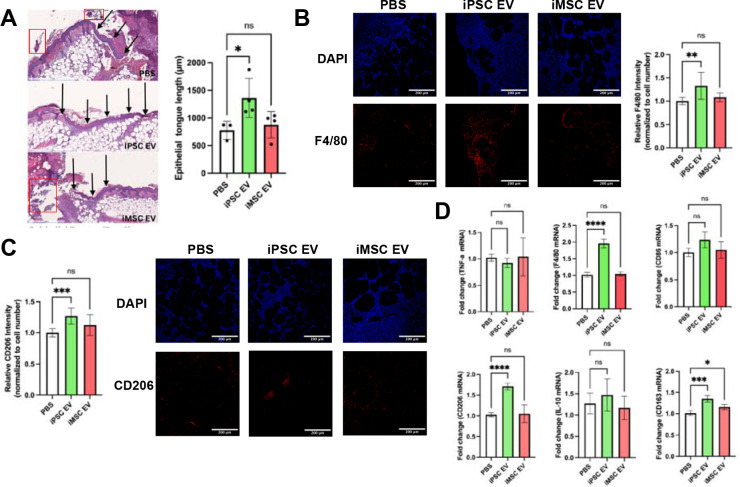
Extracellular vesicles (EVs) derived from mesenchymal stem/stromal cells (MSCs) have recently been widely explored in clinical trials for treatment of diseases with complex pathophysiology. However, production of MSC EVs is currently hampered by donor-specific characteristics and limited expansion capabilities before decreased potency, thus restricting their potential as a scalable and reproducible therapeutic. Induced pluripotent stem cells (iPSCs) represent a self-renewing source for obtaining differentiated iPSC-derived MSCs (iMSCs), circumventing both scalability and donor variability concerns for therapeutic EV production. Thus, we initially sought to evaluate the therapeutic potential of iMSC EVs. Interestingly, while utilizing undifferentiated iPSC EVs as a control, we found that their vascularization bioactivity was similar and their anti-inflammatory bioactivity was superior to donor-matched iMSC EVs in cell-based assays. To supplement this initial bioactivity screen, we employed a diabetic wound healing mouse model where both the pro-vascularization and anti-inflammatory activity of these EVs would be beneficial. In this model, iPSC EVs more effectively mediated inflammation resolution within the wound bed. Combined with the lack of additional differentiation steps required for iMSC generation, these results support the use of undifferentiated iPSCs as a source for therapeutic EV production with respect to both scalability and efficacy.
源自间充质干/基质细胞(MSC)的细胞外囊泡(EV)最近在治疗具有复杂病理生理学的疾病的临床试验中得到了广泛探索。然而,目前MSC EV的生产受到供体特异性特征的阻碍,并且在效力降低之前其扩增能力有限,从而限制了它们作为可扩展和可重复治疗方法的潜力。诱导多能干细胞(iPSC)是获得分化的iPSC衍生的MSC(iMSC)的自我更新来源,避免了治疗性EV生产中的可扩展性和供体变异性问题。因此,我们最初试图评估iMSC EV的治疗潜力。有趣的是,在将未分化的iPSC EV用作对照时,我们发现在基于细胞的测定中,它们的血管生成生物活性相似,并且它们的抗炎生物活性优于供体匹配的iMSC EV。为了补充这一初步的生物活性筛选,我们采用了糖尿病伤口愈合小鼠模型,其中这些EV的促血管生成和抗炎活性都将是有益的。在这个模型中,iPSC EV更有效地介导了伤口床内的炎症消退。结合生成iMSC所需的额外分化步骤的缺乏,这些结果支持将未分化的iPSC用作治疗性EV生产的来源,在可扩展性和疗效方面都是如此。