Tan Thong Teck, Lai Ruenn Chai, Padmanabhan Jayanthi, Sim Wei Kian, Choo Andre Boon Hwa, Lim Sai Kiang
Institute of Molecular and Cellular Biology, A*STAR, 8A Biomedical Grove, Singapore 138648, Singapore.
Bioprocessing Technology Institute, A*STAR, 20 Biopolis Way, Singapore 138668, Singapore.
Pharmaceuticals (Basel). 2021 Apr 9;14(4):345. doi: 10.3390/ph14040345.
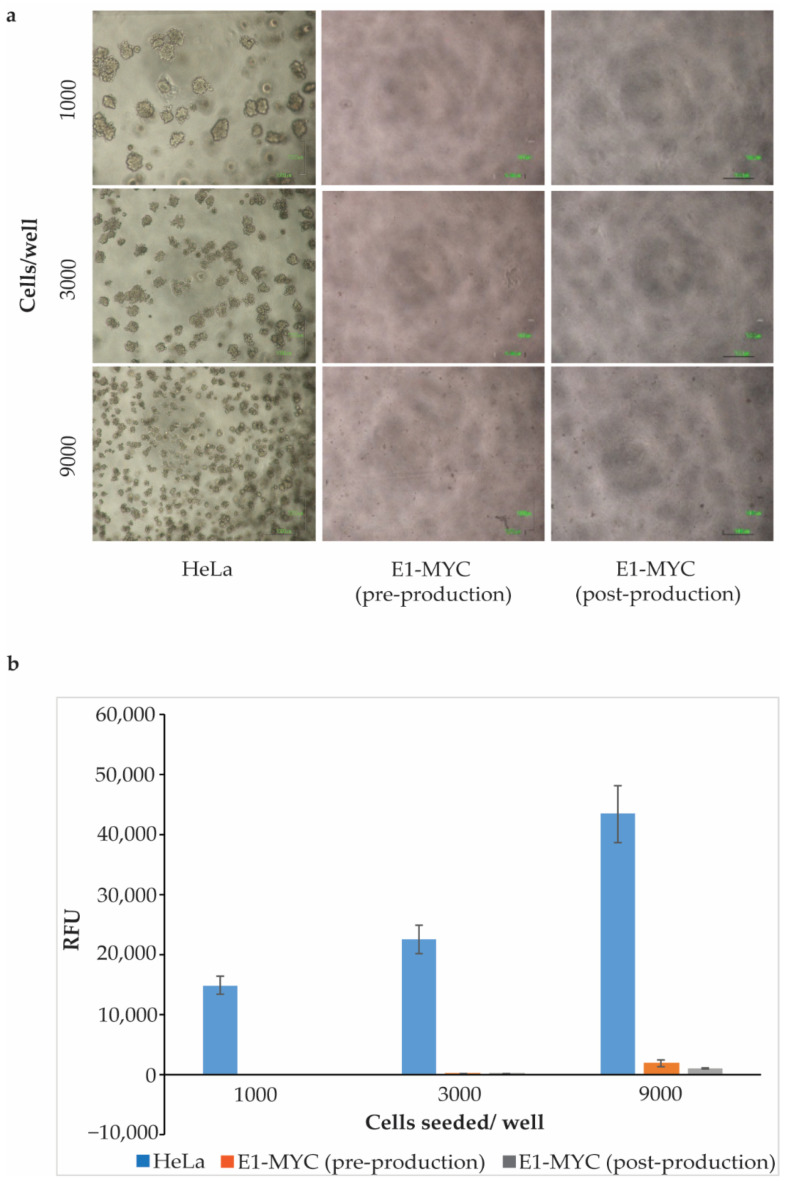
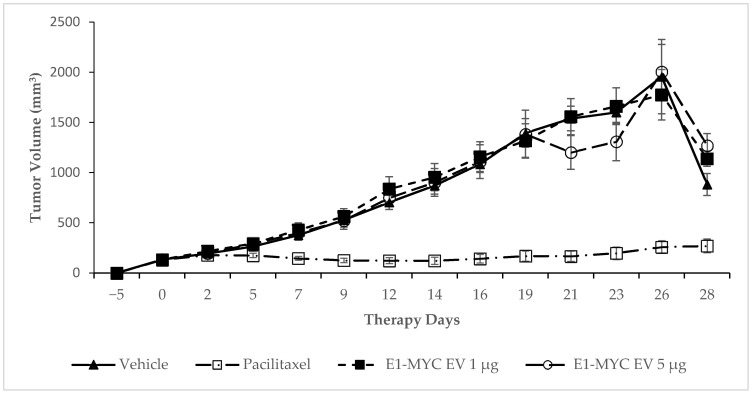
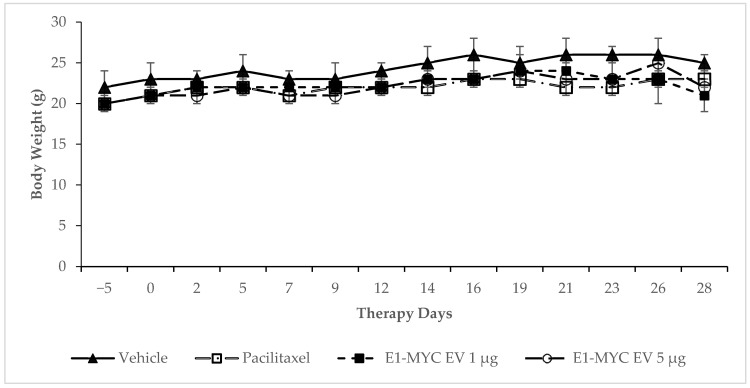
Mesenchymal-stem/stromal-cell-derived small extracellular vesicles (MSC-sEV) have been shown to ameliorate many diseases in preclinical studies. However, translating MSC-sEV into clinical use requires the development of scalable manufacturing processes for highly reproducible preparations of safe and potent MSC-sEVs. A major source of variability in MSC-sEV preparations is EV producer cells. To circumvent variability in producer cells, clonal immortalized MSC lines as EV producer lines are increasingly being used for sEV production. The use of sEVs from immortalized producer cells inevitably raises safety concerns regarding the tumorigenicity or tumor promoting potential of the EV products. In this study, cells from E1-MYC line, a MSC cell line immortalized with the gene, were injected subcutaneously into athymic nude mice. At 84 days post-injection, no tumor formation was observed at the injection site, lungs, or lymph nodes. E1-MYC cells pre-and post-sEV production did not exhibit anchorage-independent growth in soft agar. Daily intraperitoneal injections of 1 or 5 μg sEVs from E1-MYC into athymic nude mice with FaDu human head and neck cancer xenografts for 28 days did not promote or inhibit tumor growth relative to the xenograft treated with vehicle control. Therefore, -immortalized MSCs are not tumorigenic and sEVs from these MSCs do not promote tumor growth.
间充质干/基质细胞衍生的小细胞外囊泡(MSC-sEV)在临床前研究中已显示可改善多种疾病。然而,将MSC-sEV转化为临床应用需要开发可扩展的制造工艺,以高度可重复地制备安全有效的MSC-sEV。MSC-sEV制剂中变异性的一个主要来源是细胞外囊泡产生细胞。为了规避产生细胞的变异性,作为细胞外囊泡产生系的克隆永生化间充质干细胞系越来越多地用于细胞外囊泡生产。使用来自永生化产生细胞的细胞外囊泡不可避免地引发了关于细胞外囊泡产品的致瘤性或促肿瘤潜力的安全担忧。在本研究中,将用该基因永生化的间充质干细胞系E1-MYC的细胞皮下注射到无胸腺裸鼠体内。注射后84天,在注射部位、肺或淋巴结未观察到肿瘤形成。E1-MYC细胞在产生细胞外囊泡前后在软琼脂中未表现出不依赖贴壁的生长。将来自E1-MYC的1或5μg细胞外囊泡每日腹腔注射到患有FaDu人头颈癌异种移植物的无胸腺裸鼠中,持续28天,相对于用载体对照处理的异种移植物,未促进或抑制肿瘤生长。因此,永生化间充质干细胞不具有致瘤性,并且来自这些间充质干细胞的细胞外囊泡不促进肿瘤生长。