Owen Josephine C, Garrick Steven P, Peterson Briana M, Berger Philip J, Nold Marcel F, Sehgal Arvind, Nold-Petry Claudia A
Ritchie Centre, Hudson Institute of Medical Research, Melbourne, VIC, Australia.
Department of Paediatrics, Monash University, Melbourne, VIC, Australia.
Front Pediatr. 2023 Mar 13;11:1130013. doi: 10.3389/fped.2023.1130013. eCollection 2023.
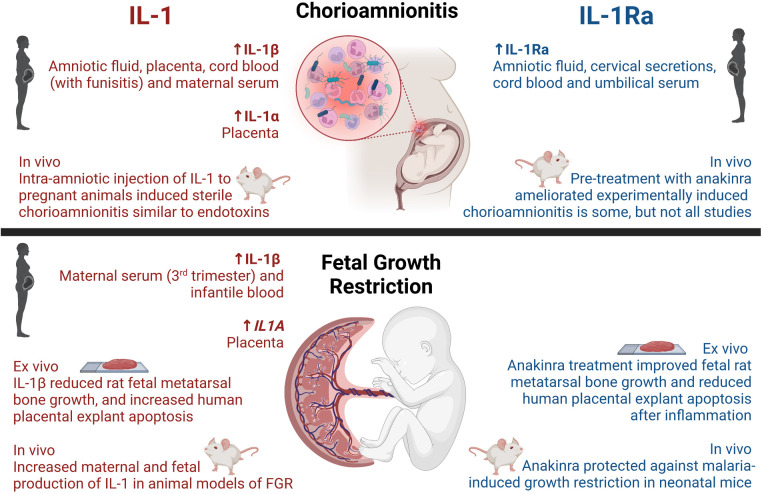
Preterm birth is defined as delivery at <37 weeks of gestational age (GA) and exposes 15 million infants worldwide to serious early life diseases. Lowering the age of viability to 22 weeks GA entailed provision of intensive care to a greater number of extremely premature infants. Moreover, improved survival, especially at extremes of prematurity, comes with a rising incidence of early life diseases with short- and long-term sequelae. The transition from fetal to neonatal circulation is a substantial and complex physiologic adaptation, which normally happens rapidly and in an orderly sequence. Maternal chorioamnionitis or fetal growth restriction (FGR) are two common causes of preterm birth that are associated with impaired circulatory transition. Among many cytokines contributing to the pathogenesis of chorioamnionitis-related perinatal inflammatory diseases, the potent pro-inflammatory interleukin (IL)-1 has been shown to play a central role. The effects of utero-placental insufficiency-related FGR and in-utero hypoxia may also be mediated, in part, via the inflammatory cascade. In preclinical studies, blocking such inflammation, early and effectively, holds great promise for improving the transition of circulation. In this mini-review, we outline the mechanistic pathways leading to abnormalities in transitional circulation in chorioamnionitis and FGR. In addition, we explore the therapeutic potential of targeting IL-1 and its influence on perinatal transition in the context of chorioamnionitis and FGR.
早产被定义为在妊娠龄(GA)<37周时分娩,全球有1500万婴儿面临严重的早期生命疾病。将可存活年龄降至22周GA需要为更多的极早产儿提供重症监护。此外,存活率的提高,尤其是在极端早产情况下,伴随着早期生命疾病及其短期和长期后遗症发病率的上升。从胎儿循环到新生儿循环的转变是一个重大而复杂的生理适应过程,通常迅速且有序地发生。母体绒毛膜羊膜炎或胎儿生长受限(FGR)是与循环转变受损相关的两种常见早产原因。在许多促成绒毛膜羊膜炎相关围产期炎症性疾病发病机制的细胞因子中,强效促炎白细胞介素(IL)-1已被证明起核心作用。子宫胎盘功能不全相关的FGR和宫内缺氧的影响也可能部分通过炎症级联反应介导。在临床前研究中,早期有效阻断这种炎症对于改善循环转变具有很大前景。在这篇小型综述中,我们概述了绒毛膜羊膜炎和FGR中导致过渡性循环异常的机制途径。此外,我们探讨了在绒毛膜羊膜炎和FGR背景下靶向IL-1的治疗潜力及其对围产期转变的影响。