Department of Biochemistry and Molecular & Cellular Biology, Georgetown University Medical Center, Washington, DC, United States of America.
Department of Thoracic Oncology, H. Lee Moffitt Cancer Center and Research Institute, Tampa, Florida, United States of America.
PLoS Comput Biol. 2023 Mar 30;19(3):e1010690. doi: 10.1371/journal.pcbi.1010690. eCollection 2023 Mar.
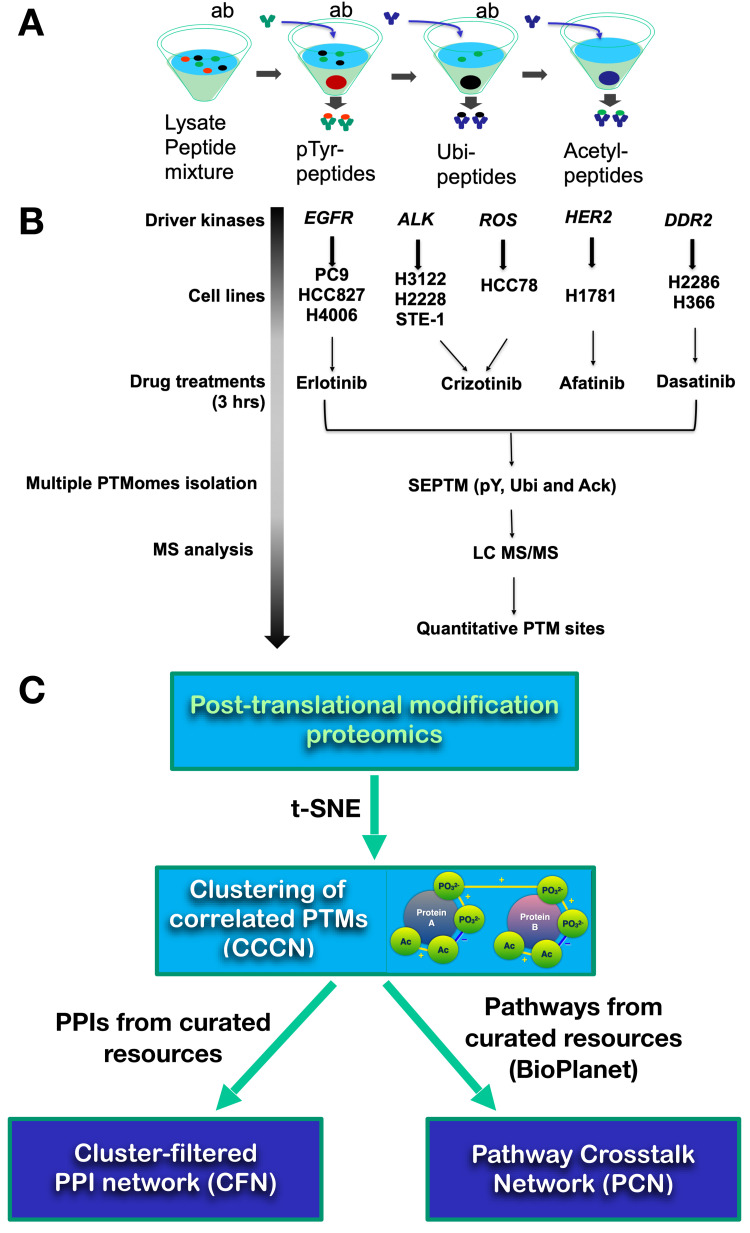
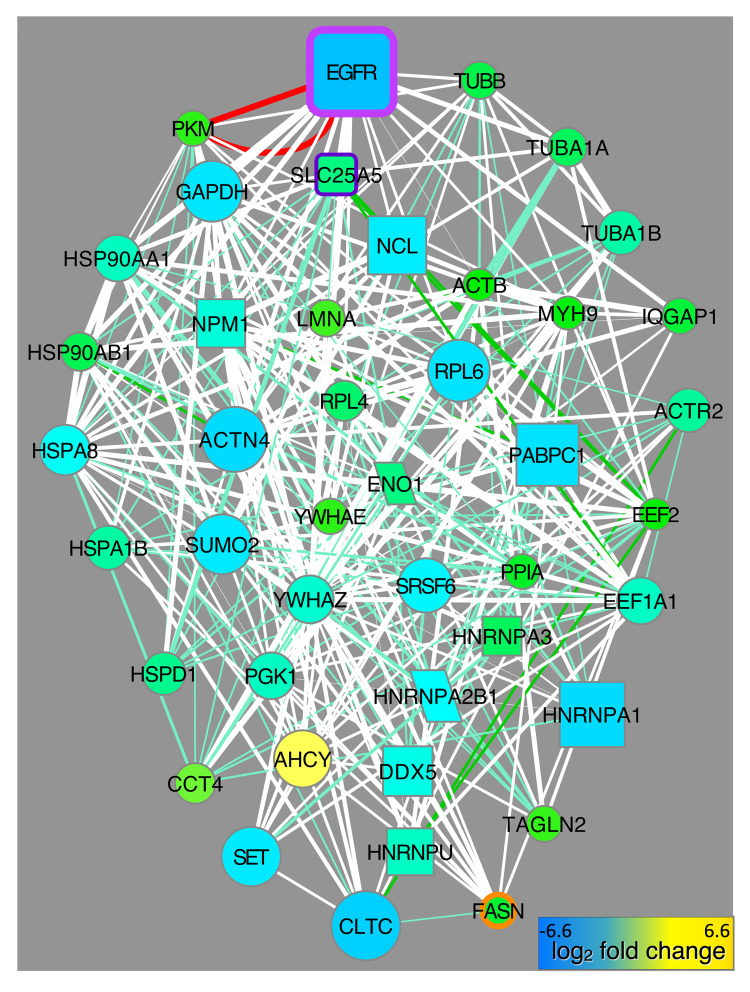
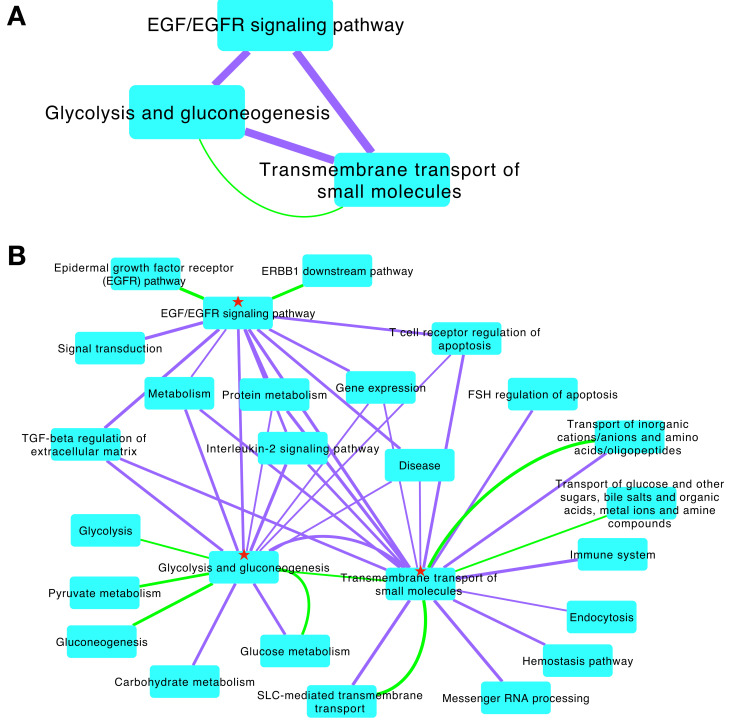
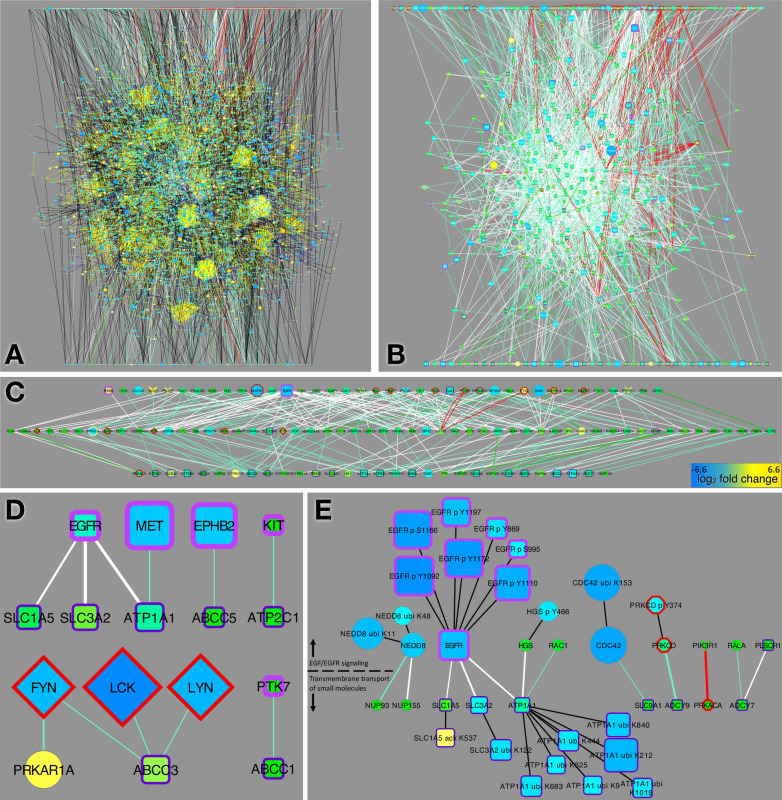
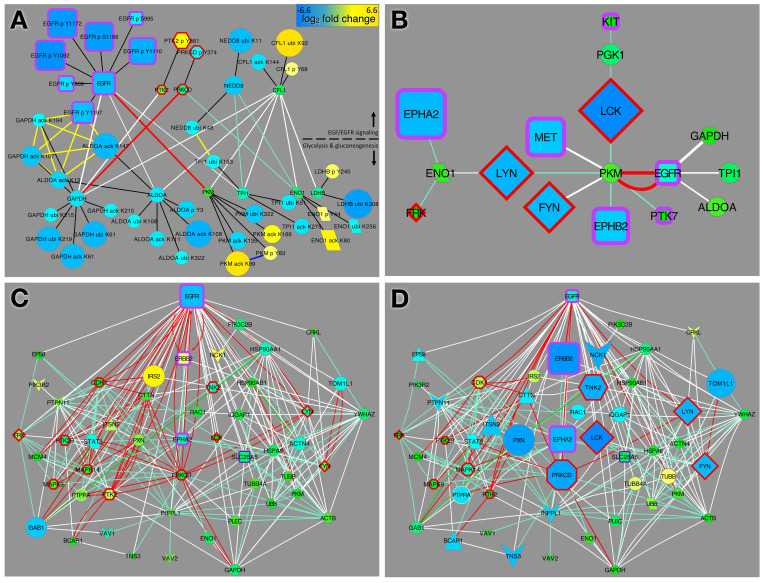
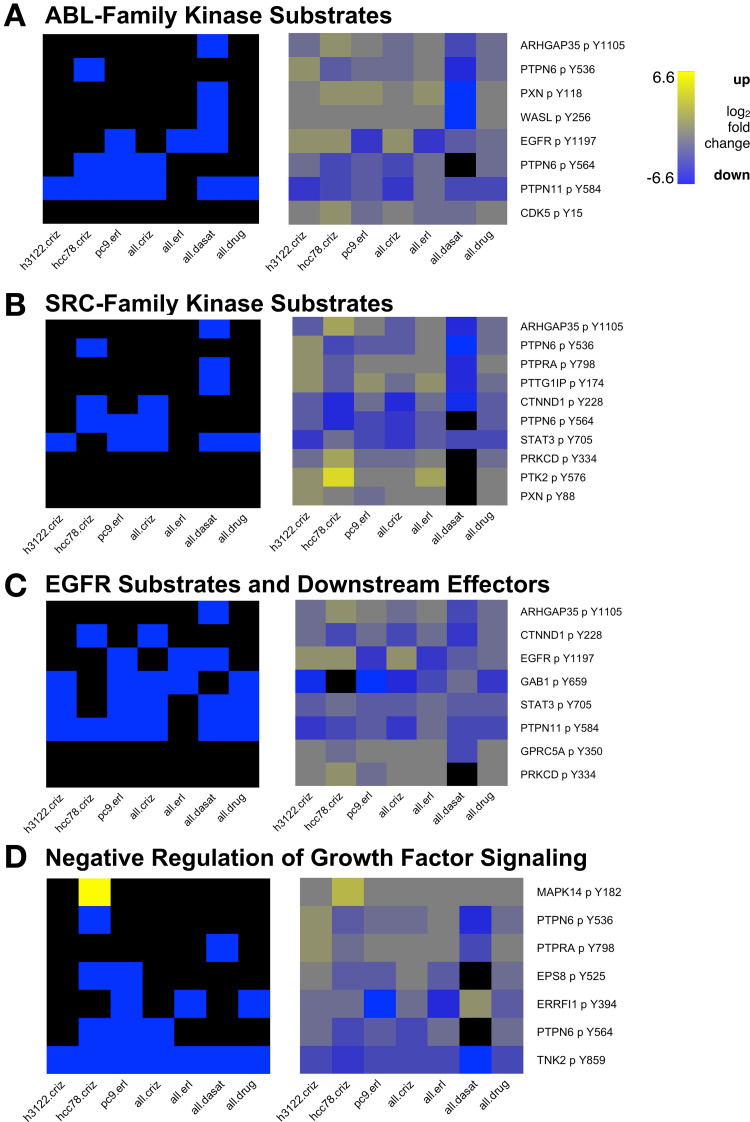
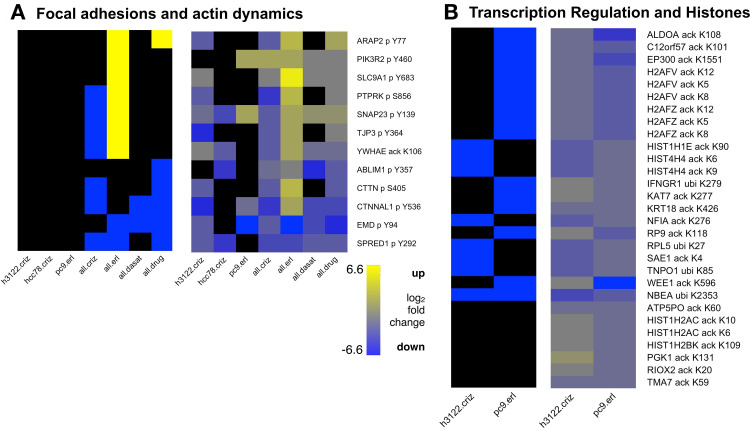
We analyzed large-scale post-translational modification (PTM) data to outline cell signaling pathways affected by tyrosine kinase inhibitors (TKIs) in ten lung cancer cell lines. Tyrosine phosphorylated, lysine ubiquitinated, and lysine acetylated proteins were concomitantly identified using sequential enrichment of post translational modification (SEPTM) proteomics. Machine learning was used to identify PTM clusters that represent functional modules that respond to TKIs. To model lung cancer signaling at the protein level, PTM clusters were used to create a co-cluster correlation network (CCCN) and select protein-protein interactions (PPIs) from a large network of curated PPIs to create a cluster-filtered network (CFN). Next, we constructed a Pathway Crosstalk Network (PCN) by connecting pathways from NCATS BioPlanet whose member proteins have PTMs that co-cluster. Interrogating the CCCN, CFN, and PCN individually and in combination yields insights into the response of lung cancer cells to TKIs. We highlight examples where cell signaling pathways involving EGFR and ALK exhibit crosstalk with BioPlanet pathways: Transmembrane transport of small molecules; and Glycolysis and gluconeogenesis. These data identify known and previously unappreciated connections between receptor tyrosine kinase (RTK) signal transduction and oncogenic metabolic reprogramming in lung cancer. Comparison to a CFN generated from a previous multi-PTM analysis of lung cancer cell lines reveals a common core of PPIs involving heat shock/chaperone proteins, metabolic enzymes, cytoskeletal components, and RNA-binding proteins. Elucidation of points of crosstalk among signaling pathways employing different PTMs reveals new potential drug targets and candidates for synergistic attack through combination drug therapy.
我们分析了大规模的翻译后修饰(PTM)数据,以概述酪氨酸激酶抑制剂(TKI)在十种肺癌细胞系中影响的细胞信号通路。使用翻译后修饰(SEPTM)蛋白质组学的连续富集,同时鉴定了酪氨酸磷酸化、赖氨酸泛素化和赖氨酸乙酰化蛋白质。使用机器学习来识别代表对 TKI 有反应的功能模块的 PTM 簇。为了在蛋白质水平上对肺癌信号进行建模,PTM 簇用于创建共聚类相关网络(CCCN),并从经过精心整理的蛋白质 - 蛋白质相互作用(PPI)大网络中选择蛋白质 - 蛋白质相互作用(PPI),以创建聚类过滤网络(CFN)。接下来,我们通过连接 NCATS BioPlanet 的途径来构建途径串扰网络(PCN),其成员蛋白具有共聚类的 PTM。单独和组合地询问 CCCN、CFN 和 PCN 可以深入了解肺癌细胞对 TKI 的反应。我们强调了涉及 EGFR 和 ALK 的细胞信号通路与 BioPlanet 途径相互作用的示例:小分子的跨膜运输;和糖酵解和糖异生。这些数据确定了受体酪氨酸激酶(RTK)信号转导与肺癌中致癌代谢重编程之间已知和以前未被重视的联系。与先前对肺癌细胞系的多 PTM 分析生成的 CFN 进行比较,揭示了涉及热休克/伴侣蛋白、代谢酶、细胞骨架成分和 RNA 结合蛋白的常见 PPI 核心。阐明使用不同 PTM 的信号通路之间的串扰点揭示了新的潜在药物靶点和通过联合药物治疗进行协同攻击的候选药物。