Huang Peng, Shang Jiawen, Xu Yingjie, Hu Zhihui, Zhang Ke, Dai Jianrong, Yan Hui
Department of Radiation Oncology, National Cancer Center/National Clinical Research Center for Cancer/Cancer Hospital, Chinese Academy of Medical Sciences and Peking Union Medical College, Beijing, China.
Front Oncol. 2023 Mar 14;13:1142947. doi: 10.3389/fonc.2023.1142947. eCollection 2023.
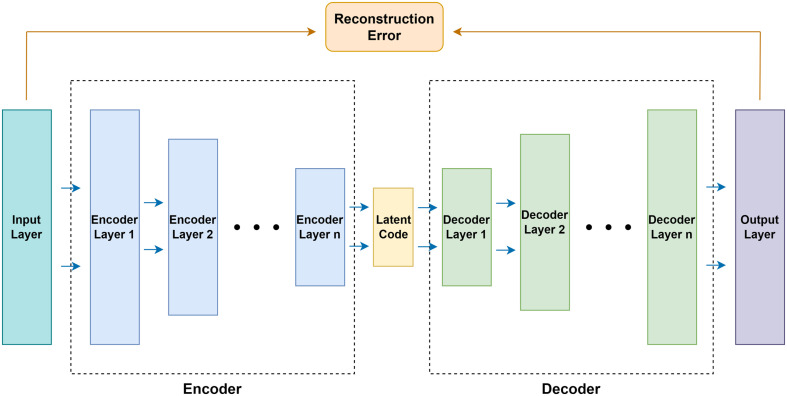
Treatment plans are used for patients under radiotherapy in clinics. Before execution, these plans are checked for safety and quality by human experts. A few of them were identified with flaws and needed further improvement. To automate this checking process, an unsupervised learning method based on an autoencoder was proposed.
First, features were extracted from the treatment plan by human experts. Then, these features were assembled and used for model learning. After network optimization, a reconstruction error between the predicted and target signals was obtained. Finally, the questionable plans were identified based on the value of the reconstruction error. A large value of the reconstruction error indicates a longer distance from the standard distribution of normal plans. A total of 576 treatment plans for breast cancer patients were used for the test. Among them, 19 were questionable plans identified by human experts. To evaluate the performance of the autoencoder, it was compared with four baseline detection algorithms, namely, local outlier factor (LOF), hierarchical density-based spatial clustering of applications with noise (HDBSCAN), one-class support vector machine (OC-SVM), and principal component analysis (PCA).
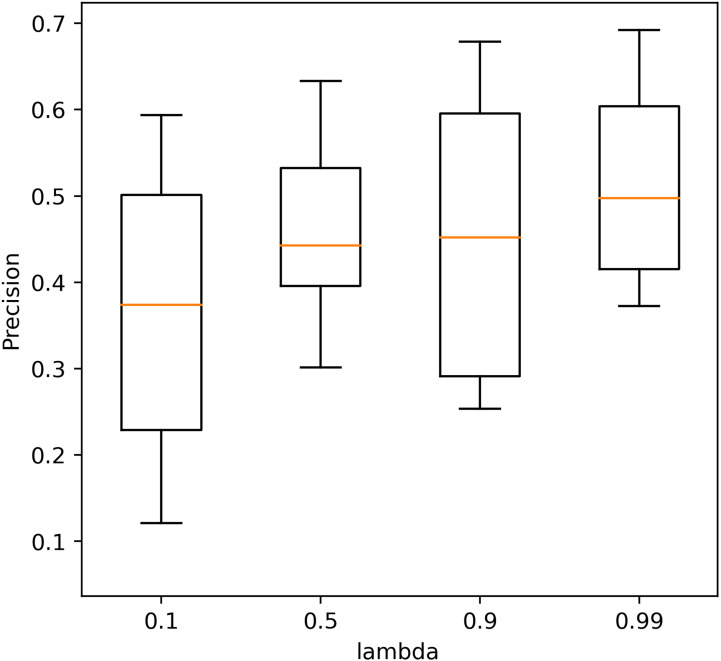
The results showed that the autoencoder achieved the best performance than the other four baseline algorithms. The AUC value of the autoencoder was 0.9985, while the second one was 0.9535 (LOF). While maintaining 100% recall, the average accuracy and precision of the results by the autoencoder were 0.9658 and 0.5143, respectively. While maintaining 100% recall, the average accuracy and precision of the results by LOF were 0.8090 and 0.1472, respectively.
The autoencoder can effectively identify questionable plans from a large group of normal plans. There is no need to label the data and prepare the training data for model learning. The autoencoder provides an effective way to carry out an automatic plan checking in radiotherapy.
治疗计划用于临床放疗患者。在执行之前,这些计划由专业人员检查其安全性和质量。其中一些被发现存在缺陷,需要进一步改进。为了使这个检查过程自动化,提出了一种基于自动编码器的无监督学习方法。
首先,由专业人员从治疗计划中提取特征。然后,将这些特征进行整合并用于模型学习。经过网络优化后,得到预测信号与目标信号之间的重构误差。最后,根据重构误差的值识别出有问题的计划。重构误差值较大表明与正常计划的标准分布距离较远。总共576例乳腺癌患者的治疗计划用于测试。其中,19例是专业人员识别出的有问题计划。为了评估自动编码器的性能,将其与四种基线检测算法进行比较,即局部离群因子(LOF)、基于密度的带噪声应用的层次空间聚类(HDBSCAN)、单类支持向量机(OC-SVM)和主成分分析(PCA)。
结果表明,自动编码器的性能优于其他四种基线算法。自动编码器的AUC值为0.9985,而第二好的是0.9535(LOF)。在保持100%召回率的情况下,自动编码器结果的平均准确率和精确率分别为0.9658和0.5143。在保持100%召回率的情况下,LOF结果的平均准确率和精确率分别为0.8090和0.1472。
自动编码器可以有效地从大量正常计划中识别出有问题的计划。无需对数据进行标注并为模型学习准备训练数据。自动编码器为放疗中的计划自动检查提供了一种有效方法。