Department of Orthopedics, Qilu Hospital of Shandong University, Jinan, Shandong, China.
NHC Key Laboratory of Otorhinolaryngology, Qilu Hospital of Shandong University, Jinan, Shandong, China.
Front Immunol. 2023 Mar 16;14:1128459. doi: 10.3389/fimmu.2023.1128459. eCollection 2023.
Osteoarthritis (OA) is the most common joint degenerative disease, and so far, there is no effective therapy to prevent or delay its development. Considerable attention is now being given to the impact of m6A RNA methylation modification on the disease immune regulation. However, much remains unknown about the function of m6A modification in OA.
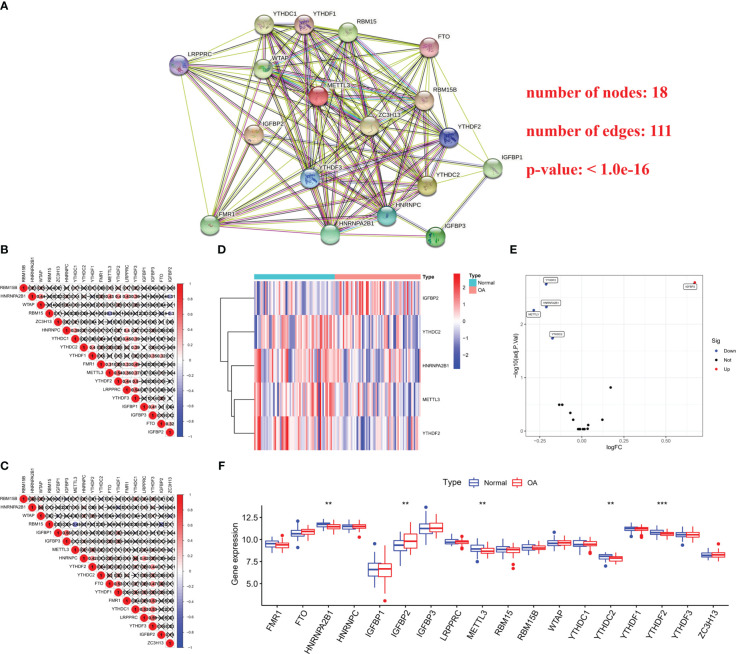
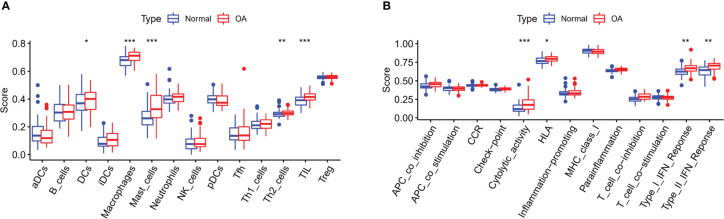
A total of 63 OA and 59 healthy samples were applied to comprehensively examine the m6A regulators mediated RNA methylation modification pattern in OA, and evaluate the impacts of distinct patterns on the characteristics of OA immune microenvironment, including immune infiltration cells, immune responses and human leukocyte antigen (HLAs) genes expression. In addition, we screened out the m6A phenotype-related genes and further explored their potential biological functions. At last, we verified the expression of key m6A regulators and their associations with immune cells, .
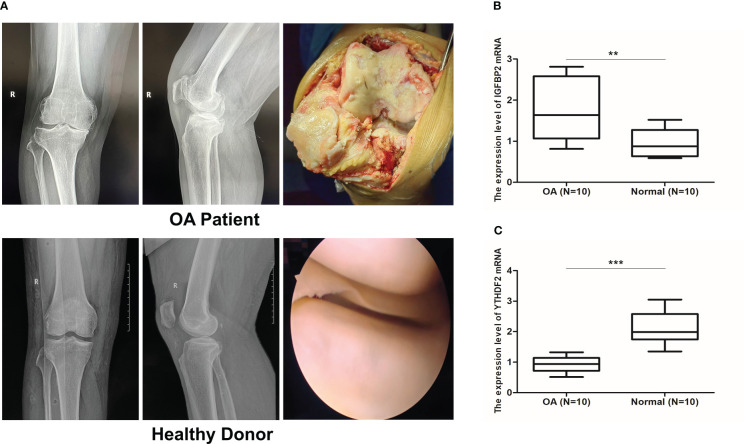
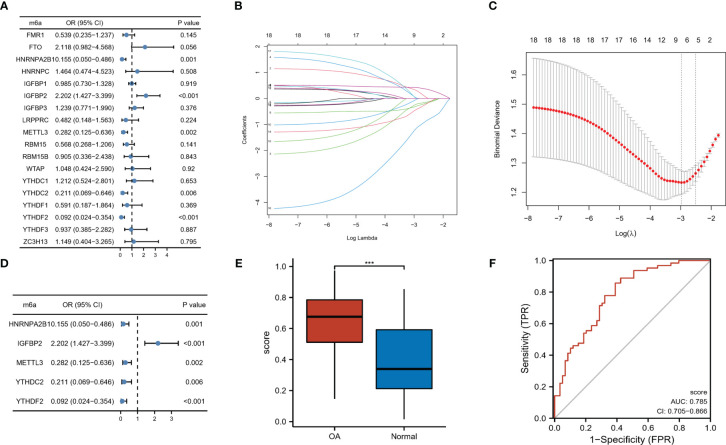
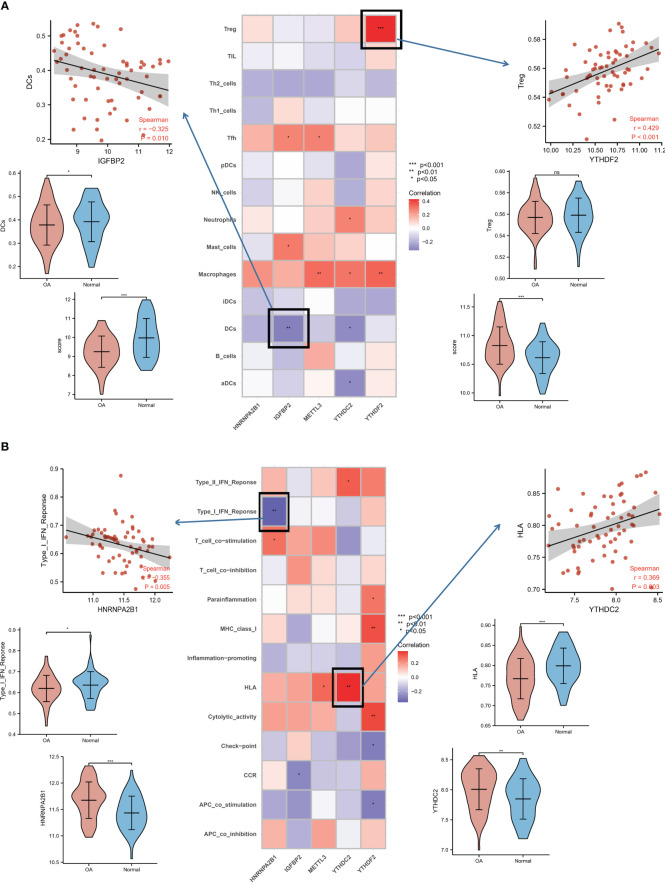
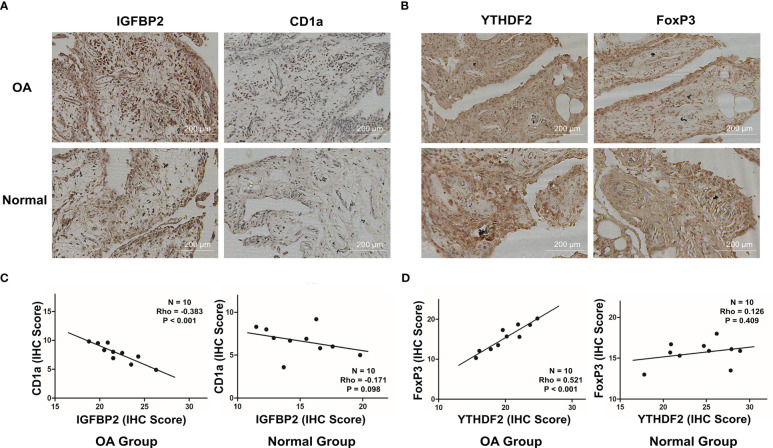
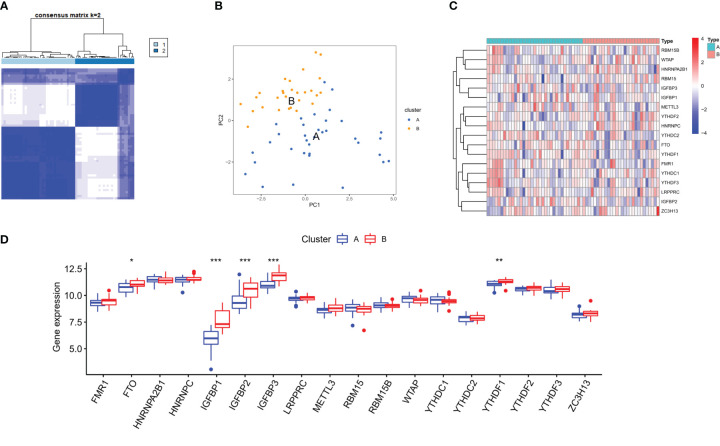
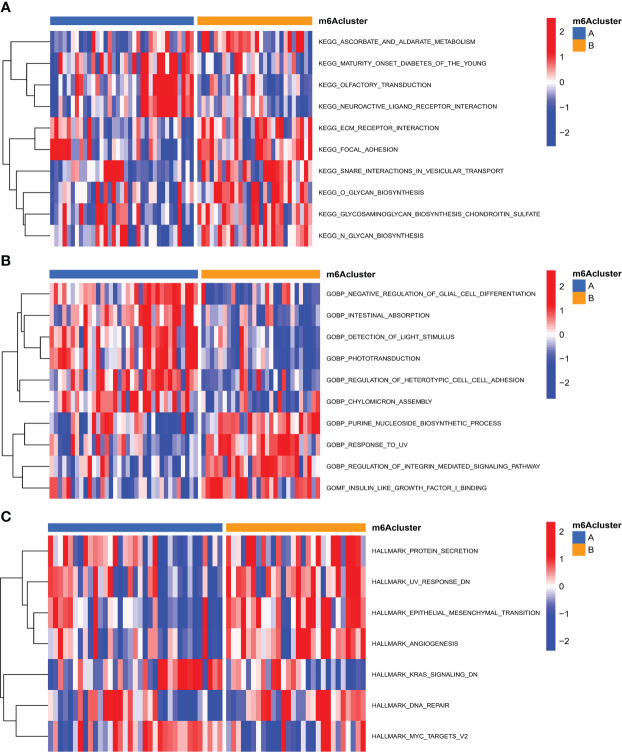
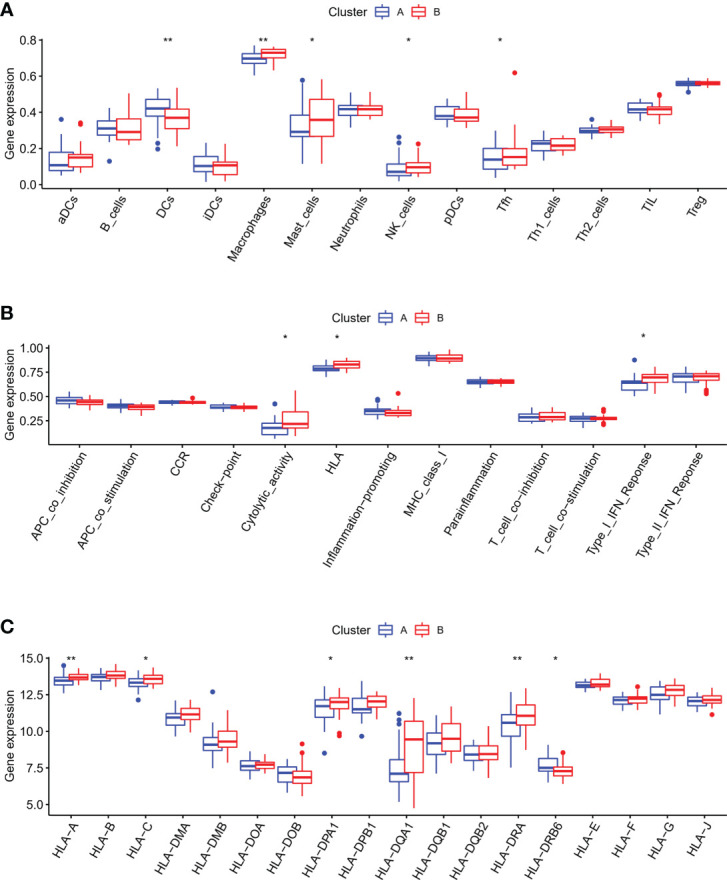
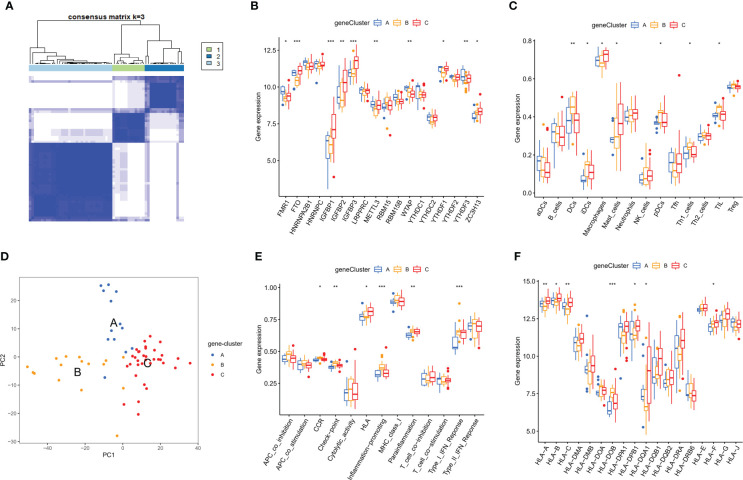
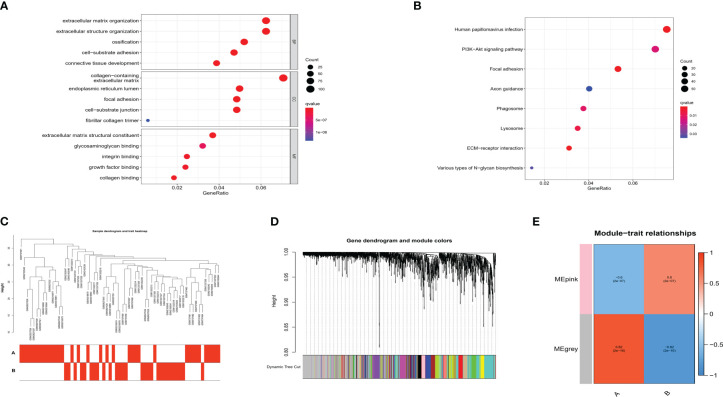
Most of m6A regulators was differentially expressed in OA samples compared to the normal tissues. Based on six hub-m6A regulators identified as abnormally expressed in OA samples, we developed a classifier to distinguish OA patients from healthy individuals. We noted that immune characteristics of OA were correlated with m6A regulators. For instance, YTHDF2 had a strongest significantly positive correlation with regulatory T cells (Tregs) and IGFBP2 was strongest negatively associated with dendritic cells (DCs), which were confirmed by the immunohistochemistry (IHC) staining. Two distinct m6A modification patterns were determined: pattern B had higher infiltrating immunocytes and more active immune responses than pattern A, and two patterns differed in the expression of HLA genes. We also identified 1,592 m6A phenotype-related genes that could mediate the OA synovitis and cartilage degradation by the PI3K-Akt signaling pathway. Quantitative real-time polymerase chain reaction (qRT-PCR) results indicated that IGFBP2 was significantly overexpressed, while YTHDF2 mRNA expression was decreased in OA samples, which was consistent with our findings.
Our research proves the essential impact of m6A RNA methylation modification on the OA immune microenvironment, and helps to explain the regulatory mechanism behind it, which may open up a new direction for more precise immunotherapy of osteoarthritis.
骨关节炎(OA)是最常见的关节退行性疾病,迄今为止,尚无有效的治疗方法来预防或延缓其发展。现在人们对 m6A RNA 甲基化修饰对疾病免疫调节的影响给予了相当大的关注。然而,m6A 修饰在 OA 中的功能仍知之甚少。
共应用 63 例 OA 和 59 例健康样本,全面检测 OA 中 m6A 调节剂介导的 RNA 甲基化修饰模式,并评估不同模式对 OA 免疫微环境特征的影响,包括免疫浸润细胞、免疫反应和人类白细胞抗原(HLA)基因表达。此外,我们筛选出与 m6A 表型相关的基因,并进一步探讨其潜在的生物学功能。最后,我们验证了关键 m6A 调节剂的表达及其与免疫细胞的相关性。
与正常组织相比,大多数 m6A 调节剂在 OA 样本中表达差异。基于在 OA 样本中异常表达的六个关键 m6A 调节剂,我们开发了一个分类器来区分 OA 患者和健康个体。我们注意到,OA 的免疫特征与 m6A 调节剂相关。例如,YTHDF2 与调节性 T 细胞(Tregs)呈最强的显著正相关,而 IGFBP2 与树突状细胞(DCs)呈最强的负相关,这通过免疫组织化学(IHC)染色得到了证实。确定了两种不同的 m6A 修饰模式:模式 B 的免疫细胞浸润和免疫反应比模式 A 更活跃,两种模式在 HLA 基因的表达上也存在差异。我们还鉴定了 1592 个 m6A 表型相关基因,这些基因可以通过 PI3K-Akt 信号通路介导 OA 滑膜炎和软骨降解。定量实时聚合酶链反应(qRT-PCR)结果表明,OA 样本中 IGFBP2 显著过表达,而 YTHDF2 mRNA 表达降低,与我们的发现一致。
我们的研究证明了 m6A RNA 甲基化修饰对 OA 免疫微环境的重要影响,并有助于解释其背后的调节机制,这可能为骨关节炎的更精确免疫治疗开辟新的方向。