National Hospital of Sri Lanka, Colombo, Sri Lanka.
Department of Community Medicine, Faculty of Medicine, University of Peradeniya, Kandy, Sri Lanka.
Virol J. 2023 Apr 2;20(1):59. doi: 10.1186/s12985-023-02018-x.
The World Health Organization (WHO) has currently detected five Variants of Concern of SARS-CoV-2 having the WHO labels of 'Alpha', 'Beta', 'Gamma', 'Delta' and 'Omicron'. We aimed to assess and compare the transmissibility of the five VOCs in terms of basic reproduction number, time-varying reproduction number and growth rate.
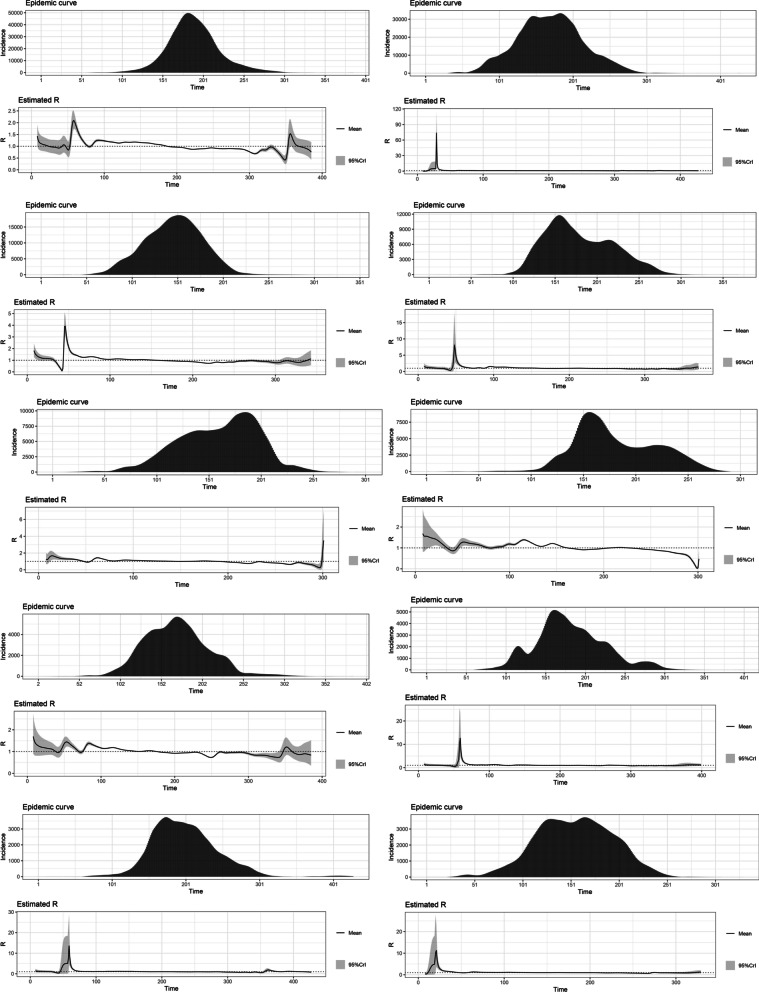
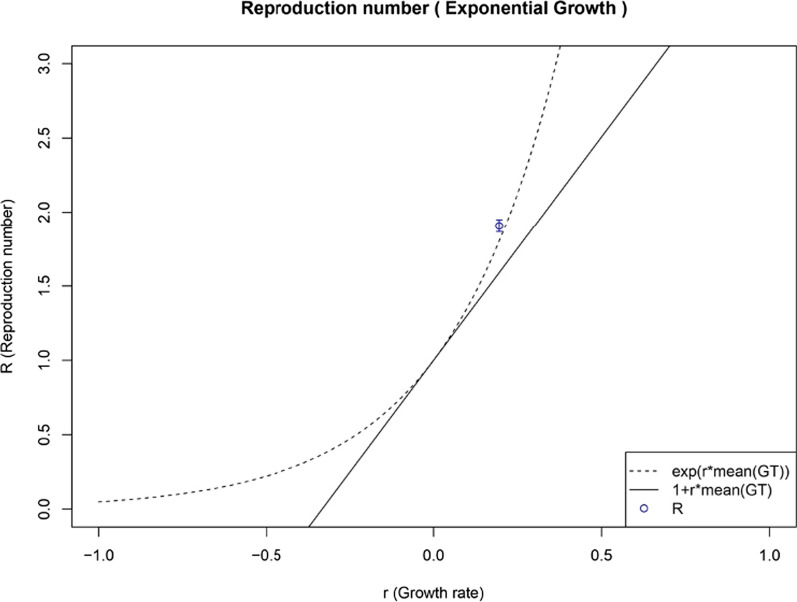
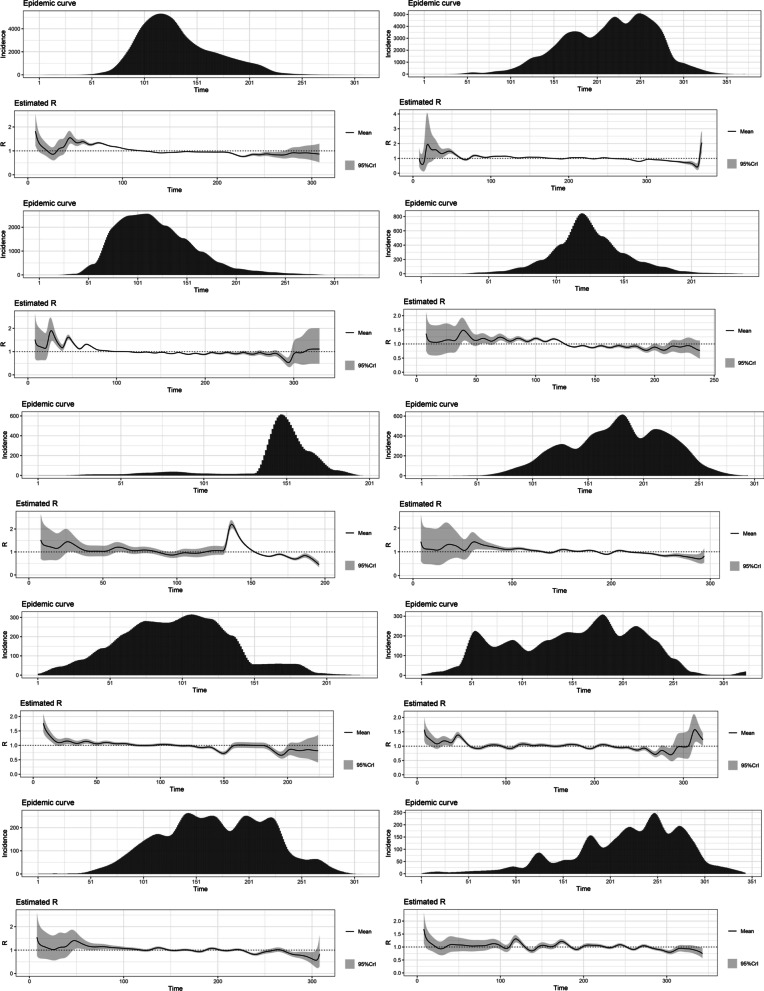
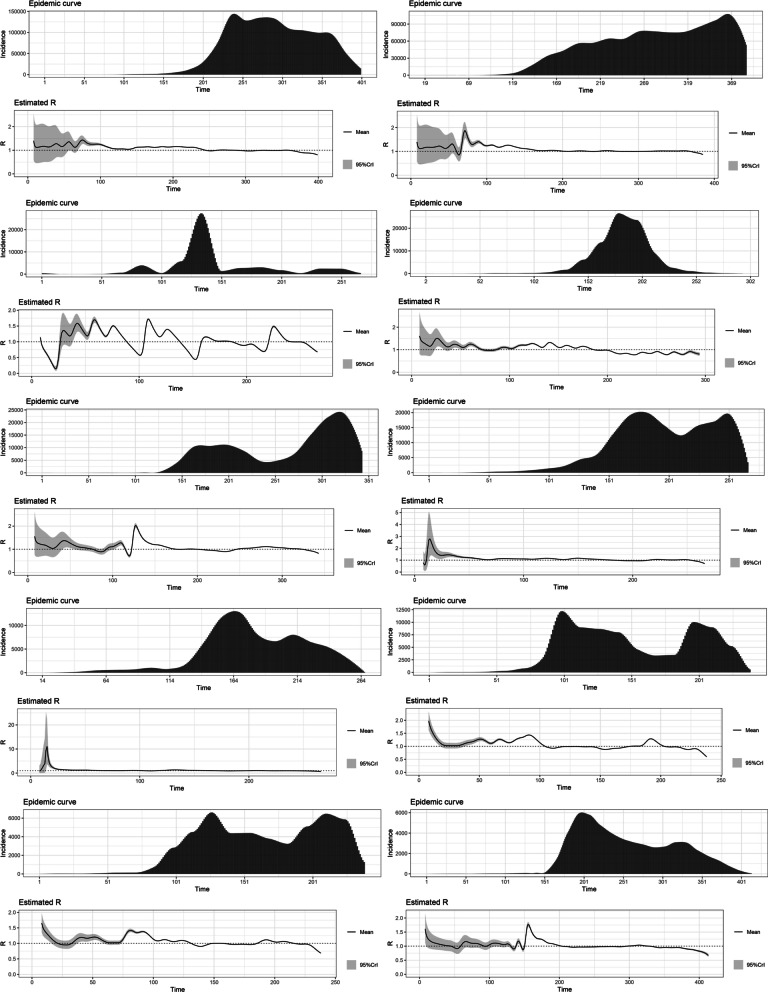
Publicly available data on the number of analyzed sequences over two-week windows for each country were extracted from covariants.org and GISAID initiative database. The ten countries which reported the highest number of analyzed sequences for each of the five variants were included in the final dataset and was analyzed using R language. The epidemic curves for each variant were estimated utilizing the two-weekly discretized incidence data using local regression (LOESS) models. The basic reproduction number was estimated with the exponential growth rate method. The time-varying reproduction number was calculated for the estimated epidemic curves by the ratio of the number of new infections generated at time step t to the total infectiousness of infected individuals at time t, using the EpiEstim package.
The highest R0 for the variants Alpha (1.22), Beta (1.19), Gamma (1.21), Delta (1.38) and Omicron (1.90) were reported from Japan, Belgium, the United States, France and South Africa, respectively. Nine out of ten epidemic curves with the highest estimated growth rates and reproduction numbers were due to the Omicron variant indicating the highest transmissibility.
The transmissibility was highest in the Omicron variant followed by Delta, Alpha, Gamma and Beta respectively.
世界卫生组织(WHO)目前已检测到五种引起关注的 SARS-CoV-2 变异株,分别被 WHO 贴上了“Alpha”“Beta”“Gamma”“Delta”和“Omicron”的标签。我们旨在评估和比较这五种变异株的基本繁殖数、时变繁殖数和增长率,以评估它们的传染性。
从 covariants.org 和 GISAID 倡议数据库中提取了各国每两周窗口分析序列数量的公开数据。最终数据集包括报告了五种变异株中每种变异株分析序列数量最高的十个国家,并使用 R 语言进行分析。利用局部回归(LOESS)模型,根据两周离散发病率数据对每种变异株的流行曲线进行估计。利用指数增长率法估计基本繁殖数。通过在时间步 t 产生的新感染数量与时间 t 时所有感染者的总传染性的比值,使用 EpiEstim 包计算时变繁殖数。
变异株 Alpha(1.22)、Beta(1.19)、Gamma(1.21)、Delta(1.38)和 Omicron(1.90)的最高 R0 分别来自日本、比利时、美国、法国和南非。十种流行曲线中,有九种是由于 Omicron 变异株,表明其传染性最高,具有最高的增长率和繁殖数。
Omicron 变异株的传染性最高,其次是 Delta、Alpha、Gamma 和 Beta。