Carruthers David N, Kim Jinho, Mendez-Perez Daniel, Monroe Eric, Myllenbeck Nick, Liu Yuzhong, Davis Ryan W, Sundstrom Eric, Lee Taek Soon
Biological Systems and Engineering Division, Lawrence Berkeley National Laboratory, Berkeley, CA, 94720, USA.
Joint BioEnergy Institute, 5885 Hollis Street, Emeryville, CA, 94608, USA.
Biotechnol Biofuels Bioprod. 2023 Apr 4;16(1):60. doi: 10.1186/s13068-023-02301-7.
Advanced spark ignition engines require high performance fuels with improved resistance to autoignition. Biologically derived olefinic alcohols have arisen as promising blendstock candidates due to favorable octane numbers and synergistic blending characteristics. However, production and downstream separation of these alcohols are limited by their intrinsic toxicity and high aqueous solubility, respectively. Bioproduction of carboxylate esters of alcohols can improve partitioning and reduce toxicity, but in practice has been limited to saturated esters with characteristically low octane sensitivity. If olefinic esters retain the synergistic blending characteristics of their alcohol counterparts, they could improve the bioblendstock combustion performance while also retaining the production advantages of the ester moiety.
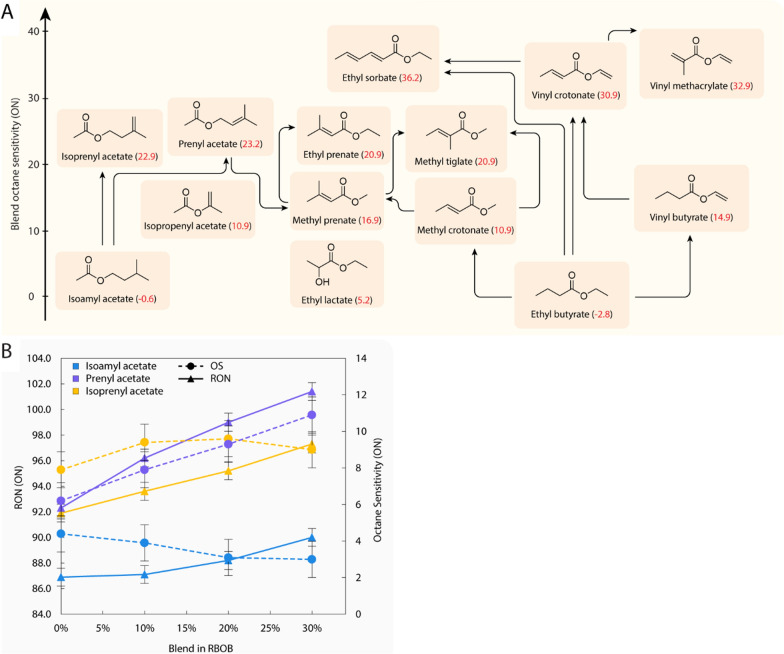
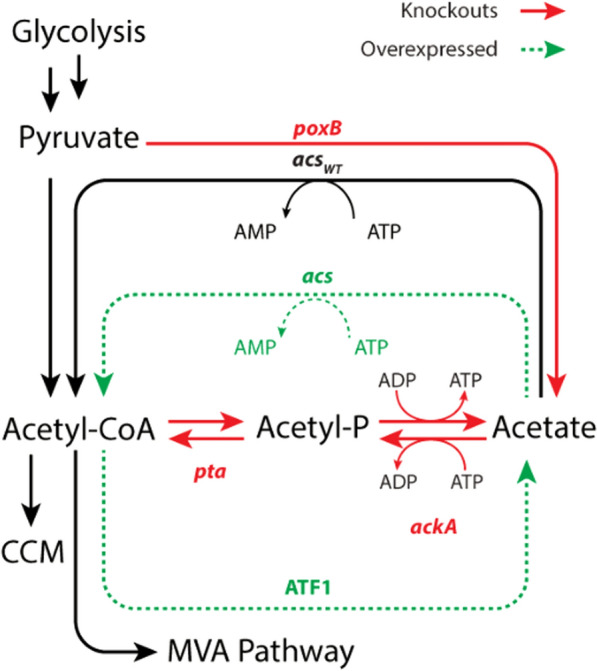
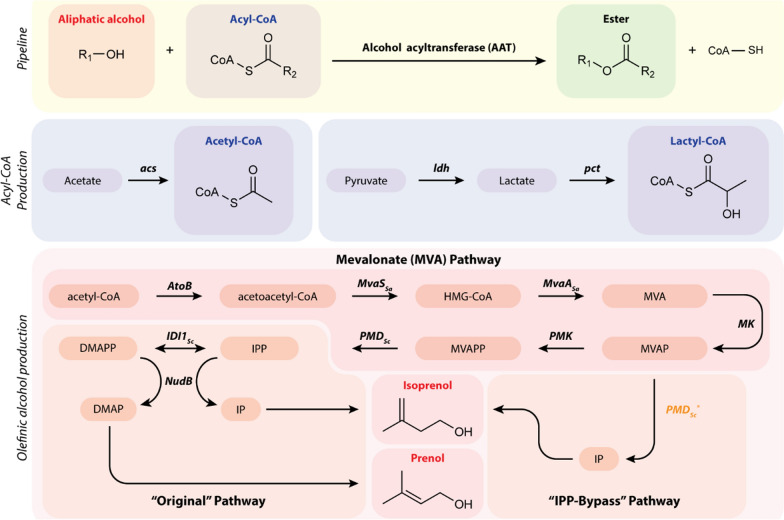
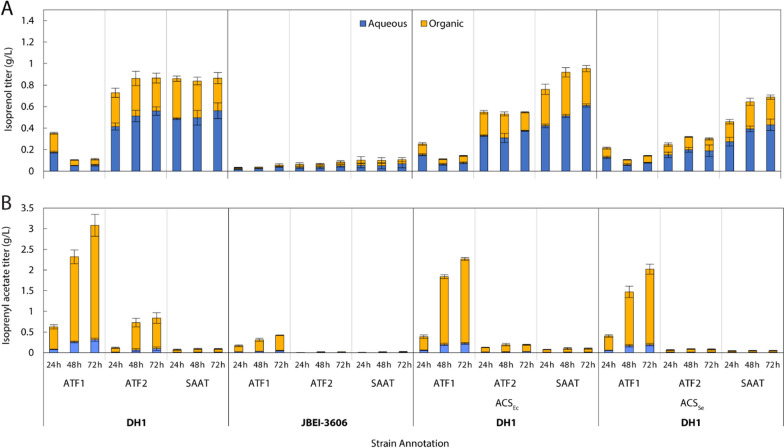
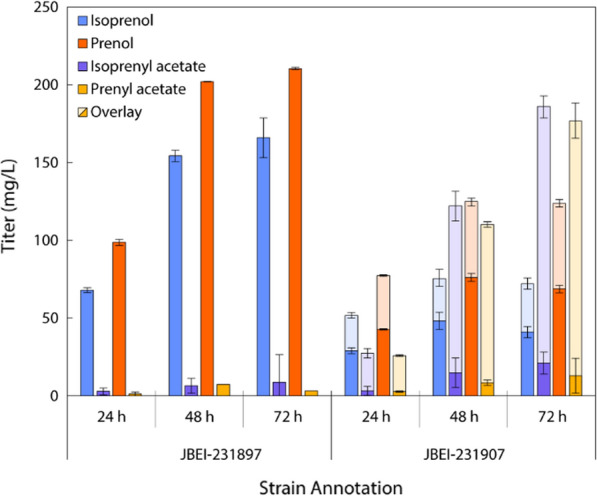
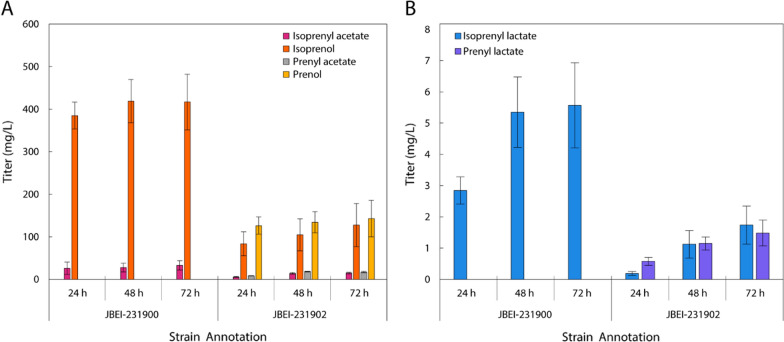
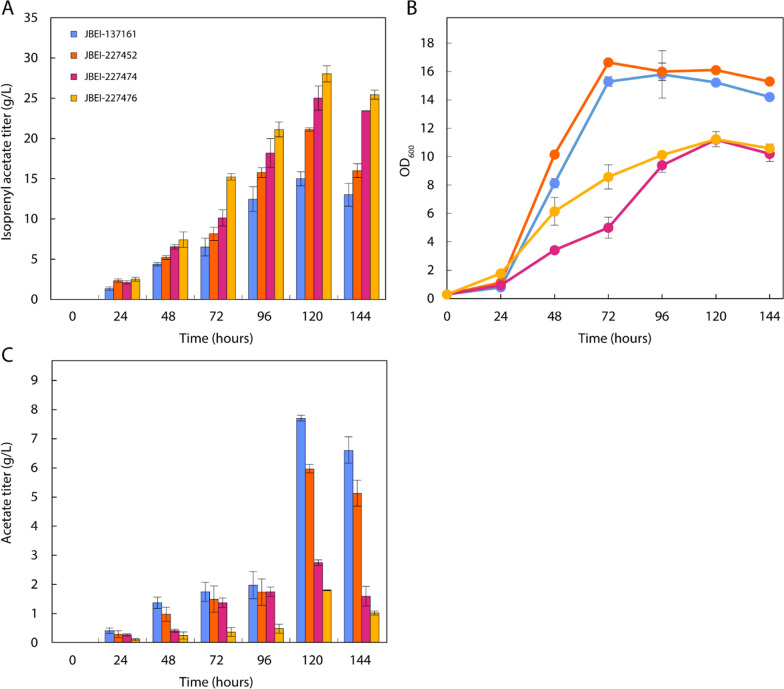
Optimization of Escherichia coli isoprenoid pathways has led to high titers of isoprenol and prenol, which are not only excellent standalone biofuel and blend candidates, but also novel targets for esterification. Here, a selection of olefinic esters enhanced blendstock performance according to their degree of unsaturation and branching. E. coli strains harboring optimized mevalonate pathways, thioester pathways, and heterologous alcohol acyltransferases (ATF1, ATF2, and SAAT) were engineered for the bioproduction of four novel olefinic esters. Although prenyl and isoprenyl lactate titers were limited to 1.48 ± 0.41 mg/L and 5.57 ± 1.36 mg/L, strains engineered for prenyl and isoprenyl acetate attained titers of 176.3 ± 16.0 mg/L and 3.08 ± 0.27 g/L, respectively. Furthermore, prenyl acetate (20% bRON = 125.8) and isoprenyl acetate (20% bRON = 108.4) exhibited blend properties comparable to ethanol and significantly better than any saturated ester. By further scaling cultures to a 2-L bioreactor under fed-batch conditions, 15.0 ± 0.9 g/L isoprenyl acetate was achieved on minimal medium. Metabolic engineering of acetate pathway flux further improved titer to attain an unprecedented 28.0 ± 1.0 g/L isoprenyl acetate, accounting for 75.7% theoretical yield from glucose.
Our study demonstrated novel bioproduction of four isoprenoid oxygenates for fuel blending. Our optimized E. coli production strain generated an unprecedented titer of isoprenyl acetate and when paired with its favorable blend properties, may enable rapid scale-up of olefinic alcohol esters for use as a fuel blend additive or as a precursor for longer-chain biofuels and biochemicals.
先进的火花点火发动机需要具有更高抗自燃性的高性能燃料。生物衍生的烯烃醇因其良好的辛烷值和协同混合特性而成为有前景的调合组分候选物。然而,这些醇的生产和下游分离分别受到其固有毒性和高水溶性的限制。醇的羧酸盐酯的生物生产可以改善分配并降低毒性,但实际上仅限于具有低辛烷敏感性的饱和酯。如果烯烃酯保留其醇对应物的协同混合特性,它们可以改善生物调合组分的燃烧性能,同时还保留酯部分的生产优势。
大肠杆菌类异戊二烯途径的优化导致异戊醇和prenol的高滴度,它们不仅是优异的独立生物燃料和调合候选物,也是酯化的新目标。在这里,一系列烯烃酯根据其不饱和度和支化程度提高了调合组分性能。携带优化的甲羟戊酸途径、硫酯途径和异源醇酰基转移酶(ATF1、ATF2和SAAT)的大肠杆菌菌株被工程化用于四种新型烯烃酯的生物生产。尽管异戊烯基乳酸酯和异戊烯基乳酸的滴度分别限于1.48±0.41mg/L和5.57±1.36mg/L,但为异戊烯基乙酸酯和异戊烯基乙酸酯设计的菌株分别达到了176.3±16.0mg/L和3.08±0.27g/L的滴度。此外,异戊烯基乙酸酯(20%bRON=125.8)和异戊烯基乙酸酯(20%bRON=108.4)表现出与乙醇相当的混合特性,并且明显优于任何饱和酯。通过在补料分批条件下将培养进一步扩大到2-L生物反应器,在基本培养基上实现了15.0±0.9g/L的异戊烯基乙酸酯。乙酸途径通量的代谢工程进一步提高了滴度,达到了前所未有的28.0±1.0g/L的异戊烯基乙酸酯,占葡萄糖理论产量的75.7%。
我们的研究证明了用于燃料调合的四种类异戊二烯含氧化合物的新型生物生产。我们优化的大肠杆菌生产菌株产生了前所未有的异戊烯基乙酸酯滴度,并且当其与有利的混合特性相结合时,可能能够快速扩大烯烃醇酯的规模,用作燃料调合添加剂或用作长链生物燃料和生物化学品的前体。