Rezende Bismarck, Alencar Allan Kardec Nogueira, de Bem Graziele Freitas, Fontes-Dantas Fabrícia Lima, Montes Guilherme Carneiro
Department of Pharmacology and Psychobiology, Roberto Alcântara Gomes Institute Biology (IBRAG), Rio de Janeiro State University (UERJ), Rio de Janeiro 20551-030, Brazil.
Department of Biomedical Engineering, Tulane University, New Orleans, LA 70118, USA.
Pharmaceuticals (Basel). 2023 Jan 19;16(2):148. doi: 10.3390/ph16020148.
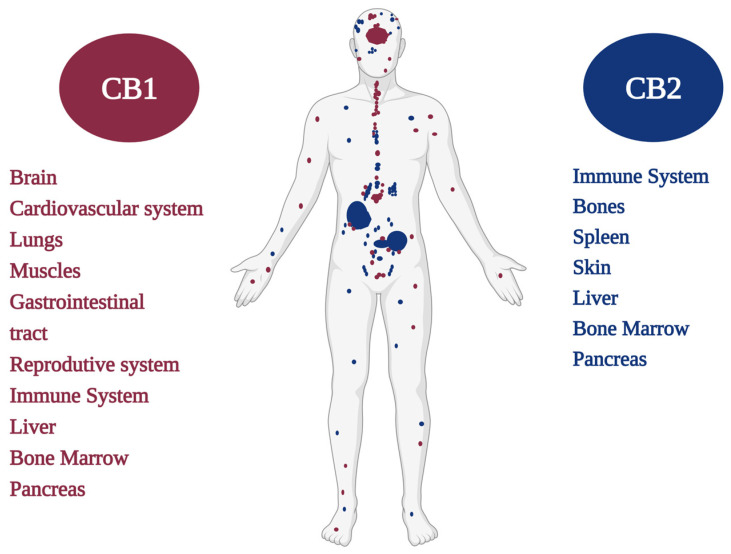
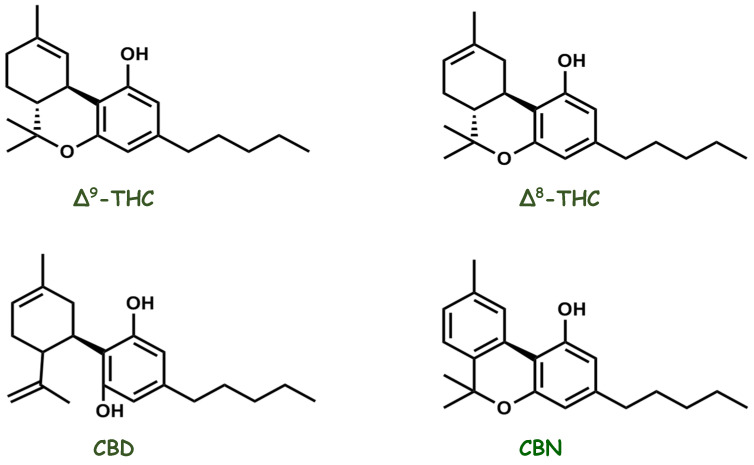
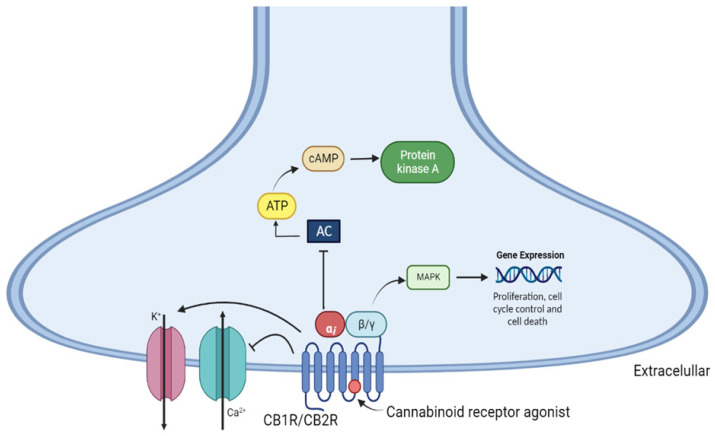
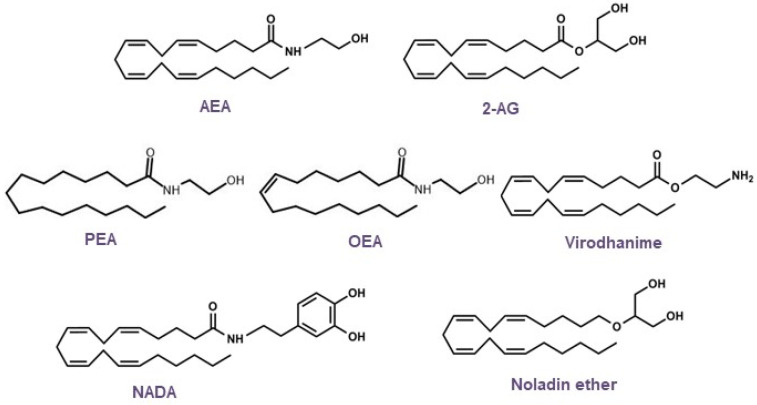
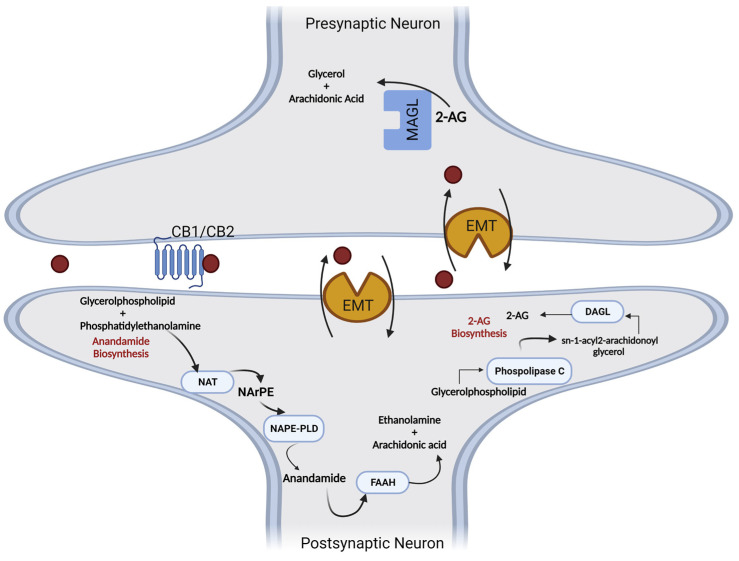
The endocannabinoid system (eCB) has been studied to identify the molecular structures present in . eCB consists of cannabinoid receptors, endogenous ligands, and the associated enzymatic apparatus responsible for maintaining energy homeostasis and cognitive processes. Several physiological effects of cannabinoids are exerted through interactions with various receptors, such as CB1 and CB2 receptors, vanilloid receptors, and the recently discovered G-protein-coupled receptors (GPR55, GPR3, GPR6, GPR12, and GPR19). Anandamide (AEA) and 2-arachidoylglycerol (2-AG), two small lipids derived from arachidonic acid, showed high-affinity binding to both CB1 and CB2 receptors. eCB plays a critical role in chronic pain and mood disorders and has been extensively studied because of its wide therapeutic potential and because it is a promising target for the development of new drugs. Phytocannabinoids and synthetic cannabinoids have shown varied affinities for eCB and are relevant to the treatment of several neurological diseases. This review provides a description of eCB components and discusses how phytocannabinoids and other exogenous compounds may regulate the eCB balance. Furthermore, we show the hypo- or hyperfunctionality of eCB in the body and how eCB is related to chronic pain and mood disorders, even with integrative and complementary health practices (ICHP) harmonizing the eCB.
内源性大麻素系统(eCB)已被研究以确定其中存在的分子结构。eCB由大麻素受体、内源性配体以及负责维持能量稳态和认知过程的相关酶装置组成。大麻素的几种生理作用是通过与各种受体相互作用而发挥的,如CB1和CB2受体、香草酸受体以及最近发现的G蛋白偶联受体(GPR55、GPR3、GPR6、GPR12和GPR19)。花生四烯酸乙醇胺(AEA)和2-花生四烯酸甘油酯(2-AG)这两种源自花生四烯酸的小脂质,对CB1和CB2受体均表现出高亲和力结合。eCB在慢性疼痛和情绪障碍中起关键作用,因其具有广泛的治疗潜力且是新药开发的一个有前景的靶点而受到广泛研究。植物大麻素和合成大麻素对eCB表现出不同的亲和力,与几种神经疾病的治疗相关。本综述描述了eCB的组成部分,并讨论了植物大麻素和其他外源性化合物如何调节eCB平衡。此外,我们展示了eCB在体内的功能减退或亢进,以及eCB如何与慢性疼痛和情绪障碍相关,即使是通过整合与补充健康实践(ICHP)来协调eCB也是如此。