Procaccia Shiri, Lewitus Gil Moshe, Lipson Feder Carni, Shapira Anna, Berman Paula, Meiri David
The Laboratory of Cancer Biology and Cannabinoid Research, Faculty of Biology, Technion- Israel Institute of Technology, Haifa, Israel.
Front Pharmacol. 2022 Apr 25;13:894960. doi: 10.3389/fphar.2022.894960. eCollection 2022.
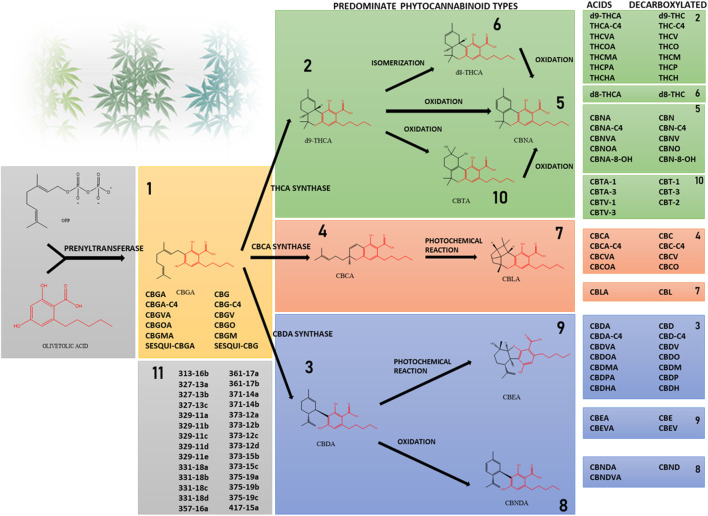
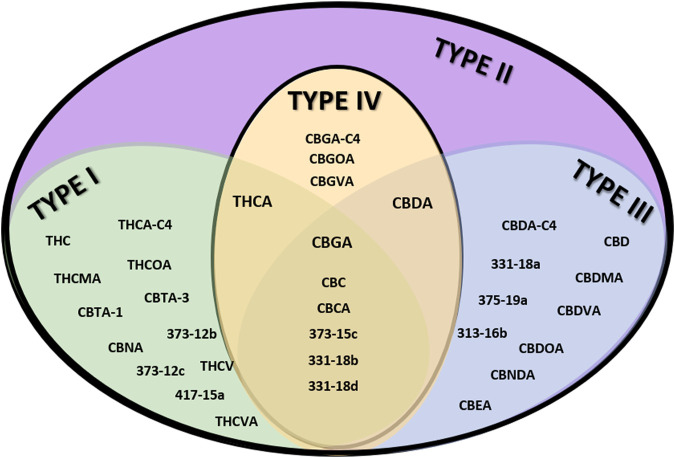
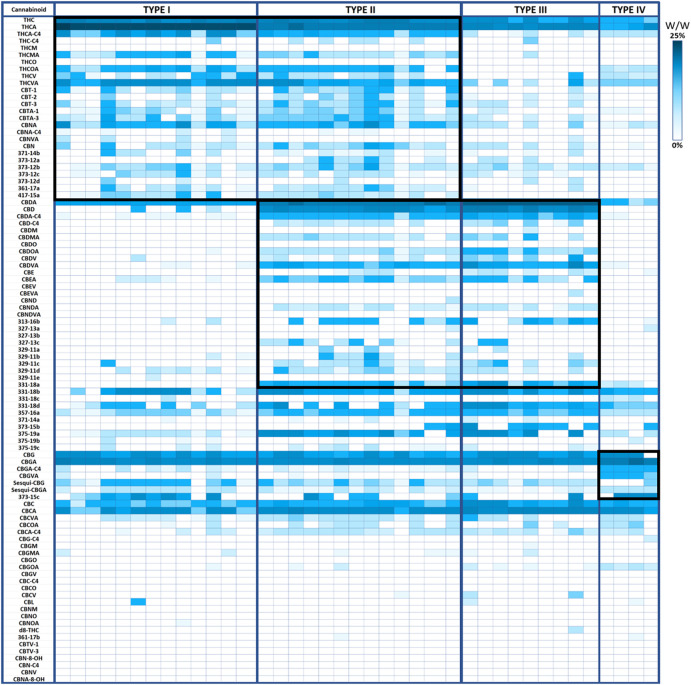
Medical and its major cannabinoids (-)--Δ-tetrahydrocannabinol (THC) and cannabidiol (CBD) are gaining momentum for various medical purposes as their therapeutic qualities are becoming better established. However, studies regarding their efficacy are oftentimes inconclusive. This is chiefly because is a versatile plant rather than a single drug and its effects do not depend only on the amount of THC and CBD. Hundreds of cultivars and hybrids exist worldwide, each with a unique and distinct chemical profile. Most studies focus on THC and CBD, but these are just two of over 140 phytocannabinoids found in the plant in addition to a milieu of terpenoids, flavonoids and other compounds with potential therapeutic activities. Different plants contain a very different array of these metabolites in varying relative ratios, and it is the interplay between these molecules from the plant and the endocannabinoid system in the body that determines the ultimate therapeutic response and associated adverse effects. Here, we discuss how phytocannabinoid profiles differ between plants depending on the chemovar types, review the major factors that affect secondary metabolite accumulation in the plant including the genotype, growth conditions, processing, storage and the delivery route; and highlight how these factors make treatment highly complex.
大麻及其主要大麻素(-)-Δ-四氢大麻酚(THC)和大麻二酚(CBD)正因其治疗特性得到更好的确立而在各种医疗用途方面获得发展势头。然而,关于它们疗效的研究往往没有定论。这主要是因为大麻是一种多用途植物而非单一药物,其效果不仅取决于THC和CBD的含量。全球存在数百种大麻品种和杂交品种,每种都有独特且不同的化学特征。大多数研究集中在THC和CBD上,但除了萜类化合物、黄酮类化合物和其他具有潜在治疗活性的化合物外,这只是该植物中发现的140多种植物大麻素中的两种。不同的植物含有这些代谢物的非常不同的组合,且比例各异,正是植物中的这些分子与体内内源性大麻素系统之间的相互作用决定了最终的治疗反应和相关不良反应。在此,我们讨论不同化学变种类型的植物之间植物大麻素特征如何不同,回顾影响植物中次生代谢物积累的主要因素,包括基因型、生长条件、加工、储存和给药途径;并强调这些因素如何使大麻治疗变得高度复杂。