Morales Paula, Reggio Patricia H
Chemistry and Biochemistry Department, UNC Greensboro, Greensboro, North Carolina.
Cannabis Cannabinoid Res. 2017 Oct 1;2(1):265-273. doi: 10.1089/can.2017.0036. eCollection 2017.
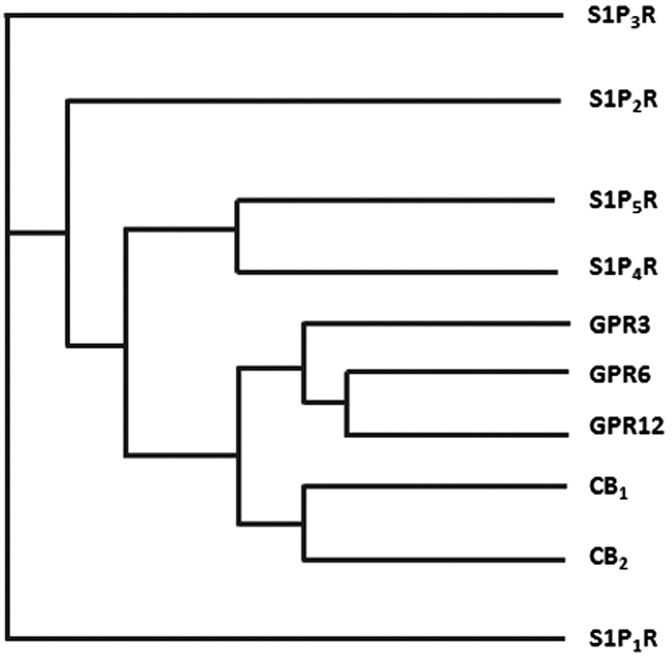
The endocannabinoid system (ECS) has been shown to be of great importance in the regulation of numerous physiological and pathological processes. To date, two Class A G-protein-coupled receptors (GPCRs) have been discovered and validated as the main therapeutic targets of this system: the cannabinoid receptor type 1 (CB), which is the most abundant neuromodulatory receptor in the brain, and the cannabinoid receptor type 2 (CB), predominantly found in the immune system among other organs and tissues. Endogenous cannabinoid receptor ligands (endocannabinoids) and the enzymes involved in their synthesis, cell uptake, and degradation have also been identified as part of the ECS. However, its complex pharmacology suggests that other GPCRs may also play physiologically relevant roles in this therapeutically promising system. In the last years, GPCRs such as GPR18 and GPR55 have emerged as possible missing members of the cannabinoid family. This categorization still stimulates strong debate due to the lack of pharmacological tools to validate it. Because of their close phylogenetic relationship, the Class A orphan GPCRs, GPR3, GPR6, and GPR12, have also been associated with the cannabinoids. Moreover, certain endo-, phyto-, and synthetic cannabinoid ligands have displayed activity at other well-established GPCRs, including the opioid, adenosine, serotonin, and dopamine receptor families. In addition, the cannabinoid receptors have also been shown to form dimers with other GPCRs triggering cross-talk signaling under specific conditions. In this mini review, we aim to provide insight into the non-CB, non-CB cannabinoid-related GPCRs that have been reported thus far. We consider the physiological relevance of these molecular targets in modulating the ECS.
内源性大麻素系统(ECS)已被证明在调节众多生理和病理过程中具有重要意义。迄今为止,已发现并验证了两种A类G蛋白偶联受体(GPCR)作为该系统的主要治疗靶点:大麻素受体1型(CB1),它是大脑中最丰富的神经调节受体;以及大麻素受体2型(CB2),主要存在于免疫系统以及其他器官和组织中。内源性大麻素受体配体(内源性大麻素)以及参与其合成、细胞摄取和降解的酶也已被确定为ECS的一部分。然而,其复杂的药理学表明,其他GPCR在这个具有治疗前景的系统中也可能发挥生理相关作用。在过去几年中,诸如GPR18和GPR55等GPCR已成为大麻素家族可能缺失的成员。由于缺乏验证它的药理学工具,这种分类仍然引发激烈争论。由于它们密切的系统发育关系,A类孤儿GPCR,即GPR3、GPR6和GPR12,也与大麻素有关。此外,某些内源性、植物源性和合成大麻素配体在其他成熟的GPCR上也表现出活性,包括阿片类、腺苷、5-羟色胺和多巴胺受体家族。此外,大麻素受体还被证明在特定条件下可与其他GPCR形成二聚体,引发串扰信号。在本综述中,我们旨在深入了解迄今为止报道的与非CB1、非CB2大麻素相关的GPCR。我们考虑了这些分子靶点在调节ECS中的生理相关性。