LAQV, REQUIMTE, Departamento de Química e Bioquímica, Faculdade de Ciências, Universidade do Porto, Rua do Campo Alegre, s/n, 4169-007 Porto, Portugal.
Laboratory of Biotechnology of Proteins and Bioactive Compounds (LABIOPROT), Oswaldo Cruz Foundation, National Institute of Epidemiology in the Western Amazon (INCT-EpiAmO), Porto Velho, Rondônia 76812-245, Brazil.
J Med Chem. 2023 Apr 27;66(8):5364-5376. doi: 10.1021/acs.jmedchem.3c00097. Epub 2023 Apr 5.
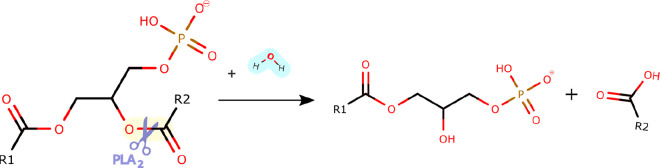
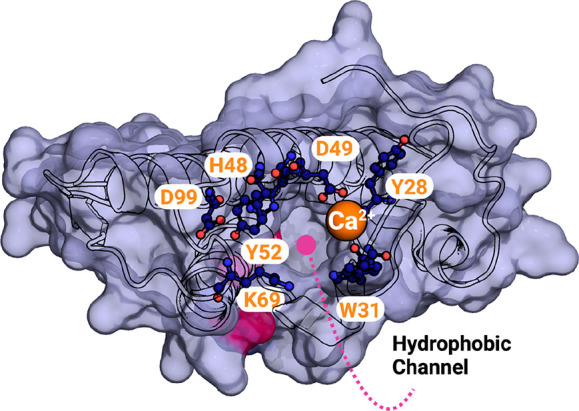
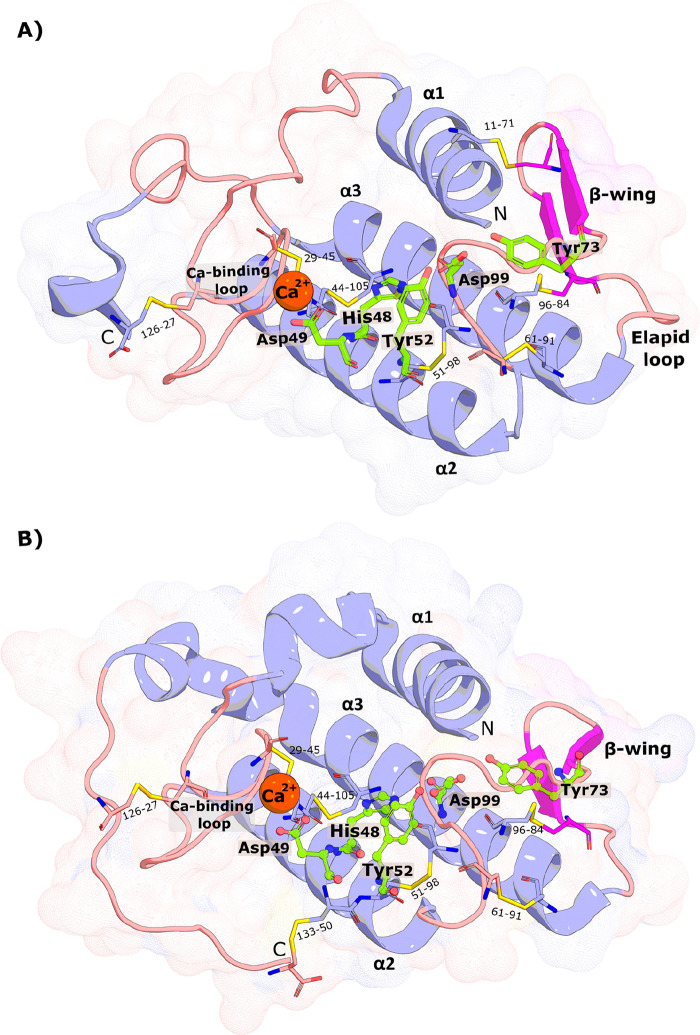
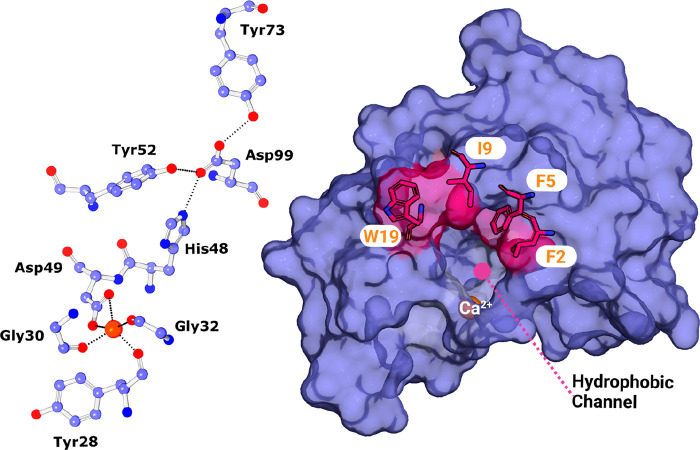
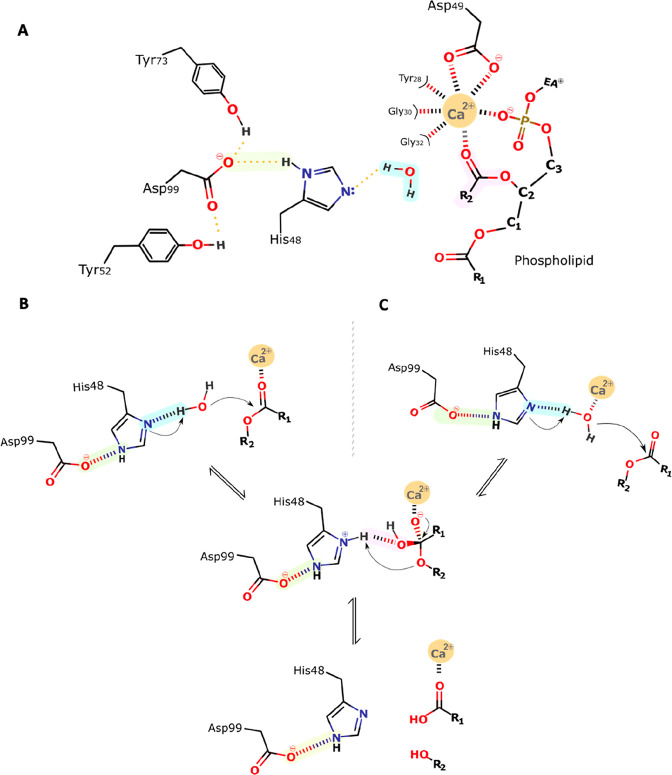
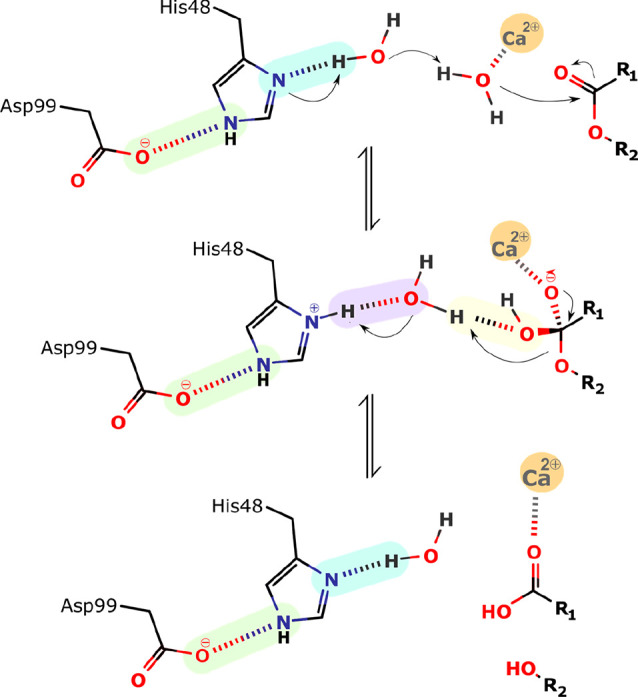
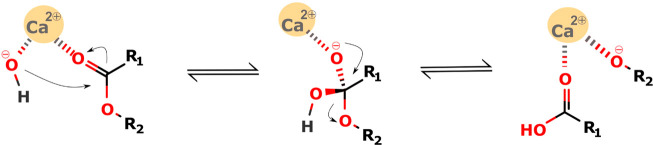
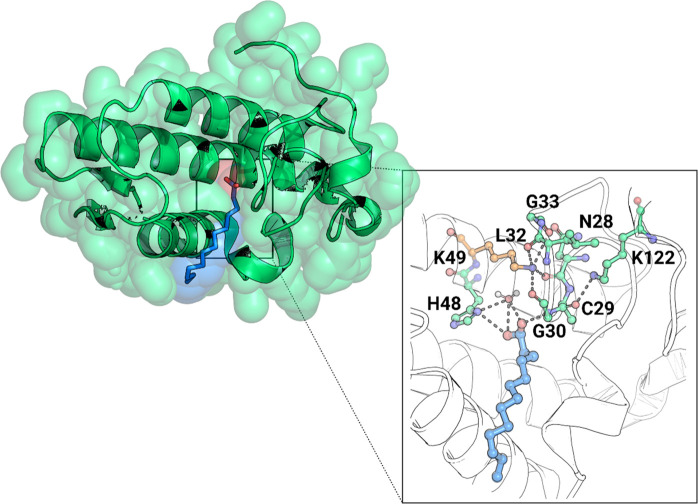
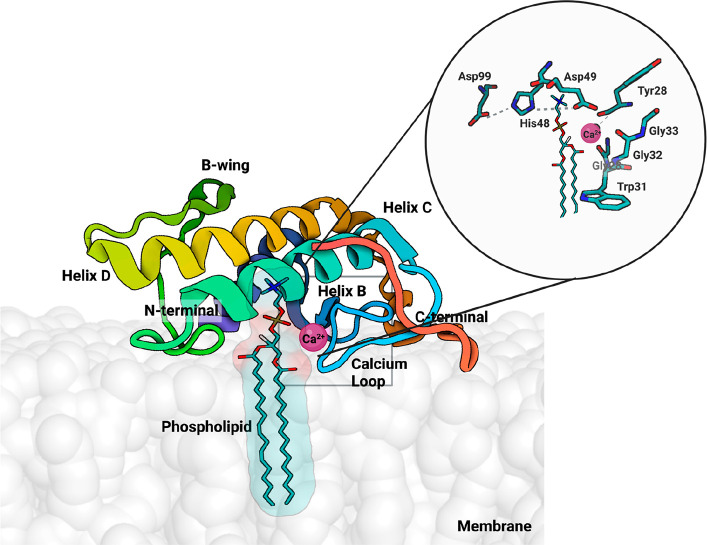
Snake venom-secreted phospholipase A (svPLA) enzymes, both catalytically active and inactive, are a central component in envenoming. These are responsible for disrupting the cell membrane's integrity, inducing a wide range of pharmacological effects, such as the necrosis of the bitten limb, cardiorespiratory arrest, edema, and anticoagulation. Although extensively characterized, the reaction mechanisms of enzymatic svPLA are still to be thoroughly understood. This review presents and analyses the most plausible reaction mechanisms for svPLA such as the "single-water mechanism" or the "assisted-water mechanism" initially proposed for the homologous human PLA. All of the mechanistic possibilities are characterized by a highly conserved Asp/His/water triad and a Ca cofactor. The extraordinary increase in activity induced by binding to a lipid-water interface, known as "interfacial activation," critical for the PLAs activity, is also discussed. Finally, a potential catalytic mechanism for the postulated noncatalytic PLA-like proteins is anticipated.
蛇毒分泌的磷脂酶 A(svPLA)酶,包括有催化活性和无催化活性的,是蛇毒中毒的一个核心成分。这些酶负责破坏细胞膜的完整性,引起广泛的药理作用,如咬伤肢体的坏死、心肺骤停、水肿和抗凝。尽管已经广泛研究,但酶 svPLA 的反应机制仍有待深入了解。本综述介绍并分析了最合理的 svPLA 反应机制,如最初为同源人 PLA 提出的“单水分子机制”或“辅助水分子机制”。所有的机制可能性都具有高度保守的 Asp/His/水分子三联体和 Ca 辅因子。与脂质-水界面结合所诱导的活性的非凡增加,即“界面激活”,对 PLA 的活性至关重要,也进行了讨论。最后,预期会出现推测的非催化 PLA 样蛋白的潜在催化机制。