Department of Brain and Cognitive Sciences, Ben-Gurion University of the Negev, Beer Sheva, Israel.
The Health & Nutrition Innovative International Research Center, Faculty of Health Sciences, Ben-Gurion University of the Negev, Beer Sheva, Israel.
Elife. 2023 Apr 6;12:e83604. doi: 10.7554/eLife.83604.
Obesity negatively impacts multiple bodily systems, including the central nervous system. Retrospective studies that estimated chronological age from neuroimaging have found accelerated brain aging in obesity, but it is unclear how this estimation would be affected by weight loss following a lifestyle intervention.
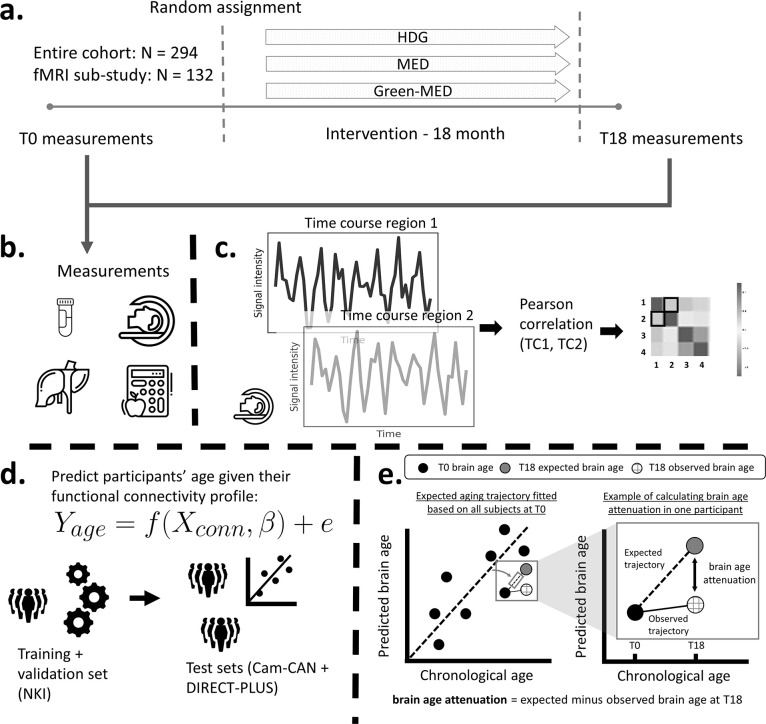
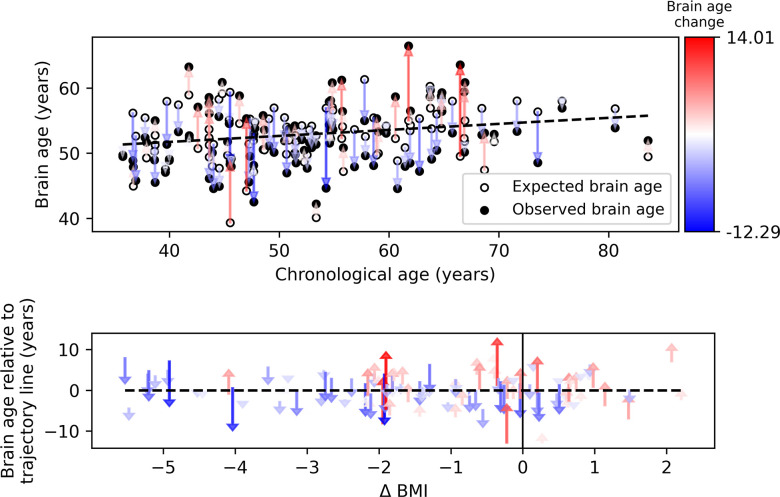
In a sub-study of 102 participants of the Dietary Intervention Randomized Controlled Trial Polyphenols Unprocessed Study (DIRECT-PLUS) trial, we tested the effect of weight loss following 18 months of lifestyle intervention on predicted brain age based on magnetic resonance imaging (MRI)-assessed resting-state functional connectivity (RSFC). We further examined how dynamics in multiple health factors, including anthropometric measurements, blood biomarkers, and fat deposition, can account for changes in brain age.
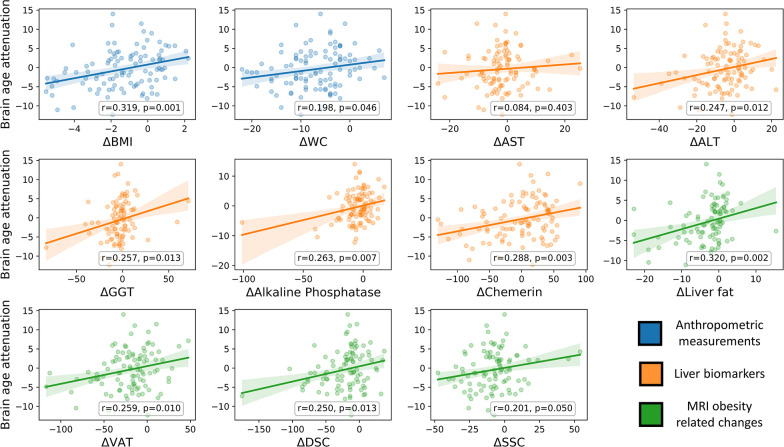
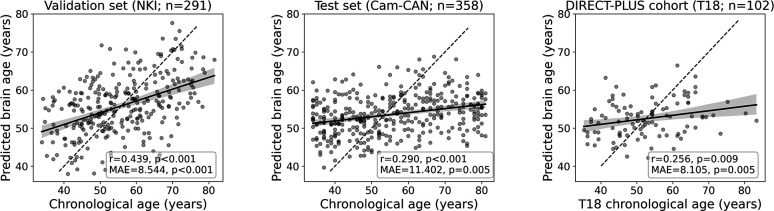
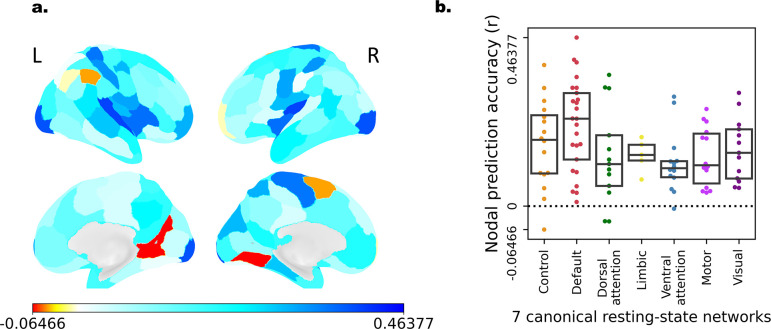
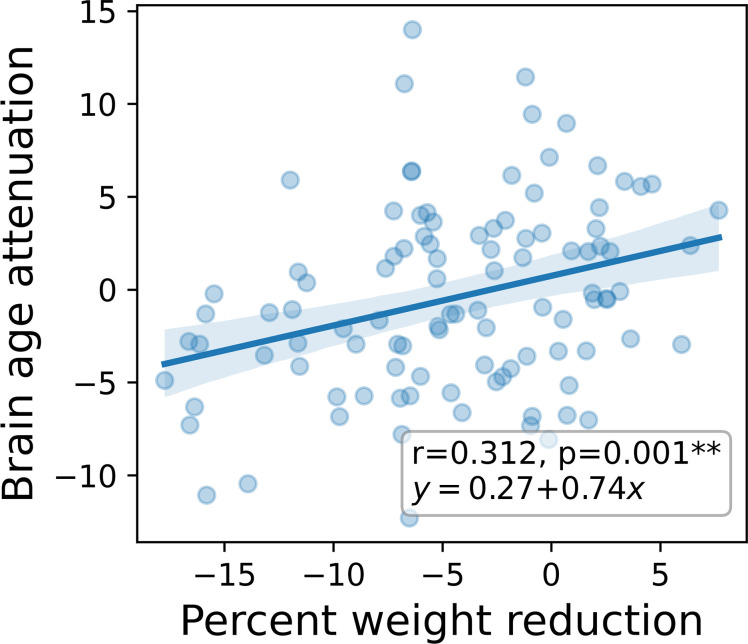
To establish our method, we first demonstrated that our model could successfully predict chronological age from RSFC in three cohorts (n=291;358;102). We then found that among the DIRECT-PLUS participants, 1% of body weight loss resulted in an 8.9 months' attenuation of brain age. Attenuation of brain age was significantly associated with improved liver biomarkers, decreased liver fat, and visceral and deep subcutaneous adipose tissues after 18 months of intervention. Finally, we showed that lower consumption of processed food, sweets and beverages were associated with attenuated brain age.
Successful weight loss following lifestyle intervention might have a beneficial effect on the trajectory of brain aging.
The German Research Foundation (DFG), German Research Foundation - project number 209933838 - SFB 1052; B11, Israel Ministry of Health grant 87472511 (to I Shai); Israel Ministry of Science and Technology grant 3-13604 (to I Shai); and the California Walnuts Commission 09933838 SFB 105 (to I Shai).
肥胖会对包括中枢神经系统在内的多个身体系统产生负面影响。通过对神经影像学进行回顾性研究,发现肥胖会导致大脑老化加速,但尚不清楚体重减轻后,这种估计会如何受到生活方式干预的影响。
在 Dietary Intervention Randomized Controlled Trial Polyphenols Unprocessed Study(DIRECT-PLUS)试验的 102 名参与者的子研究中,我们测试了在 18 个月的生活方式干预后体重减轻对基于磁共振成像(MRI)评估的静息状态功能连接(RSFC)预测脑龄的影响。我们进一步研究了多种健康因素的动态变化,包括人体测量指标、血液生物标志物和脂肪沉积,如何解释脑龄的变化。
为了建立我们的方法,我们首先证明了我们的模型可以从三个队列(n=291;358;102)的 RSFC 中成功预测实际年龄。然后,我们发现,在 DIRECT-PLUS 参与者中,体重减轻 1%会使脑龄减少 8.9 个月。经过 18 个月的干预,肝脏生物标志物改善、肝脂肪减少以及内脏和深层皮下脂肪组织减少与脑龄的衰减显著相关。最后,我们表明,减少加工食品、甜食和饮料的摄入与脑龄的衰减有关。
生活方式干预后的成功减肥可能对大脑衰老轨迹有有益的影响。
德国研究基金会(DFG),德国研究基金会项目编号 209933838-SFB 1052;B11,以色列卫生部拨款 87472511(给 I Shai);以色列科学技术部拨款 3-13604(给 I Shai);加州核桃委员会 09933838 SFB 105(给 I Shai)。